
依瑞奈单抗治疗抵抗性慢性偏头痛的疗效及 3 个月后应答的预测因素:临床服务评估。
Efficacy of erenumab and factors predicting response after 3 months in treatment resistant chronic migraine: a clinical service evaluation.
机构信息
Institute of Neurological Sciences, Queen Elizabeth University Hospital, Glasgow, G51 4TF, UK.
出版信息
J Headache Pain. 2022 Jul 22;23(1):86. doi: 10.1186/s10194-022-01456-2.
BACKGROUND
Calcitonin gene-related peptide (CGRP) inhibitors have been developed as options for treatment of chronic and episodic migraine. We present our experience of the use of erenumab in a tertiary headache centre.
METHODS
This was a prospective clinical audit of all patients commenced on erenumab following a locally agreed pathway and criteria over a consecutive period. Patients received monthly erenumab 140 mg for 3 months. Data were collected prospectively at baseline and 3 months follow up.
RESULTS
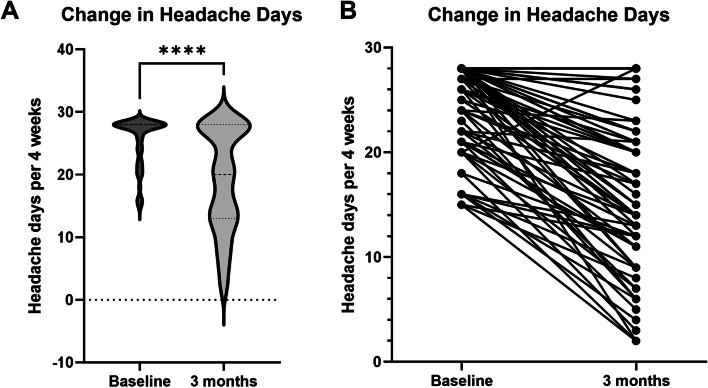
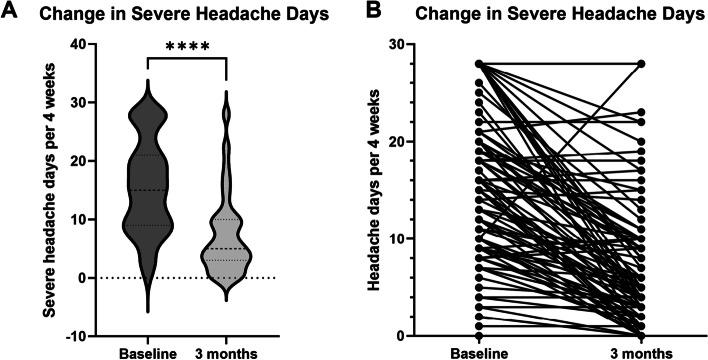
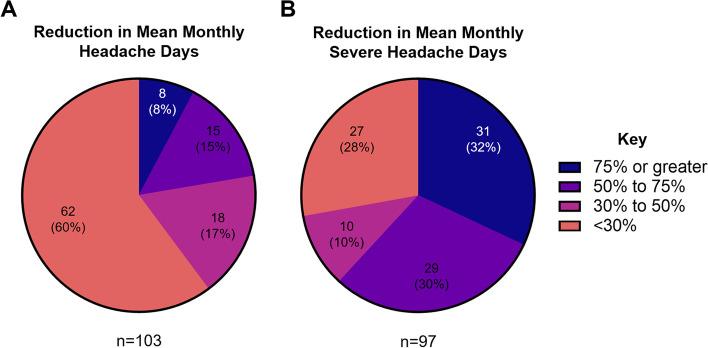
One hundred three patients were commenced on erenumab during the study period. Patients had tried a median of 7 previous prophylactics, including onabotulinum toxin A in 94%. At 3 months there was a reduction in median total (28 to 20, 29% reduction, p < 0.0001) and severe (15 to 5, 67% reduction, p < 0.0001) headache days. 39.8% of patients achieved at least a 30% reduction in total headache days; 61.8% of patients achieved at least a 50% reduction in severe headache days. Meeting either of these thresholds was considered a positive response, 68% of patients achieved this. Presence of daily headache pattern was negatively associated with response, (56% response vs. 90% without daily headache, p = 0.0003). There was no association between age, gender, presence of medication overuse or number of previously tried prophylactic treatments and response to erenumab. 43% of patients reported at least one adverse effect, most commonly constipation (26%); treatment was discontinued in 3 patients due to adverse effects.
CONCLUSIONS
Erenumab was an effective treatment for chronic migraine in this treatment resistant population over 3 months of follow up. Presence of daily headache predicted poorer response but there was still a significant positive response rate in this group.
背景
降钙素基因相关肽(CGRP)抑制剂已被开发为治疗慢性和阵发性偏头痛的选择。我们介绍了在三级头痛中心使用依那西普的经验。
方法
这是一项针对符合当地既定途径和标准的连续患者使用依那西普的前瞻性临床审计。患者每月接受依那西普 140mg,共 3 个月。数据在基线和 3 个月随访时前瞻性收集。
结果
在研究期间,有 103 名患者开始使用依那西普。患者尝试了中位数为 7 种的预防性药物,包括 94%的肉毒杆菌毒素 A。在 3 个月时,总头痛天数(从 28 天减少到 20 天,减少 29%,p<0.0001)和严重头痛天数(从 15 天减少到 5 天,减少 67%,p<0.0001)中位数均降低。39.8%的患者总头痛天数减少至少 30%;61.8%的患者严重头痛天数减少至少 50%。达到总头痛天数减少 30%或严重头痛天数减少 50%中的任何一个阈值都被认为是阳性反应,68%的患者达到了这一标准。每日头痛模式的存在与反应呈负相关(反应率为 56%,无每日头痛者为 90%,p=0.0003)。年龄、性别、药物过度使用的存在或之前尝试的预防性治疗数量与依那西普的反应之间没有关联。43%的患者报告至少有一种不良反应,最常见的是便秘(26%);有 3 名患者因不良反应而停止治疗。
结论
在 3 个月的随访中,依那西普对这种治疗抵抗的慢性偏头痛患者是一种有效的治疗方法。每日头痛的存在预示着反应较差,但在该组中仍有相当高的阳性反应率。

 Zotero 插件