
MACC1促进结直肠癌进展,是预测免疫治疗反应的新型生物标志物。
MACC1 Promotes the Progression and Is a Novel Biomarker for Predicting Immunotherapy Response in Colorectal Cancer.
作者信息
Xiong Man, Wang Mingsen, Yan Youhong, Chen Xiaowu, Guo Wanwei, Xu Ming, Guo Shaoyan, Wang Yeyang
机构信息
School of Nursing, Guangzhou University of Chinese Medicine, Guangzhou 510006, Guangdong, China.
Department of Gastroenterology, Guangdong Second Provincial General Hospital, Guangzhou 510030, Guangdong, China.
出版信息
J Oncol. 2022 Jul 14;2022:8326940. doi: 10.1155/2022/8326940. eCollection 2022.
AIMS
As one of the most prevalent malignant diseases in the world, the mechanisms of metastasis in colon cancer are poorly understood. The aim of this study was to investigate the role of the HGF/c-MET axis in the proliferation and metastasis in colon cancer.
METHODS
The effect of MACC1 on cell proliferation and metastasis was analyzed through a series of experiments. The role of MACC1 in cancer cells was demonstrated by overexpression and silencing of MACC1 in gain or loss function experiments. To investigate the relationship between MACC1 and c-MET/HGF, we detected c-MET protein expression by disrupting with or overexpressing MACC1. The bioinformatics analysis was used to investigate the correlation between MACC1 and c-MET, and the c-MET expression after the interference of HGF with MACC1 was determined. Subsequently, the function of c-MET was verified in colon cancer cells by a series of experiments. The mouse tumor transplantation model experiment is most suitable .
RESULTS
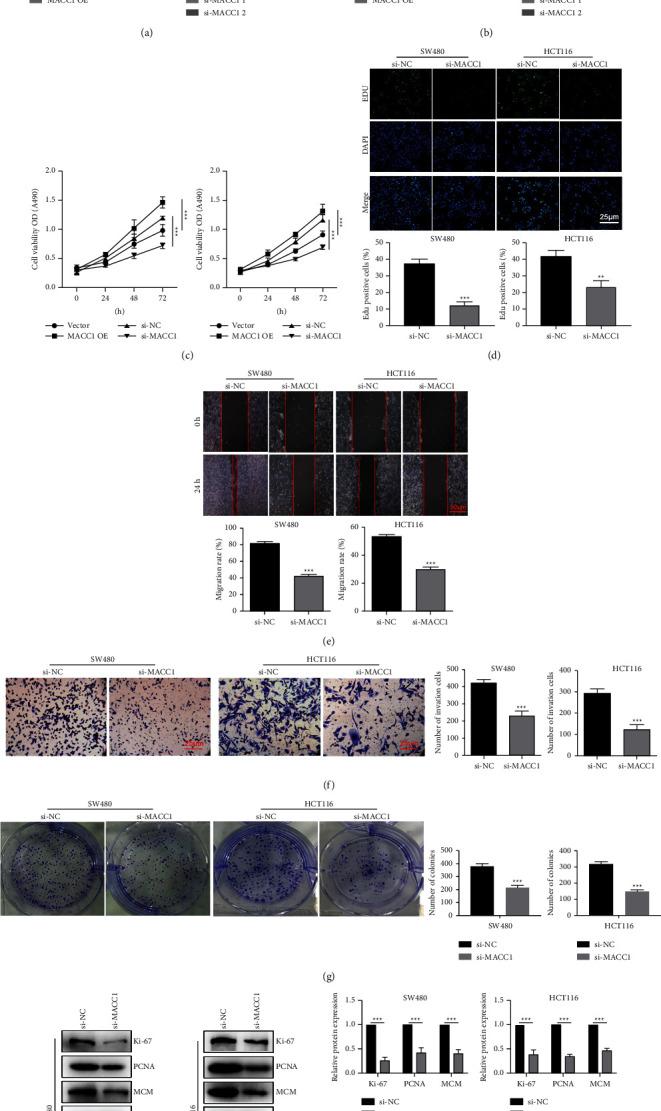
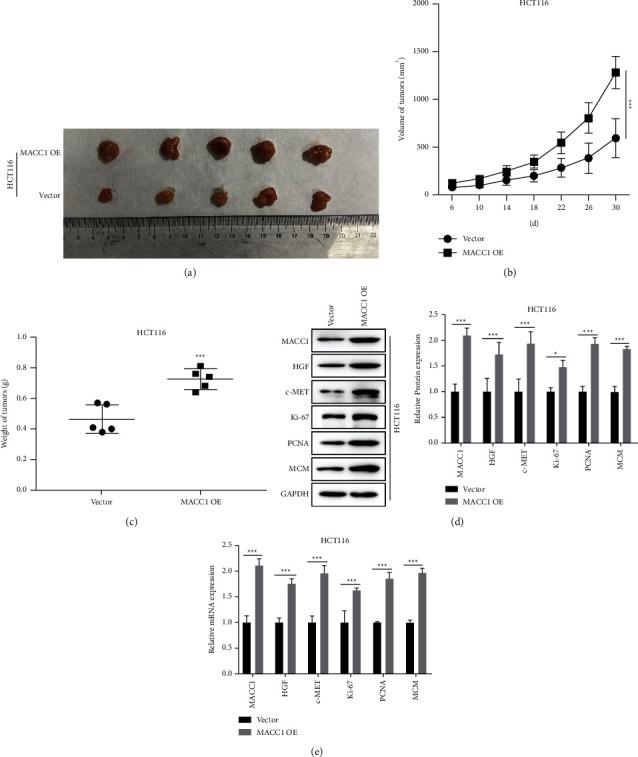
The results indicated that the overexpression of MACC1 could accelerate proliferation and facilitate metastasis in colon cancer cell lines. Furthermore, c-MET was determined to be the downstream regulator of MACC1. The addition of HGF could stimulate the expression of MACC1. With further exploration, we proved that c-MET is downstream of MACC1 in colon cancer and that overexpression of c-MET in colon cancer enhances cell proliferation and migration capability. At last, MACC1 expression level negatively correlates with the infiltration levels and several immune checkpoint biomarkers. High MACC1 expression has a lower response rate with ICIs in COAD.
CONCLUSIONS
We found that, under the regulation of the MACC1/HGF/c-MET axis, the proliferation and metastasis of colorectal cancer are increased by MACC1, which can be a novel biomarker for predicting ICIs response in colorectal cancer. Our findings provide a new idea for the targeted treatment of colorectal cancer.
目的
作为全球最常见的恶性疾病之一,结肠癌转移的机制尚不清楚。本研究旨在探讨HGF/c-MET轴在结肠癌增殖和转移中的作用。
方法
通过一系列实验分析MACC1对细胞增殖和转移的影响。在功能获得或丧失实验中,通过MACC1的过表达和沉默来证明MACC1在癌细胞中的作用。为了研究MACC1与c-MET/HGF之间的关系,我们通过干扰或过表达MACC1来检测c-MET蛋白表达。采用生物信息学分析研究MACC1与c-MET之间的相关性,并确定HGF干扰MACC1后c-MET的表达情况。随后,通过一系列实验在结肠癌细胞中验证c-MET的功能。小鼠肿瘤移植模型实验最为合适。
结果
结果表明,MACC1的过表达可加速结肠癌细胞系的增殖并促进转移。此外,确定c-MET是MACC1的下游调节因子。添加HGF可刺激MACC1的表达。进一步研究证明,在结肠癌中c-MET位于MACC1下游,且c-MET在结肠癌中的过表达增强了细胞增殖和迁移能力。最后,MACC1表达水平与浸润水平及几种免疫检查点生物标志物呈负相关。在结肠癌(COAD)中,高MACC1表达对免疫检查点抑制剂(ICIs)的反应率较低。
结论
我们发现,在MACC1/HGF/c-MET轴的调节下,MACC1增加了结直肠癌的增殖和转移,其可作为预测结直肠癌对ICIs反应的新型生物标志物。我们的研究结果为结直肠癌的靶向治疗提供了新思路。




 Zotero 插件