
西班牙西北部的犬猫收容所新收容动物中心血管呼吸线虫与胃肠道寄生虫的合并感染。
Cardiorespiratory nematodes and co-infections with gastrointestinal parasites in new arrivals at dog and cat shelters in north-western Spain.
机构信息
Investigación en Sanidad Animal: Galicia (Grupo INVESAGA), Facultade de Veterinaria, Universidade de Santiago de Compostela, Lugo, Spain.
出版信息
Transbound Emerg Dis. 2022 Sep;69(5):e3141-e3153. doi: 10.1111/tbed.14670. Epub 2022 Aug 9.
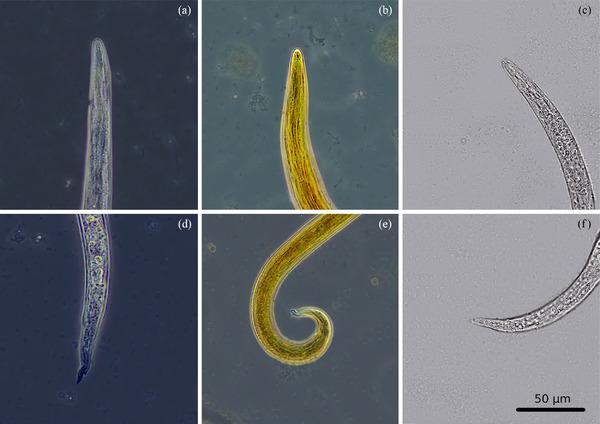
Metastrongyloid and trichuroid cardiorespiratory nematodes of dogs and cats are considered emergent in several European countries, and an increase in the number and extent of endemic foci has been described. Since data on their prevalence are limited in this continent, faecal samples from new arrivals (365 dogs and 65 cats) at two animal shelters in North-western Spain were analysed using both floatation and Baermann techniques. In order to confirm the microscopic identification of Metastrongylidae first stage larvae, molecular characterization based on the sequence of the ITS-2 was performed. The possible influence of some variables such as the species, sex and age of the animals and the co-infection with other gastrointestinal parasites on the prevalence of cardiorespiratory nematodes was analysed. The most prevalent metastrongylid was Aelurostrongylus abstrusus (15.4%) followed by Angiostrongylus vasorum (4.1%) and Crenosoma vulpis (1.1%). Regarding trichuroids, Eucoleus aerophilus and/or Eucoleus boehmi eggs were detected in 28 dogs (7.7%) and four cats (6.2%). Almost all animals positive to cardiorespiratory nematodes (86.8%) were co-infected with gastrointestinal parasites. The prevalence of Metastrongylidae and respiratory trichuroids was significantly higher in dogs co-infected with Taenia spp. and Toxocara canis or Giardia duodenalis and Sarcocystis spp., respectively. In cats, a significant higher prevalence of Metastrongylidae nematodes was found in animals co-infected with Toxocara cati. Our results reveal that cardiorespiratory nematodes are common in companion animals from north-western Spain, showing higher prevalences than those previously reported from this country. This investigation represents the first report of C. vulpis, E. aerophilus and E. boehmi in dogs from Spain. The identification of a number of zoonotic parasites is of public health concern. Our results indicate that these nematodes should be included in the differential diagnosis of dogs and cats from north-western Spain showing respiratory or cardiac clinical signs.
犬猫的心呼吸寄生线虫(Metastrongyloid 和 Trichuroid)在一些欧洲国家被认为是新兴的寄生虫,并且已经描述了这些寄生虫的数量和范围在这些国家的增加。由于在这个大陆上关于它们的流行率的数据有限,因此对西班牙西北部两个动物收容所的新到达的粪便样本(365 只狗和 65 只猫)使用漂浮和巴氏技术进行了分析。为了确认对 Metastrongylidae 第一阶段幼虫的显微镜鉴定,基于 ITS-2 序列进行了分子特征描述。分析了一些变量(如动物的物种、性别和年龄以及与其他胃肠道寄生虫的共同感染)对心呼吸线虫流行率的可能影响。最常见的寄生线虫是 Aelurostrongylus abstrusus(15.4%),其次是 Angiostrongylus vasorum(4.1%)和 Crenosoma vulpis(1.1%)。关于 Trichuroid,在 28 只狗(7.7%)和 4 只猫(6.2%)中检测到 Eucoleus aerophilus 和/或 Eucoleus boehmi 卵。几乎所有感染心呼吸线虫的动物(86.8%)都与胃肠道寄生虫共同感染。Metastrongylidae 和呼吸性 Trichuroid 在与 Taenia spp.、Toxocara canis 或 Giardia duodenalis 和 Sarcocystis spp. 共同感染的犬中以及在与 Toxocara cati 共同感染的猫中,其流行率显著更高。我们的结果表明,心呼吸线虫在来自西班牙西北部的伴侣动物中很常见,其流行率高于该国以前报道的流行率。这项调查代表了西班牙首次在狗中发现 C. vulpis、E. aerophilus 和 E. boehmi。一些人畜共患寄生虫的鉴定引起了公共卫生关注。我们的结果表明,这些线虫应该纳入来自西班牙西北部表现出呼吸或心脏临床症状的犬和猫的鉴别诊断中。

 Zotero 插件