
鲍曼不动杆菌在没有代谢体的情况下分解乙醇胺,并将钴胺酰胺转化为腺苷钴胺素。
Acinetobacter baumannii Catabolizes Ethanolamine in the Absence of a Metabolosome and Converts Cobinamide into Adenosylated Cobamides.
机构信息
Department of Microbiology, University of Georgia, Athens, Georgia, USA.
出版信息
mBio. 2022 Aug 30;13(4):e0179322. doi: 10.1128/mbio.01793-22. Epub 2022 Jul 26.
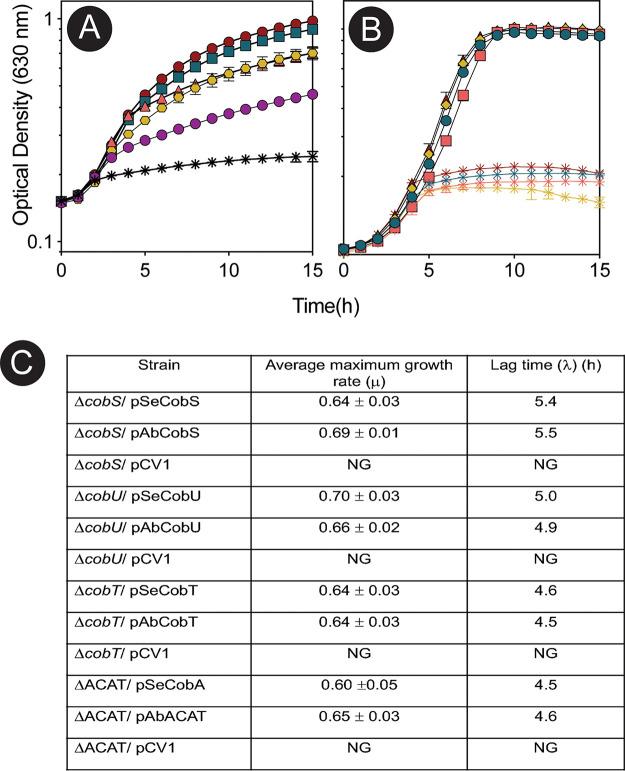
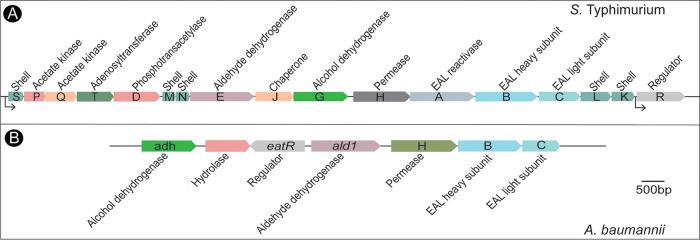
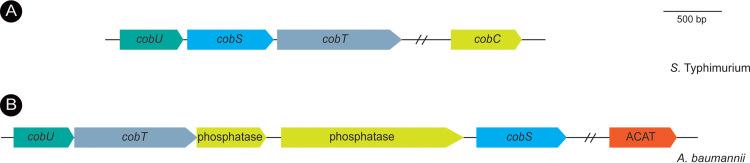
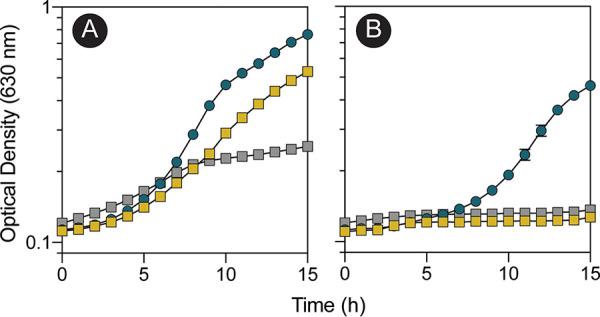
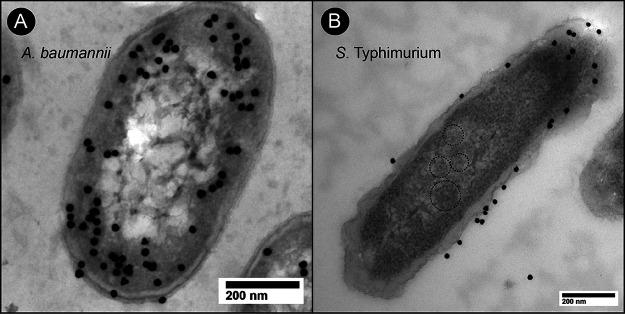
Acinetobacter baumannii is an opportunistic pathogen typically associated with hospital-acquired infections. Our understanding of the metabolism and physiology of A. baumannii is limited. Here, we report that A. baumannii uses ethanolamine (EA) as the sole source of nitrogen and can use this aminoalcohol as a source of carbon and energy if the expression of the genes encoding ethanolamine ammonia-lyase (EAL) is increased. A strain with an IS element upstream of the genes efficiently used EA as a carbon and energy source. The A. baumannii EAL (EAL) enzyme supported the growth of a strain of Salmonella lacking the entire operon. Remarkably, the growth of the above-mentioned Salmonella strain did not require the metabolosome, the reactivase EutA enzyme, the EutE acetaldehyde dehydrogenase, or the addition of glutathione to the medium. Transmission electron micrographs showed that when Acinetobacter baumannii or Salmonella enterica subsp. serovar Typhimurium strain LT2 synthesized EAL, the protein localized to the cell membrane. We also report that the A. baumannii genome encodes all of the enzymes needed for the assembly of the nucleotide loop of cobamides and that it uses these enzymes to synthesize different cobamides from the precursor cobinamide and several nucleobases. In the absence of exogenous nucleobases, the most abundant cobamide produced by A. baumannii was cobalamin. Acinetobacter baumannii is a Gram-negative bacterium commonly found in soil and water. A. baumannii is an opportunistic human pathogen, considered by the CDC to be a serious threat to human health due to the multidrug resistance commonly associated with this bacterium. Knowledge of the metabolic capabilities of A. baumannii is limited. The importance of the work reported here lies in the identification of ethanolamine catabolism occurring in the absence of a metabolosome structure. In other bacteria, this structure protects the cell against damage by acetaldehyde generated by the deamination of ethanolamine. In addition, the ethanolamine ammonia-lyase (EAL) enzyme of this bacterium is unique in that it does not require a reactivase enzyme to remain active. Importantly, we also demonstrate that the A. baumannii genome encodes the functions needed to assemble adenosylcobamide, the coenzyme of EAL, from the precursor cobinamide.
鲍曼不动杆菌是一种机会致病菌,通常与医院获得性感染有关。我们对鲍曼不动杆菌的代谢和生理学的了解有限。在这里,我们报告说,鲍曼不动杆菌将乙醇胺(EA)用作唯一的氮源,如果编码乙醇胺氨裂解酶(EAL)的基因表达增加,它可以将这种氨基酸醇用作碳和能源的来源。一株在基因上游具有 IS 元件的菌株可以有效地将 EA 用作碳和能源源。鲍曼不动杆菌 EAL(EAL)酶支持缺乏整个操纵子的沙门氏菌菌株的生长。值得注意的是,上述沙门氏菌菌株的生长不需要代谢体、再激活酶 EutA 酶、EutE 乙醛脱氢酶,也不需要向培养基中添加谷胱甘肽。透射电子显微镜照片显示,当鲍曼不动杆菌或肠炎沙门氏菌亚种进入鼠伤寒沙门氏菌 LT2 合成 EAL 时,该蛋白定位于细胞膜。我们还报告说,鲍曼不动杆菌基因组编码组装钴胺素核苷酸环所需的所有酶,并且它使用这些酶从前体 cobinamide 和几种核碱基合成不同的 cobamides。在没有外源核碱基的情况下,鲍曼不动杆菌产生的最丰富的 cobamide 是钴胺素。鲍曼不动杆菌是一种革兰氏阴性菌,常见于土壤和水中。鲍曼不动杆菌是一种机会性人类病原体,由于与这种细菌通常相关的多药耐药性,被疾病预防控制中心认为对人类健康构成严重威胁。对鲍曼不动杆菌代谢能力的了解有限。这里报告的工作的重要性在于鉴定在没有代谢体结构的情况下发生的乙醇胺分解代谢。在其他细菌中,这种结构可防止细胞受到乙醇胺脱氨产生的乙醛的损伤。此外,这种细菌的乙醇胺氨裂解酶(EAL)酶的独特之处在于它不需要再激活酶即可保持活性。重要的是,我们还证明,鲍曼不动杆菌基因组编码了从前体 cobinamide 组装腺苷钴胺素(EAL 的辅酶)所需的功能。



 Zotero 插件