
循环游离DNA分析可预测接受联合免疫治疗的晚期肝细胞癌患者的治疗结果。
Circulating Cell-Free DNA Profiling Predicts the Therapeutic Outcome in Advanced Hepatocellular Carcinoma Patients Treated with Combination Immunotherapy.
作者信息
Matsumae Takayuki, Kodama Takahiro, Myojin Yuta, Maesaka Kazuki, Sakamori Ryotaro, Takuwa Ayako, Oku Keiko, Motooka Daisuke, Sawai Yoshiyuki, Oshita Masahide, Nakabori Tasuku, Ohkawa Kazuyoshi, Miyazaki Masanori, Tanaka Satoshi, Mita Eiji, Tawara Seiichi, Yakushijin Takayuki, Nozaki Yasutoshi, Hagiwara Hideki, Tahata Yuki, Yamada Ryoko, Hikita Hayato, Tatsumi Tomohide, Takehara Tetsuo
机构信息
Department of Gastroenterology and Hepatology, Osaka University Graduate School of Medicine, Suita 565-0871, Japan.
Center for Cancer Research, National Cancer Institute, Bethesda, MD 20892, USA.
出版信息
Cancers (Basel). 2022 Jul 11;14(14):3367. doi: 10.3390/cancers14143367.
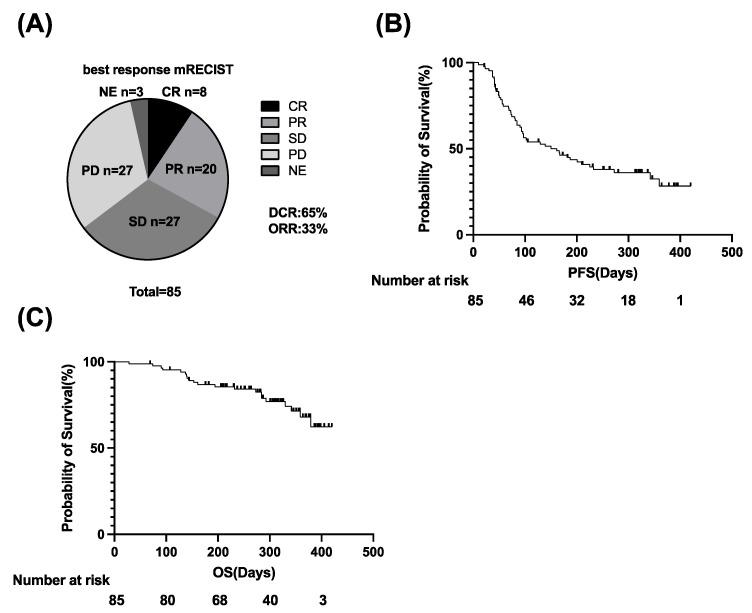
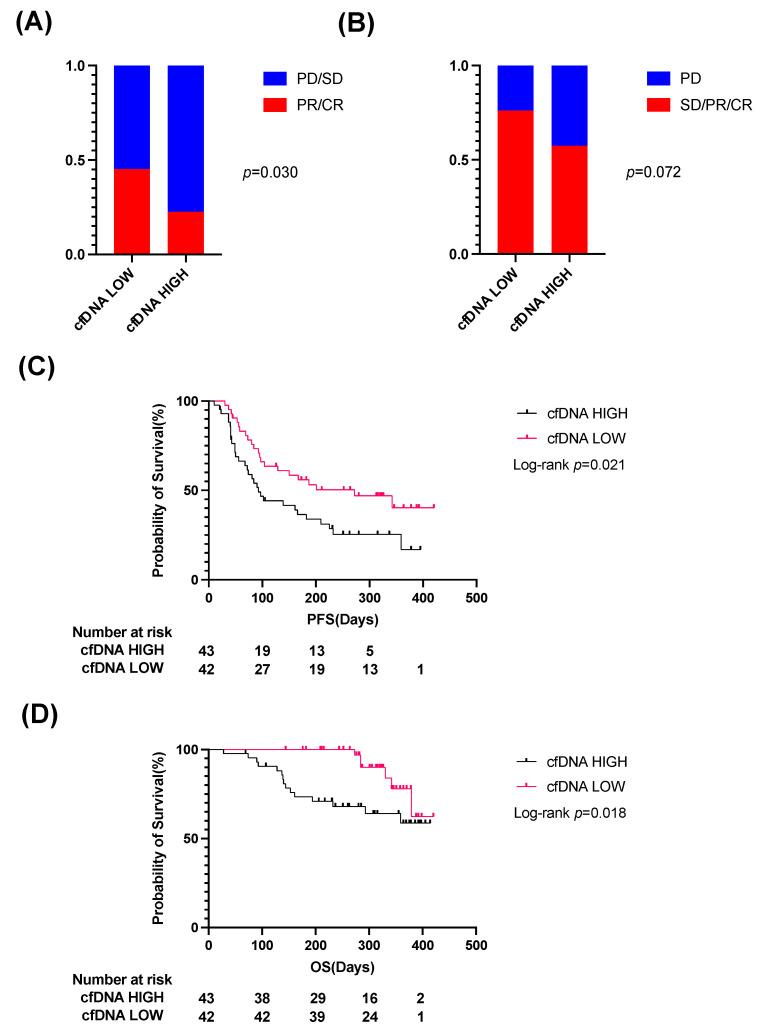
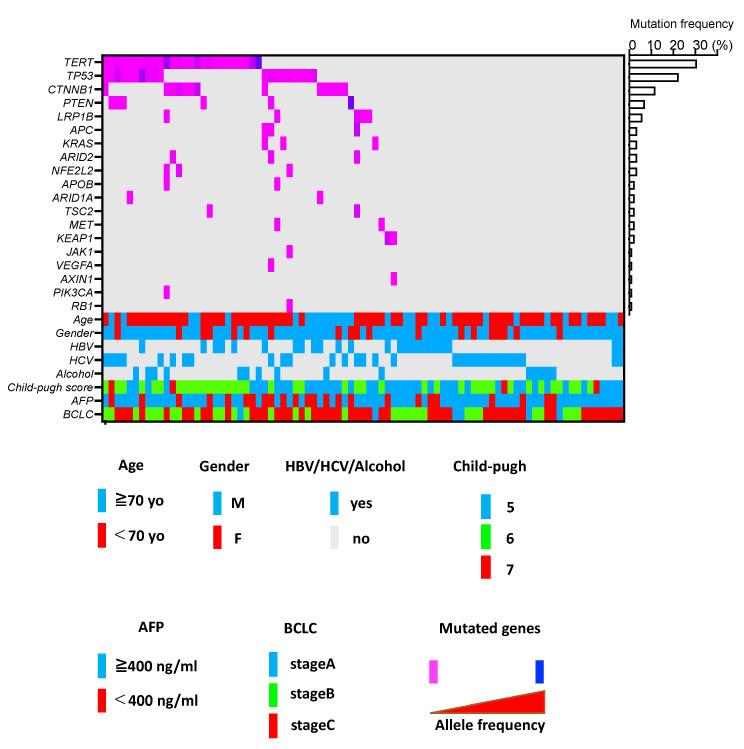
Combination immunotherapy with anti-programmed cell death1-ligand1 (PD-L1) and anti-vascular endothelial growth factor (VEGF) antibodies has become the standard treatment for patients with unresectable HCC (u-HCC). However, limited patients obtain clinical benefits. Cell-free DNA (cfDNA) in peripheral blood contains circulating tumor DNA (ctDNA) that reflects molecular abnormalities in tumor tissue. We investigated the potential of cfDNA/ctDNA as biomarkers for predicting the therapeutic outcome in u-HCC patients treated with anti-PD-L1/VEGF therapy. We enrolled a multicenter cohort of 85 HCC patients treated with atezolizumab and bevacizumab (Atezo/Bev) between 2020 and 2021. Pretreatment plasma was collected, and cfDNA levels were quantified. Ultradeep sequencing of cfDNA was performed with a custom-made panel for detecting mutations in 25 HCC-related cancer genes. We evaluated the association of cfDNA/ctDNA profiles and clinical outcomes. Patients with high plasma cfDNA levels showed a significantly lower response rate and shorter progression-free survival and overall survival (OS) than those with low cfDNA levels. ctDNA detected in 55% of HCC patients included the telomerase reverse transcriptase (TERT) promoter in 31% of these patients, tumor protein 53 (TP53) in 21%, catenin beta 1 (CTNNB1) in 13% and phosphatase and tensin homolog (PTEN) in 7%. The presence or absence of ctDNA did not predict the efficacy of Atezo/Bev therapy. Twenty-six patients with a TERT mutation had significantly shorter OS than those without. The presence of a TERT mutation and alpha-fetoprotein (AFP) ≥ 400 ng/mL were independent predictors of poor OS according to multivariate Cox proportional hazard analysis and could be used to stratify patients treated with Atezo/Bev therapy based on prognosis. In conclusion, pretreatment cfDNA/ctDNA profiling may be useful for predicting the therapeutic outcome in u-HCC patients treated with anti-PD-L1/VEGF therapy.
抗程序性细胞死亡蛋白1配体1(PD-L1)和抗血管内皮生长因子(VEGF)抗体的联合免疫疗法已成为不可切除肝细胞癌(u-HCC)患者的标准治疗方法。然而,仅有少数患者能获得临床益处。外周血中的游离DNA(cfDNA)包含循环肿瘤DNA(ctDNA),其反映了肿瘤组织中的分子异常情况。我们研究了cfDNA/ctDNA作为生物标志物预测接受抗PD-L1/VEGF治疗的u-HCC患者治疗结果的潜力。我们纳入了一个多中心队列,该队列由2020年至2021年间接受阿替利珠单抗和贝伐单抗(阿替利珠单抗/贝伐单抗)治疗的85例HCC患者组成。收集治疗前血浆并对cfDNA水平进行定量。使用定制的检测板对cfDNA进行超深度测序,以检测25个与HCC相关的癌症基因中的突变。我们评估了cfDNA/ctDNA谱与临床结果之间的关联。血浆cfDNA水平高的患者与cfDNA水平低的患者相比,缓解率显著更低,无进展生存期和总生存期(OS)更短。在55%的HCC患者中检测到的ctDNA,其中31%的患者包含端粒酶逆转录酶(TERT)启动子,21%包含肿瘤蛋白53(TP53),13%包含连环蛋白β1(CTNNB1),7%包含磷酸酶和张力蛋白同源物(PTEN)。ctDNA的存在与否并不能预测阿替利珠单抗/贝伐单抗治疗的疗效。26例有TERT突变的患者的OS明显短于无TERT突变的患者。根据多变量Cox比例风险分析,TERT突变的存在和甲胎蛋白(AFP)≥400 ng/mL是OS不良的独立预测因素,可用于根据预后对接受阿替利珠单抗/贝伐单抗治疗的患者进行分层。总之,治疗前cfDNA/ctDNA分析可能有助于预测接受抗PD-L1/VEGF治疗的u-HCC患者的治疗结果。


 Zotero 插件