
细菌 E3 泛素连接酶 NEL 家族。
The NEL Family of Bacterial E3 Ubiquitin Ligases.
机构信息
Departamento de Genética, Facultad de Biología, Universidad de Sevilla, 41012 Sevilla, Spain.
出版信息
Int J Mol Sci. 2022 Jul 13;23(14):7725. doi: 10.3390/ijms23147725.
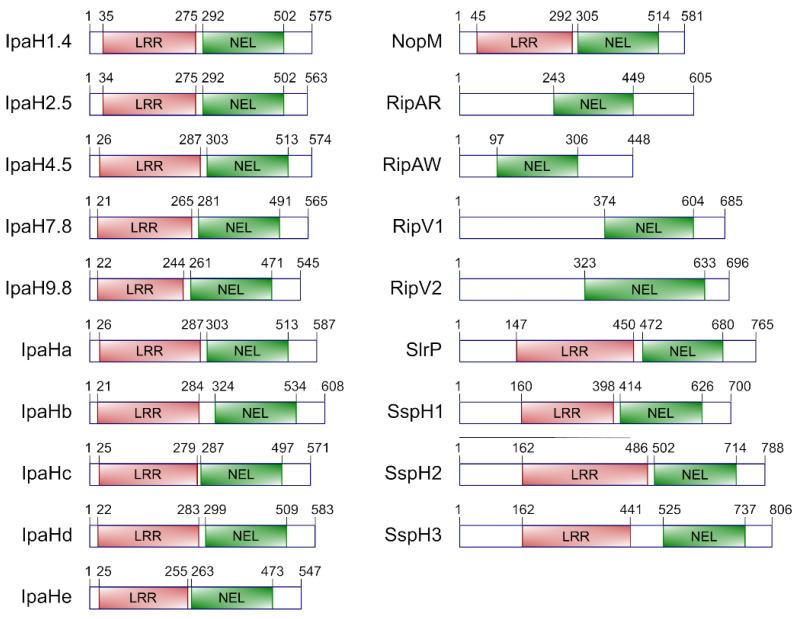
Some pathogenic or symbiotic Gram-negative bacteria can manipulate the ubiquitination system of the eukaryotic host cell using a variety of strategies. Members of the genera , , , and , among others, express E3 ubiquitin ligases that belong to the NEL family. These bacteria use type III secretion systems to translocate these proteins into host cells, where they will find their targets. In this review, we first introduce type III secretion systems and the ubiquitination process and consider the various ways bacteria use to alter the ubiquitin ligation machinery. We then focus on the members of the NEL family, their expression, translocation, and subcellular localization in the host cell, and we review what is known about the structure of these proteins, their function in virulence or symbiosis, and their specific targets.
一些病原或共生革兰氏阴性菌可以使用多种策略来操纵真核宿主细胞的泛素化系统。属的成员, , , 和 ,等等,表达属于 NEL 家族的 E3 泛素连接酶。这些细菌使用 III 型分泌系统将这些蛋白质转运到宿主细胞中,在那里它们将找到它们的靶标。在这篇综述中,我们首先介绍了 III 型分泌系统和泛素化过程,并考虑了细菌改变泛素连接机制的各种方式。然后,我们专注于 NEL 家族的成员,它们在宿主细胞中的表达、易位和亚细胞定位,我们回顾了这些蛋白质的结构、它们在毒力或共生中的功能以及它们的特定靶标方面的已知信息。


 Zotero 插件