
蛛网膜下腔出血中与神经元凋亡相关的机制、相关介质及潜在治疗靶点。
The mechanism and relevant mediators associated with neuronal apoptosis and potential therapeutic targets in subarachnoid hemorrhage.
作者信息
Tian Qi, Liu Sheng, Han Shou-Meng, Zhang Wei, Qin Xian-Yao, Chen Jun-Hui, Liu Cheng-Li, Guo Yu-Jia, Li Ming-Chang
机构信息
Department of Neurosurgery, Renmin Hospital of Wuhan University, Wuhan, Hubei Province, China.
出版信息
Neural Regen Res. 2023 Feb;18(2):244-252. doi: 10.4103/1673-5374.346542.
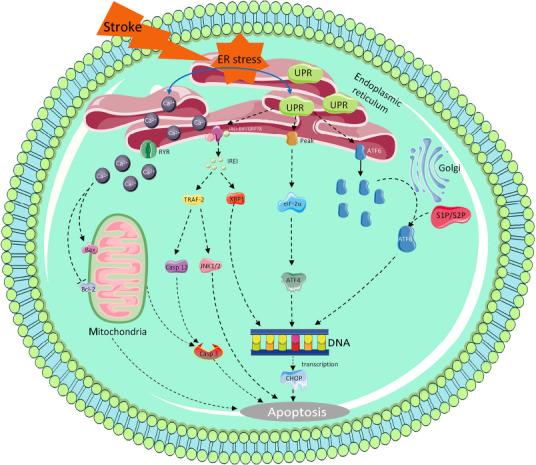
Subarachnoid hemorrhage (SAH) is a dominant cause of death and disability worldwide. A sharp increase in intracranial pressure after SAH leads to a reduction in cerebral perfusion and insufficient blood supply for neurons, which subsequently promotes a series of pathophysiological responses leading to neuronal death. Many previous experimental studies have reported that excitotoxicity, mitochondrial death pathways, the release of free radicals, protein misfolding, apoptosis, necrosis, autophagy, and inflammation are involved solely or in combination in this disorder. Among them, irreversible neuronal apoptosis plays a key role in both short- and long-term prognoses after SAH. Neuronal apoptosis occurs through multiple pathways including extrinsic, mitochondrial, endoplasmic reticulum, p53 and oxidative stress. Meanwhile, a large number of blood contents enter the subarachnoid space after SAH, and the secondary metabolites, including oxygenated hemoglobin and heme, further aggravate the destruction of the blood-brain barrier and vasogenic and cytotoxic brain edema, causing early brain injury and delayed cerebral ischemia, and ultimately increasing neuronal apoptosis. Even there is no clear and effective therapeutic strategy for SAH thus far, but by understanding apoptosis, we might excavate new ideas and approaches, as targeting the upstream and downstream molecules of apoptosis-related pathways shows promise in the treatment of SAH. In this review, we summarize the existing evidence on molecules and related drugs or molecules involved in the apoptotic pathway after SAH, which provides a possible target or new strategy for the treatment of SAH.
蛛网膜下腔出血(SAH)是全球范围内导致死亡和残疾的主要原因。SAH后颅内压急剧升高导致脑灌注减少和神经元供血不足,进而引发一系列导致神经元死亡的病理生理反应。许多先前的实验研究报告称,兴奋性毒性、线粒体死亡途径、自由基释放、蛋白质错误折叠、细胞凋亡、坏死、自噬和炎症单独或共同参与了这种疾病。其中,不可逆的神经元凋亡在SAH后的短期和长期预后中都起着关键作用。神经元凋亡通过多种途径发生,包括外源性、线粒体、内质网、p53和氧化应激途径。同时,SAH后大量血液成分进入蛛网膜下腔,其代谢产物,包括氧化血红蛋白和血红素,进一步加重血脑屏障的破坏以及血管源性和细胞毒性脑水肿,导致早期脑损伤和迟发性脑缺血,并最终增加神经元凋亡。尽管迄今为止尚无针对SAH明确有效的治疗策略,但通过了解细胞凋亡,我们可能挖掘出新的思路和方法,因为针对凋亡相关途径的上游和下游分子在SAH治疗中显示出了前景。在这篇综述中,我们总结了SAH后凋亡途径中涉及的分子以及相关药物或分子的现有证据,这为SAH的治疗提供了可能的靶点或新策略。



 Zotero 插件