
从以患者为中心、团队为基础的干预措施中吸取的经验教训 2 型糖尿病患者具有较高的心血管风险:CINEMA 计划的第 1 年结果。
Lessons Learned From a Patient-Centered, Team-Based Intervention for Patients With Type 2 Diabetes at High Cardiovascular Risk: Year 1 Results From the CINEMA Program.
机构信息
Division of Cardiovascular Medicine University Hospitals Harrington Heart and Vascular Institute, University Hospitals Cleveland Medical Center Cleveland OH.
University Hospitals Health System Cleveland OH.
出版信息
J Am Heart Assoc. 2022 Aug 2;11(15):e024482. doi: 10.1161/JAHA.120.024482. Epub 2022 Jul 29.
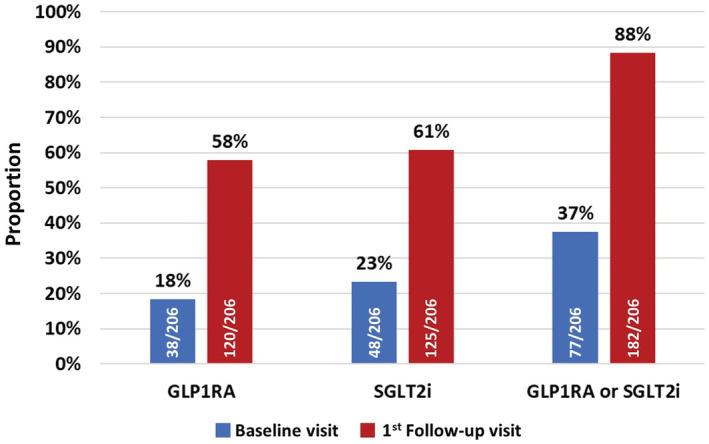
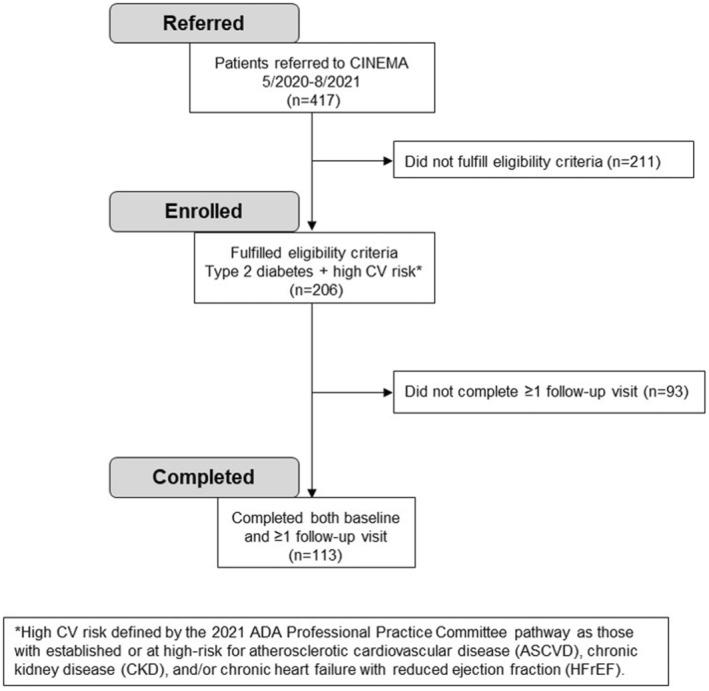
Background The care for patients with type 2 diabetes necessitates a multidisciplinary team approach to reduce cardiovascular risk, but implementation of effective integrated strategies has been limited. Methods and Results We conceptualized and initiated a patient-centered, team-based intervention called Center for Integrated and Novel Approaches in Vascular-Metabolic Disease (CINEMA) at University Hospitals Cleveland Medical Center. Patients with type 2 diabetes at high risk for cardiovascular events, including those with established atherosclerotic cardiovascular disease, elevated coronary artery calcium score >100, chronic heart failure with reduced ejection fraction, and/or chronic kidney disease stages 2 to 4 were included. Herein, we present the year 1 results for the program. From May 2020 through August 2021, there were 417 referrals. Among 206 eligible patients, 113 (55%) completed a baseline and ≥1 follow-up visit through December 2021, with mean (SD) time of 105 (34) days between baseline and first follow-up visits. Mean age was 59 years, with 49% women and 37% Black patients. Patients had significant reductions from baseline in glycosylated hemoglobin (-10.8%), total cholesterol (-7.9%), low-density lipoprotein cholesterol (-13.5%), systolic blood pressure (-4.0%), and body mass index (-2.7%) (≤0.001 for all). In addition, among the 129 (63%) eligible patients not on sodium-glucose cotransporter 2 inhibitor or glucagon-like peptide-1 receptor agonist at baseline, 81% were prescribed evidence-based therapy with sodium-glucose cotransporter 2 inhibitor (n=66 [51%]) and/or glucagon-like peptide-1 receptor agonist (n=67 [52%]) to reduce the risk of cardiovascular disease in the initial 3-month follow-up period. Conclusions A team-based, patient-centered approach to high-risk disease management appears to be a promising paradigm for care delivery associated with greater use of evidence-based therapies and improved control of multiple cardiovascular risk factors.
背景
对于 2 型糖尿病患者的护理需要采取多学科团队的方法来降低心血管风险,但有效的综合策略的实施受到了限制。
方法和结果
我们在克利夫兰大学医院构思并启动了一个以患者为中心、以团队为基础的干预项目,称为血管代谢疾病综合与创新方法中心(CINEMA)。该项目纳入了心血管事件风险较高的 2 型糖尿病患者,包括已确诊的动脉粥样硬化性心血管疾病、冠状动脉钙评分>100、射血分数降低的慢性心力衰竭和/或 2 至 4 期慢性肾脏病患者。在此,我们呈现该项目的第 1 年结果。从 2020 年 5 月到 2021 年 8 月,有 417 名患者被转介。在 206 名符合条件的患者中,有 113 名(55%)完成了基线和至少 1 次随访,截至 2021 年 12 月,基线和首次随访之间的平均时间为 105(34)天。患者的平均年龄为 59 岁,其中 49%为女性,37%为黑人患者。与基线相比,患者的糖化血红蛋白(-10.8%)、总胆固醇(-7.9%)、低密度脂蛋白胆固醇(-13.5%)、收缩压(-4.0%)和体重指数(-2.7%)均显著降低(均≤0.001)。此外,在基线时未使用钠-葡萄糖共转运蛋白 2 抑制剂或胰高血糖素样肽-1 受体激动剂的 129 名(63%)符合条件的患者中,81%的患者在最初的 3 个月随访期间被开具了基于证据的治疗方案,包括钠-葡萄糖共转运蛋白 2 抑制剂(n=66[51%])和/或胰高血糖素样肽-1 受体激动剂(n=67[52%]),以降低心血管疾病的风险。
结论
一种以团队为基础、以患者为中心的高风险疾病管理方法似乎是一种很有前途的护理提供模式,与更广泛地使用基于证据的治疗方法和改善多种心血管风险因素的控制有关。

 Zotero 插件