
从发病机制到诊断和治疗,深入了解 microRNA 调控胶质瘤的最新研究进展。
Recent insights into the microRNA-dependent modulation of gliomas from pathogenesis to diagnosis and treatment.
机构信息
Department of Clinical Biochemistry, School of Pharmacy and Pharmaceutical Sciences, Isfahan University of Medical Sciences, Isfahan, Iran.
Department of Hematology and Blood Banking, Faculty of Medicine, Mashhad University of Medical Sciences, Mashhad, Iran.
出版信息
Cell Mol Biol Lett. 2022 Aug 3;27(1):65. doi: 10.1186/s11658-022-00354-4.
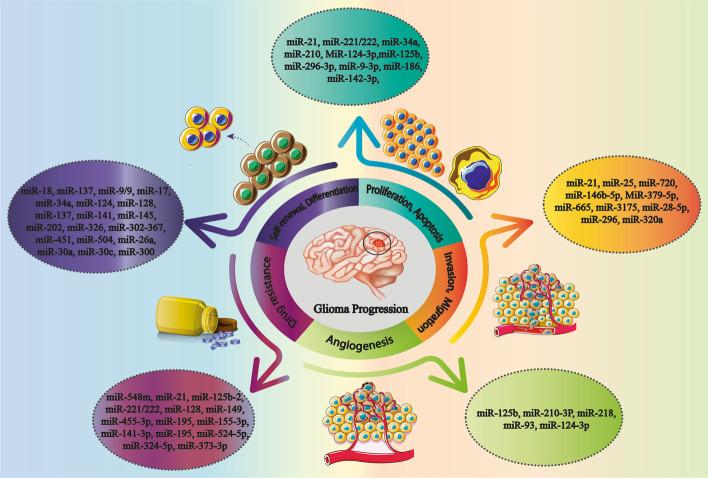
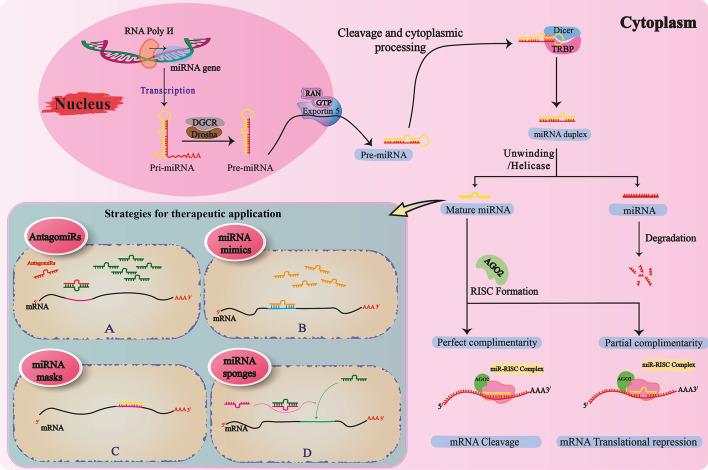
Gliomas are the most lethal primary brain tumors in adults. These highly invasive tumors have poor 5-year survival for patients. Gliomas are principally characterized by rapid diffusion as well as high levels of cellular heterogeneity. However, to date, the exact pathogenic mechanisms, contributing to gliomas remain ambiguous. MicroRNAs (miRNAs), as small noncoding RNAs of about 20 nucleotides in length, are known as chief modulators of different biological processes at both transcriptional and posttranscriptional levels. More recently, it has been revealed that these noncoding RNA molecules have essential roles in tumorigenesis and progression of multiple cancers, including gliomas. Interestingly, miRNAs are able to modulate diverse cancer-related processes such as cell proliferation and apoptosis, invasion and migration, differentiation and stemness, angiogenesis, and drug resistance; thus, impaired miRNAs may result in deterioration of gliomas. Additionally, miRNAs can be secreted into cerebrospinal fluid (CSF), as well as the bloodstream, and transported between normal and tumor cells freely or by exosomes, converting them into potential diagnostic and/or prognostic biomarkers for gliomas. They would also be great therapeutic agents, especially if they could cross the blood-brain barrier (BBB). Accordingly, in the current review, the contribution of miRNAs to glioma pathogenesis is first discussed, then their glioma-related diagnostic/prognostic and therapeutic potential is highlighted briefly.
神经胶质瘤是成年人中最致命的原发性脑肿瘤。这些高度侵袭性的肿瘤患者 5 年生存率较差。神经胶质瘤的主要特征是快速扩散以及高水平的细胞异质性。然而,迄今为止,导致神经胶质瘤的确切发病机制仍不清楚。MicroRNAs(miRNAs)是长度约为 20 个核苷酸的小非编码 RNA,作为转录和转录后水平上不同生物学过程的主要调节剂而闻名。最近,人们发现这些非编码 RNA 分子在多种癌症的肿瘤发生和进展中起着重要作用,包括神经胶质瘤。有趣的是,miRNAs 能够调节多种与癌症相关的过程,如细胞增殖和凋亡、侵袭和迁移、分化和干性、血管生成和耐药性;因此,miRNAs 的功能受损可能导致神经胶质瘤恶化。此外,miRNAs 可以分泌到脑脊液(CSF)和血液中,并通过外泌体在正常和肿瘤细胞之间自由或传递,将其转化为神经胶质瘤的潜在诊断和/或预后生物标志物。它们也将成为很好的治疗剂,特别是如果它们能够穿过血脑屏障(BBB)。因此,在本综述中,首先讨论了 miRNAs 对神经胶质瘤发病机制的贡献,然后简要强调了它们在神经胶质瘤中的诊断/预后和治疗潜力。
 Zotero 插件