
CRISPR/Cas9 切割的 TP53 依赖性毒性在基因组位置上具有差异性,可能会干扰遗传筛选。
TP53-dependent toxicity of CRISPR/Cas9 cuts is differential across genomic loci and can confound genetic screening.
机构信息
Genome Data Science, Institute for Research in Biomedicine (IRB Barcelona), Barcelona institute for Science and Technology, Barcelona, Spain.
Department of General, Visceral, Transplant, Vascular and Pediatric Surgery (Department of Surgery I), University Hospital Würzburg, Würzburg, Germany.
出版信息
Nat Commun. 2022 Aug 4;13(1):4520. doi: 10.1038/s41467-022-32285-1.
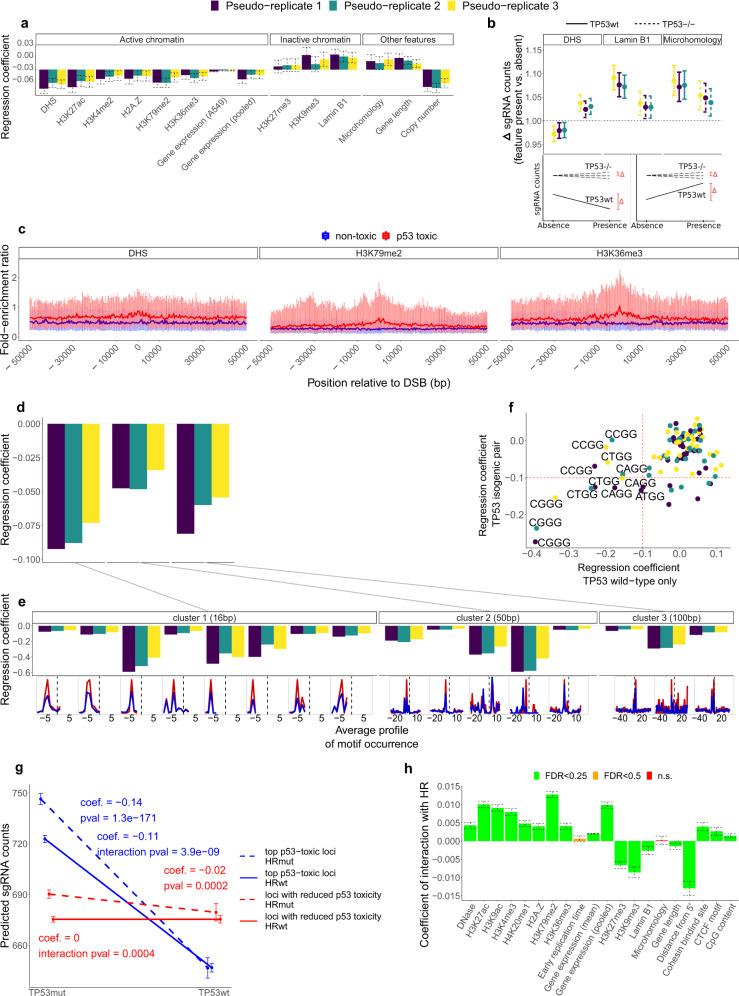
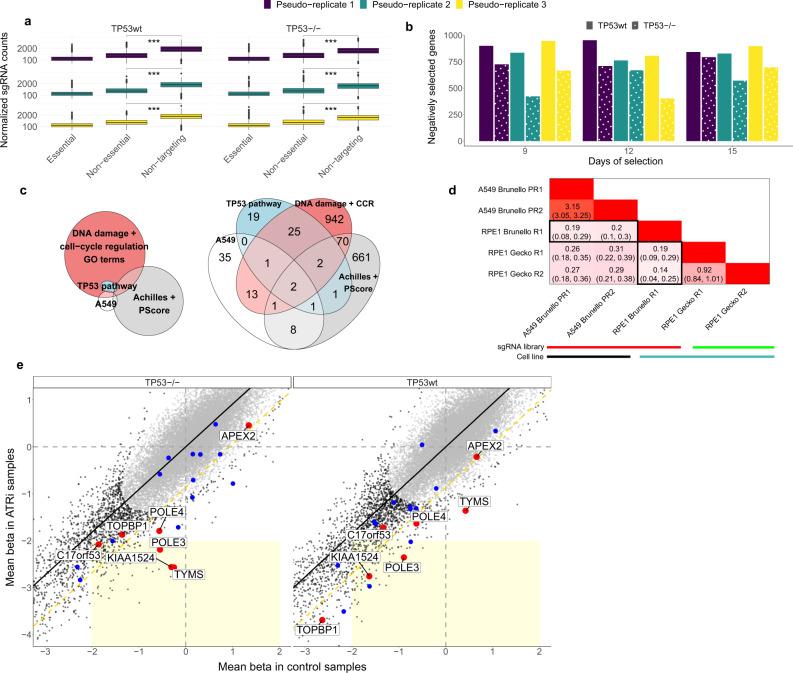
CRISPR/Cas9 gene editing can inactivate genes in a precise manner. This process involves DNA double-strand breaks (DSB), which may incur a loss of cell fitness. We hypothesize that DSB toxicity may be variable depending on the chromatin environment in the targeted locus. Here, by analyzing isogenic cell line pair CRISPR experiments jointly with previous screening data from across ~900 cell lines, we show that TP53-associated break toxicity is higher in genomic regions that harbor active chromatin, such as gene regulatory elements or transcription elongation histone marks. DSB repair pathway choice and DNA sequence context also associate with toxicity. We also show that, due to noise introduced by differential toxicity of sgRNA-targeted sites, the power of genetic screens to detect conditional essentiality is reduced in TP53 wild-type cells. Understanding the determinants of Cas9 cut toxicity will help improve design of CRISPR reagents to avoid incidental selection of TP53-deficient and/or DNA repair deficient cells.
CRISPR/Cas9 基因编辑可以精确地使基因失活。这一过程涉及 DNA 双链断裂 (DSB),可能导致细胞适应性丧失。我们假设 DSB 毒性可能因靶向基因座的染色质环境而异。在这里,我们通过联合分析同源细胞系 CRISPR 实验和来自约 900 个细胞系的先前筛选数据,表明在含有活性染色质的基因组区域,如基因调控元件或转录延伸组蛋白标记,与 TP53 相关的断裂毒性更高。DSB 修复途径的选择和 DNA 序列背景也与毒性相关。我们还表明,由于 sgRNA 靶向位点的毒性差异所带来的噪声,在 TP53 野生型细胞中,遗传筛选检测条件必需性的能力会降低。了解 Cas9 切割毒性的决定因素将有助于改进 CRISPR 试剂的设计,以避免偶然选择 TP53 缺失和/或 DNA 修复缺陷的细胞。
 Zotero 插件