
预防或治疗硬膜外相关产妇发热的干预措施:系统评价和荟萃分析。
Interventions for the prevention or treatment of epidural-related maternal fever: a systematic review and meta-analysis.
机构信息
School of Health and Related Research, University of Sheffield, Sheffield, UK.
School of Health and Related Research, University of Sheffield, Sheffield, UK.
出版信息
Br J Anaesth. 2022 Oct;129(4):567-580. doi: 10.1016/j.bja.2022.06.022. Epub 2022 Aug 5.
BACKGROUND
Epidural-related maternal fever in women in labour has consequences for the mother and neonate. There has been no systematic review of preventive strategies.
METHODS
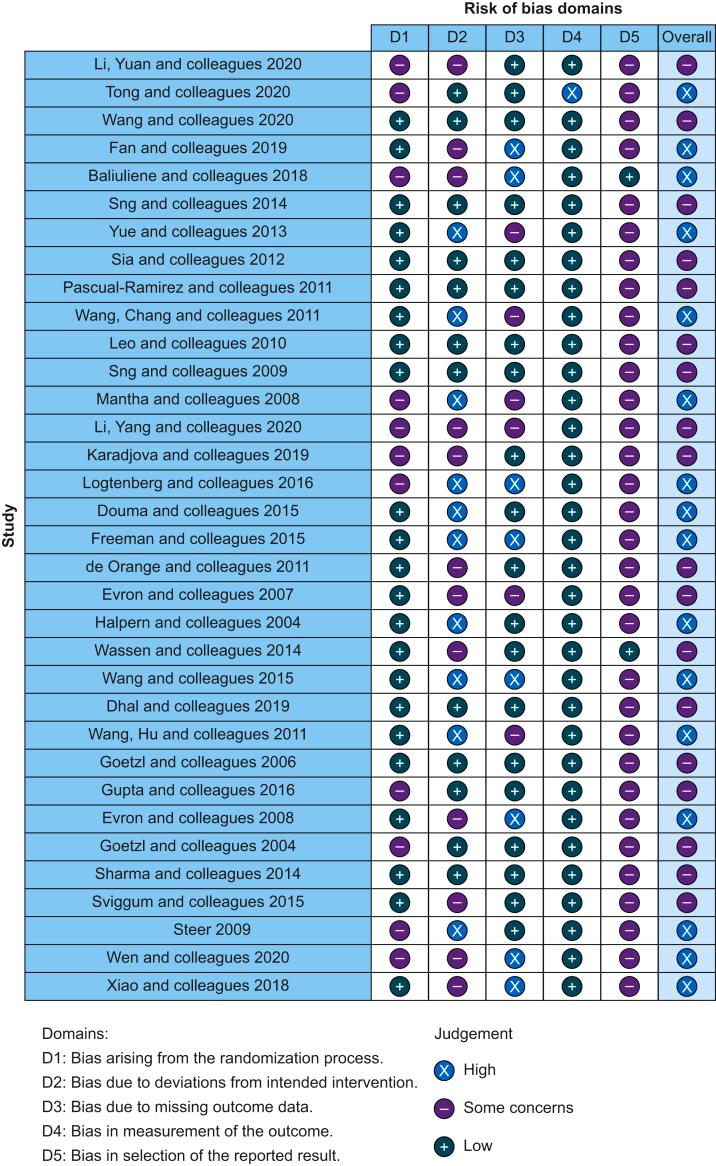
RCTs evaluating methods of preventing or treating epidural-related maternal fever in women in active labour were eligible. We searched MEDLINE, EMBASE, CINAHL, Web of Science, CENTRAL, and grey literature sources were searched from inception to April 2021. Two review authors independently undertook study selection. Data extraction and quality assessment was performed by a single author and checked by a second. The Cochrane Risk of Bias 2 tool was used. Meta-analyses for the primary outcome, incidence of intrapartum fever, were performed using the DerSimonian and Laird random effects model to produce summary risk ratios (RRs) with 95% confidence intervals (95% CIs).
RESULTS
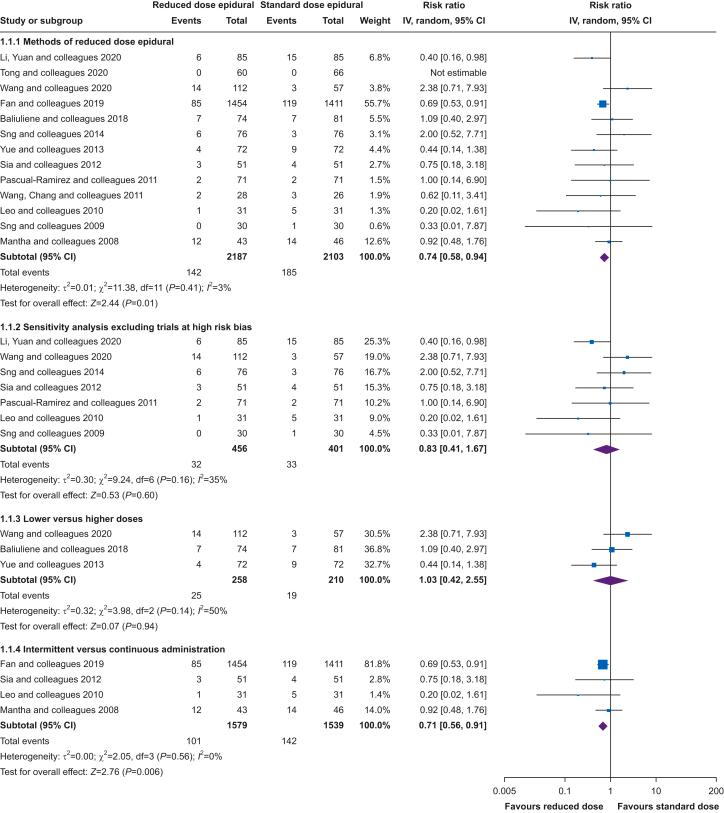
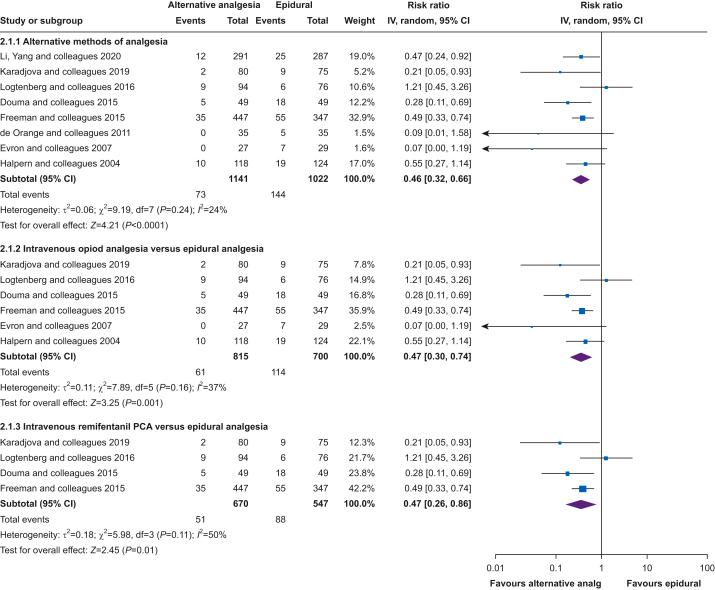
Forty-two records, representing 34 studies, were included. Methods of reduced dose epidural reduced the incidence of intrapartum fever, but this was not statistically significant when six trials at high risk of bias were removed (seven trials; 857 participants; RR=0.83; 95% CI, 0.41-1.67). Alternative methods of analgesia and high-dose prophylactic systemic steroids reduced the risk of intrapartum fever compared with epidural analgesia. Prophylactic paracetamol was not effective.
CONCLUSIONS
There is no clear evidence to support the use of any individual preventative or therapeutic intervention for epidural-related maternal fever. Further research should focus on understanding the mechanism of fever development to enable RCTs of potential interventions to reduce the incidence of intrapartum fever development and the subsequent disease burden felt by the neonate.
CLINICAL TRIAL REGISTRATION
CRD42021246929.
背景
产妇分娩时硬膜外相关发热会对母婴产生影响。目前尚未对预防策略进行系统评价。
方法
符合纳入标准的 RCT 评估了预防或治疗活跃期产妇硬膜外相关发热的方法。我们检索了 MEDLINE、EMBASE、CINAHL、Web of Science、CENTRAL,并从成立之初到 2021 年 4 月搜索了灰色文献来源。两位综述作者独立进行了研究选择。数据提取和质量评估由一位作者进行,另一位作者进行核对。Cochrane 偏倚风险 2 工具用于评估。使用 DerSimonian 和 Laird 随机效应模型对主要结局(产时发热发生率)进行 meta 分析,以产生具有 95%置信区间(95%CI)的汇总风险比(RR)。
结果
共纳入 42 篇记录,代表 34 项研究。减少剂量硬膜外麻醉的方法降低了产时发热的发生率,但当去除 6 项高偏倚风险的试验时,这并不具有统计学意义(7 项试验;857 名参与者;RR=0.83;95%CI,0.41-1.67)。替代的镇痛方法和高剂量预防性全身类固醇与硬膜外镇痛相比,降低了产时发热的风险。预防性扑热息痛无效。
结论
目前没有明确的证据支持使用任何单一的预防或治疗干预措施来预防硬膜外相关的产妇发热。进一步的研究应侧重于了解发热发展的机制,以便能够进行 RCT,以减少产时发热的发生和新生儿随后的疾病负担。
临床试验注册
CRD42021246929。



 Zotero 插件