
表皮生长因子受体突变型晚期非小细胞肺癌的免疫治疗:现状、可能机制与应用前景。
Immunotherapy for EGFR-mutant advanced non-small-cell lung cancer: Current status, possible mechanisms and application prospects.
机构信息
Department of Thoracic Oncology, Cancer Center, West China Hospital, Sichuan University, Chengdu, China.
The Department of Oncology, Jiujiang No.1 People's Hospital, Jiujiang, China.
出版信息
Front Immunol. 2022 Jul 22;13:940288. doi: 10.3389/fimmu.2022.940288. eCollection 2022.
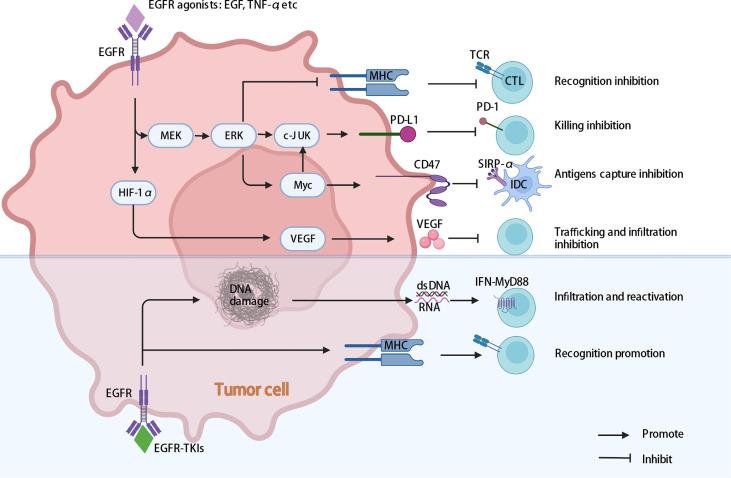
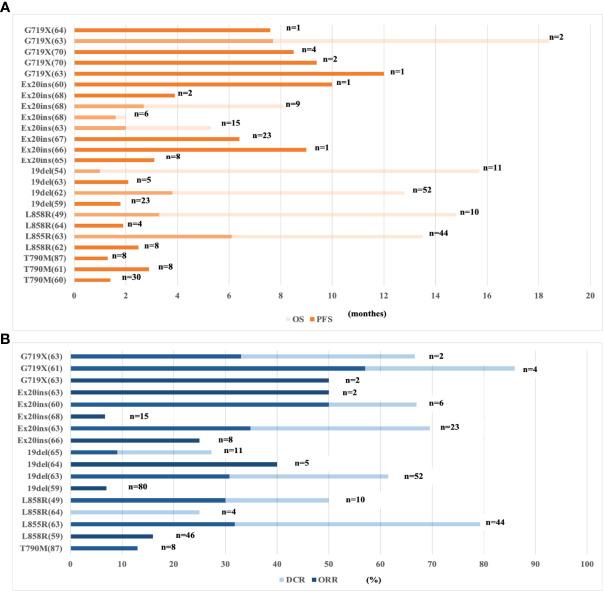
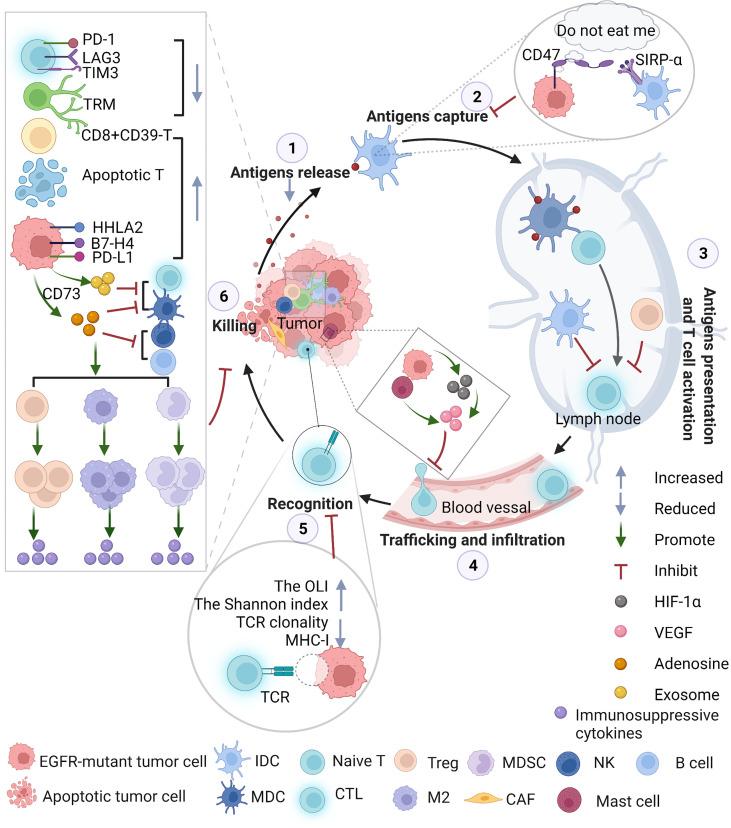
Immune checkpoint inhibitors (ICIs) are effective against advanced and even perioperative non-small-cell lung cancer (NSCLC) and result in durable clinical benefit, regardless of programmed death ligand-1 (PD-L1) expression status in cancer. Existing clinical evidence shows that the effect of immunotherapy in patients with EGFR-mutant NSCLC after the development of tyrosine kinase inhibitor (TKI) resistance is not satisfactory. However, compared with monotherapy, ICIs combined with chemotherapy can improve the efficacy. Encouragingly, compared with that of patients with sensitive mutations, the progression-free survival of patients with rare mutations who were treated with ICIs was increased. Adequately maximizing the efficacy of ICIs in EGFR-mutant NSCLC patients is worth exploring. In this review, we described preclinical and clinical studies of ICIs or combined therapy for EGFR-mutant NSCLC. We further focused on EGFR mutations and the cancer immune response, with particular attention given to the role of EGFR activation in the cancer-immunity cycle. The mechanisms for the natural resistance to ICIs were explored to identify corresponding countermeasures that made more EGFR-mutant NSCLC patients benefit from ICIs.
免疫检查点抑制剂(ICIs)对晚期甚至围手术期非小细胞肺癌(NSCLC)有效,无论癌症中程序性死亡配体 1(PD-L1)表达状态如何,均可带来持久的临床获益。现有临床证据表明,免疫疗法在 EGFR 突变型 NSCLC 患者出现酪氨酸激酶抑制剂(TKI)耐药后的效果并不理想。然而,与单药治疗相比,ICI 联合化疗可以提高疗效。令人鼓舞的是,与敏感突变患者相比,接受 ICI 治疗的罕见突变患者的无进展生存期增加。充分发挥 ICI 在 EGFR 突变型 NSCLC 患者中的疗效值得探索。在这篇综述中,我们描述了针对 EGFR 突变型 NSCLC 的 ICI 或联合治疗的临床前和临床研究。我们进一步关注了 EGFR 突变与癌症免疫反应,特别关注了 EGFR 激活在癌症免疫循环中的作用。探索了对 ICI 产生天然耐药的机制,以确定相应的对策,使更多的 EGFR 突变型 NSCLC 患者从 ICI 中获益。
 Zotero 插件