
鉴定与肾透明细胞癌病理分级相关的基因。
Identification of Pathologic Grading-Related Genes Associated with Kidney Renal Clear Cell Carcinoma.
机构信息
Nephrology Department of Chongqing Hospital of Traditional Chinese Medicine, China.
出版信息
J Immunol Res. 2022 Jul 30;2022:2818777. doi: 10.1155/2022/2818777. eCollection 2022.
BACKGROUND
Renal epithelium lesions can cause renal cell carcinoma. This kind of tumor is common among all renal cancers with poor prognosis, of which more than 70% belong to kidney renal clear cell carcinoma. As the pathogenesis of KIRC has not been elucidated, it is necessary to be further explored.
METHODS
The Genomic Spatial Event database was used to obtain the analysis dataset (GSE126964) based on the GEO database, and The Cancer Genome Atlas was applied for KIRC data collection. edgeR and limma analyses were subsequently conducted to identify differentially expressed genes. Based on the systems biology approach of WGCNA, potential biomarkers and therapeutic targets of this disease were screened after the establishment of a gene coexpression network. GO and KEGG enrichment used cluster Profiler, enrichplot, and ggplot2 in the R software package. Protein-protein interaction network diagrams were plotted for hub gene collection via the STRING platform and Cytoscape software. Hub genes associated with overall survival time of KIRC patients were ultimately identified using the Kaplan-Meier plotter.
RESULTS
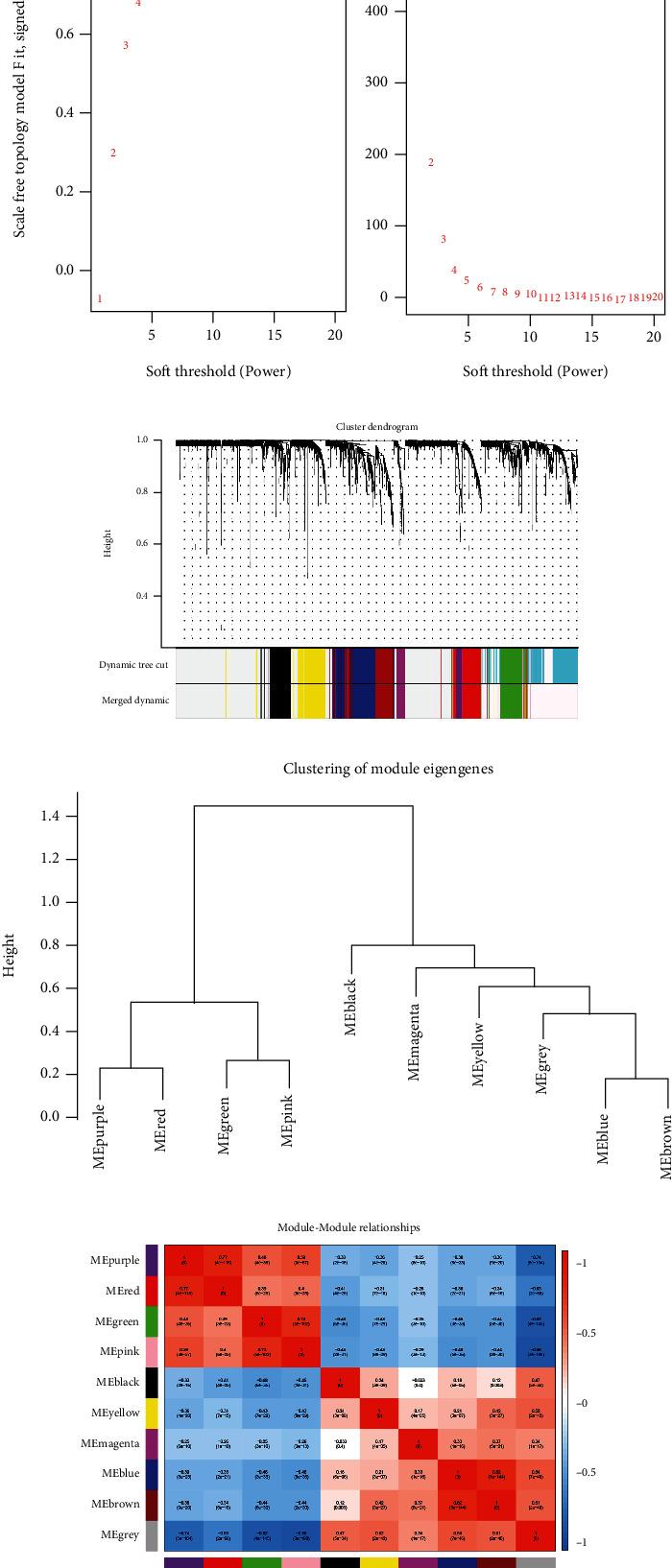
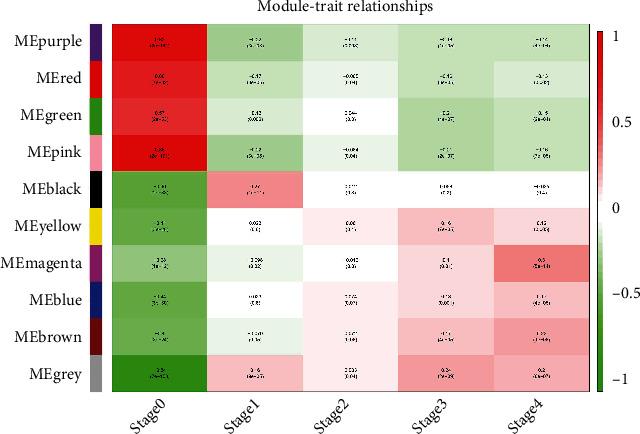
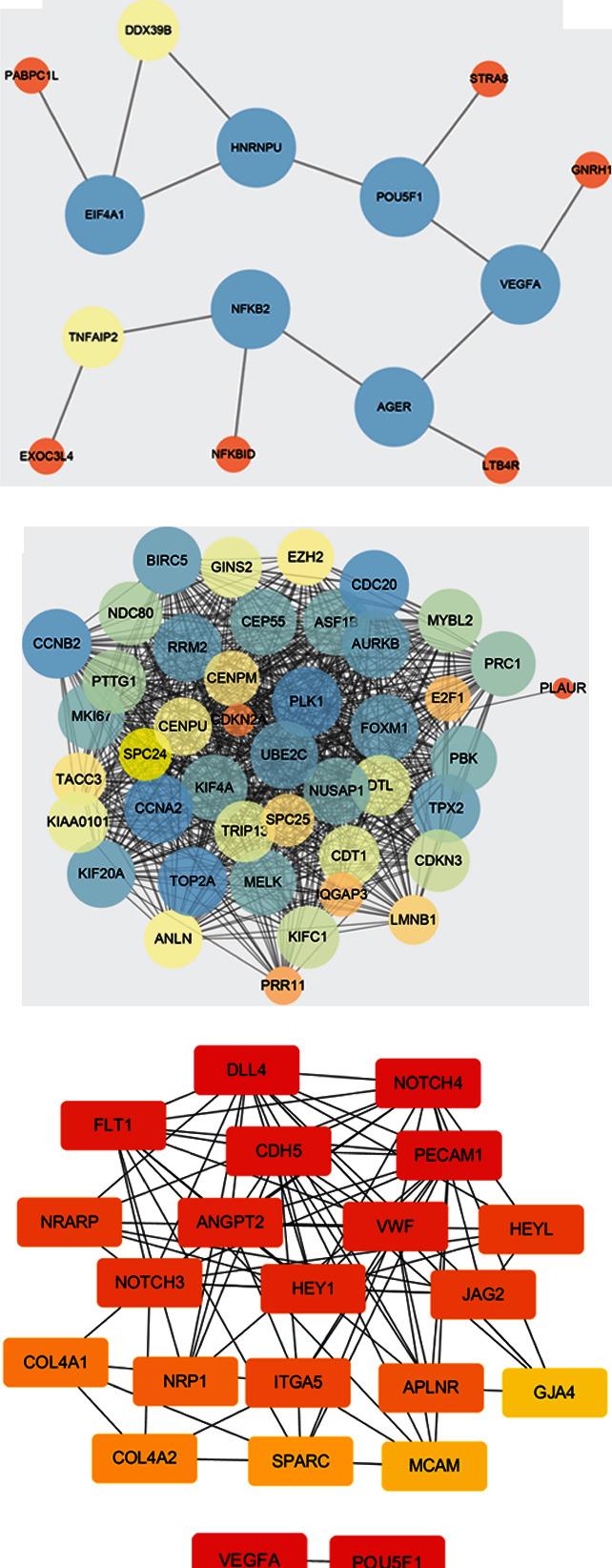
There were 1863 DEGs identified in total and ten coexpressed gene modules discovered using a WGCNA method. GO and KEGG analysis findings revealed that the most enrichment pathways included Notch binding, cell migration, cell cycle, cell senescence, apoptosis, focal adhesions, and autophagosomes. Twenty-seven hub genes were identified, among which FLT1, HNRNPU, ATP6V0D2, ATP6V1A, and ATP6V1H were positively correlated with OS rates of KIRC patients ( < 0.05).
CONCLUSIONS
In conclusion, bioinformatic techniques can be useful tools for predicting the progression of KIRC. DEGs are present in both KIRC and normal kidney tissues, which can be considered the KIRC biomarkers.
背景
肾上皮损伤可导致肾细胞癌。这种肿瘤在所有肾癌中较为常见,预后较差,其中超过 70%属于肾透明细胞癌。由于 KIRC 的发病机制尚未阐明,有必要进一步探讨。
方法
从基因表达综合数据库中获取基于 GEO 数据库的分析数据集(GSE126964),从癌症基因组图谱中获取 KIRC 数据。然后进行 edgeR 和 limma 分析,以鉴定差异表达基因。基于 WGCNA 的系统生物学方法,建立基因共表达网络后筛选疾病的潜在生物标志物和治疗靶点。GO 和 KEGG 富集使用 R 软件包中的 cluster Profiler、enrichplot 和 ggplot2 进行。通过 STRING 平台和 Cytoscape 软件绘制 hub 基因集的蛋白质-蛋白质相互作用网络图。最终使用 Kaplan-Meier plotter 确定与 KIRC 患者总生存时间相关的 hub 基因。
结果
总共鉴定出 1863 个差异表达基因,并使用 WGCNA 方法发现了十个共表达基因模块。GO 和 KEGG 分析结果表明,最富集的途径包括 Notch 结合、细胞迁移、细胞周期、细胞衰老、细胞凋亡、焦点黏附、自噬体。确定了 27 个 hub 基因,其中 FLT1、HNRNPU、ATP6V0D2、ATP6V1A 和 ATP6V1H 与 KIRC 患者的 OS 率呈正相关(<0.05)。
结论
总之,生物信息学技术可以成为预测 KIRC 进展的有用工具。DEGs 在 KIRC 和正常肾组织中均存在,可作为 KIRC 的生物标志物。




 Zotero 插件