
利用 CRISPR/Cas9 基因组编辑技术创建用于研究 HIV 感染干细胞疗法的非人类灵长类动物模型。
CRISPR/Cas9 genome editing to create nonhuman primate models for studying stem cell therapies for HIV infection.
机构信息
Wisconsin National Primate Research Center, University of Wisconsin-Madison, Madison, WI, USA.
Department of Pathobiological Sciences, University of Wisconsin-Madison, Madison, WI, USA.
出版信息
Retrovirology. 2022 Aug 10;19(1):17. doi: 10.1186/s12977-022-00604-5.
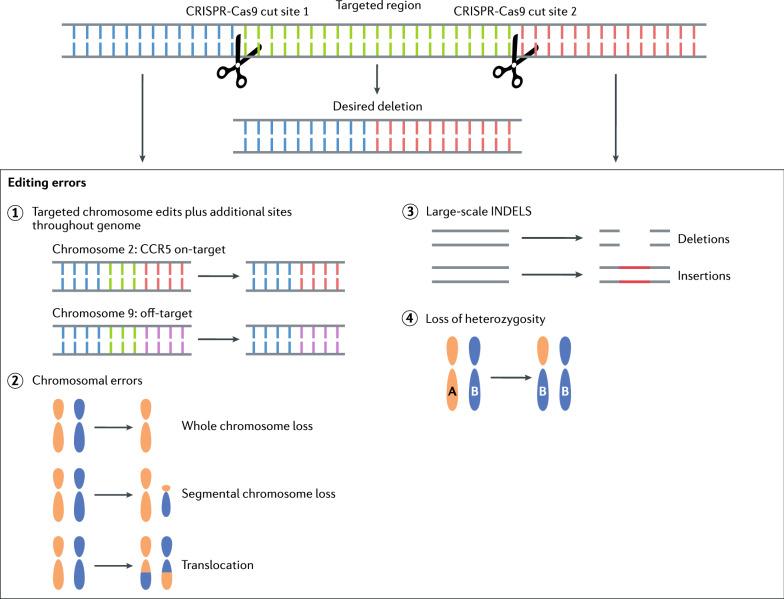
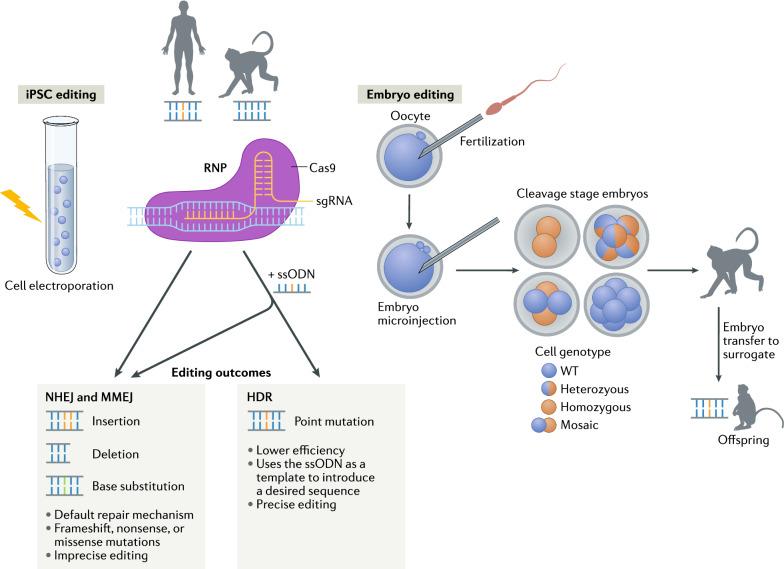
Nonhuman primates (NHPs) are well-established basic and translational research models for human immunodeficiency virus (HIV) infections and pathophysiology, hematopoietic stem cell (HSC) transplantation, and assisted reproductive technologies. Recent advances in CRISPR/Cas9 gene editing technologies present opportunities to refine NHP HIV models for investigating genetic factors that affect HIV replication and designing cellular therapies that exploit genetic barriers to HIV infections, including engineering mutations into CCR5 and conferring resistance to HIV/simian immunodeficiency virus (SIV) infections. In this report, we provide an overview of recent advances and challenges in gene editing NHP embryos and discuss the value of genetically engineered animal models for developing novel stem cell-based therapies for curing HIV.
非人类灵长类动物(NHPs)是研究人类免疫缺陷病毒(HIV)感染和发病机制、造血干细胞(HSC)移植和辅助生殖技术的成熟基础和转化研究模型。CRISPR/Cas9 基因编辑技术的最新进展为改进 NHP HIV 模型提供了机会,以研究影响 HIV 复制的遗传因素,并设计利用 HIV 感染的遗传障碍的细胞治疗方法,包括将突变工程引入 CCR5 并赋予对 HIV/猴免疫缺陷病毒(SIV)感染的抗性。在本报告中,我们提供了基因编辑 NHP 胚胎的最新进展和挑战的概述,并讨论了基因工程动物模型在开发新型基于干细胞的治疗 HIV 的方法中的价值。
 Zotero 插件