
利用染料/表面活性剂和猝灭技术组合对水中微塑料进行原位荧光照明
In Situ Fluorescent Illumination of Microplastics in Water Utilizing a Combination of Dye/Surfactant and Quenching Techniques.
作者信息
Park Doo Hong, Oh Se Bin, Hong Sung Chul
机构信息
HMC, Department of Nanotechnology and Advanced Materials Engineering, Sejong University, Seoul 143-747, Korea.
出版信息
Polymers (Basel). 2022 Jul 29;14(15):3084. doi: 10.3390/polym14153084.
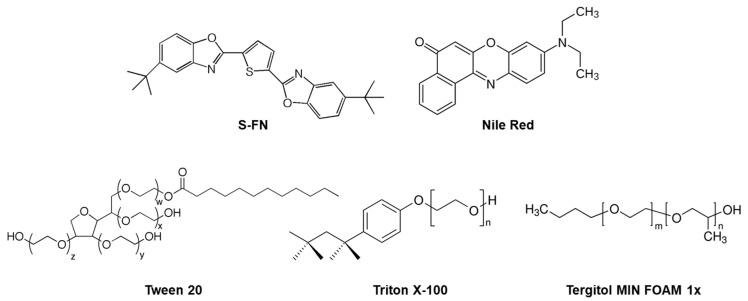
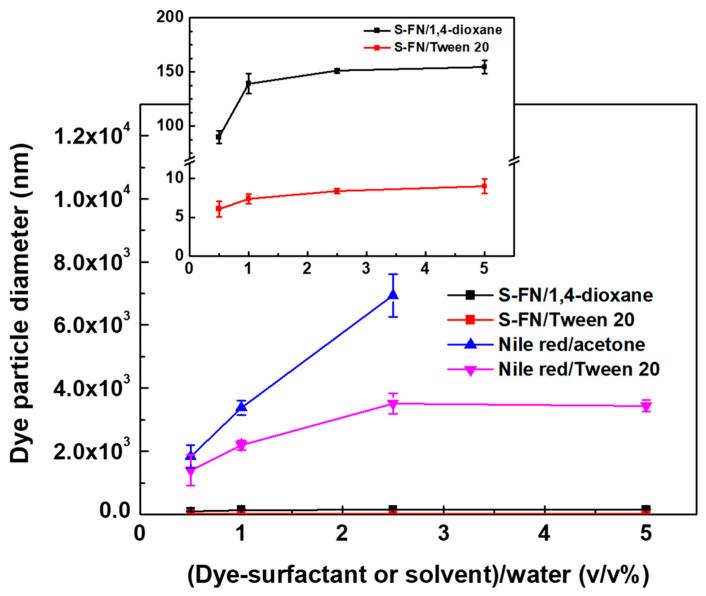
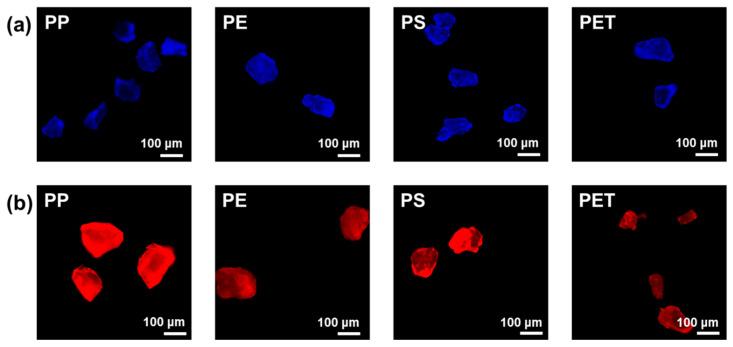
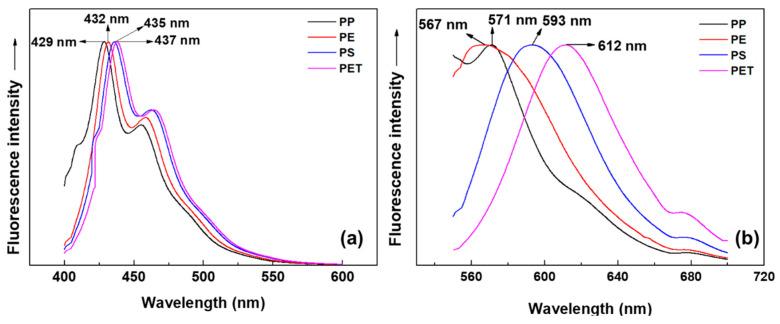
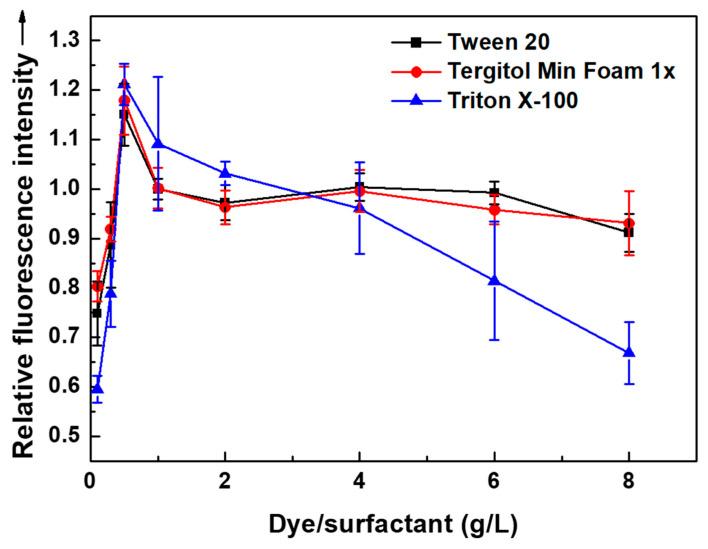
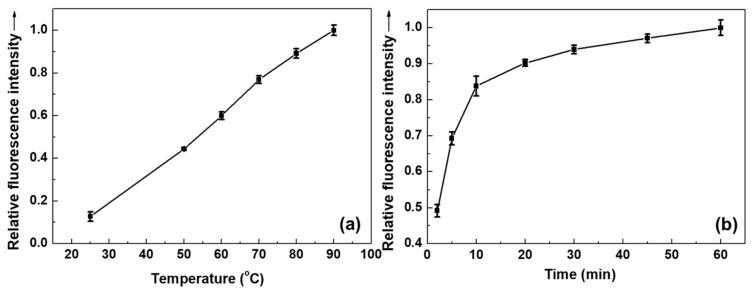
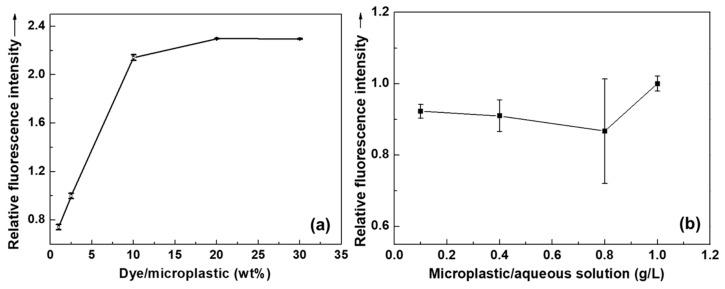
Although plastics have benefited our lives in terms of cost and convenience, the disposal of end-of-life plastics poses environmental problems, such as microplastics (MPs). Although the separation (e.g., filtration) and staining of MPs with fluorescent dye/solvent are generally accepted steps to observe MPs in an environmental matrix, in this study, an in situ selective fluorescent illumination of the MPs in water was attempted with the aid of surfactant. Nonpolar fluorescent dye in combination with surfactant affords nanometer-sized dye particles in water, which adsorb on MPs and penetrate the polymer matrix for effective staining and stable fluorescent behaviors. The effects of different staining parameters, including different dyes, surfactants, staining temperatures, staining times, dye/surfactant ratios, dye/MP ratios, and MP concentrations in aqueous solutions were investigated to better understand staining conditions. More interestingly, non-adsorbed free dye molecules in the staining solution were almost completely fluorescence-quenched by introducing the quenching agent, aniline, while the fluorescence intensity of the stained MP was maintained. By staining MPs with a dye/surfactant combination and subsequently quenching with aniline, in situ selective fluorescent illumination of the MPs in water was successfully achieved, which may eliminate the tedious separation/filtration procedure of MPs to accomplish the quick detection or monitoring of MPs.
尽管塑料在成本和便利性方面给我们的生活带来了益处,但废弃塑料的处理却引发了环境问题,比如微塑料(MPs)。虽然微塑料的分离(如过滤)以及用荧光染料/溶剂进行染色是在环境基质中观察微塑料时普遍认可的步骤,但在本研究中,尝试借助表面活性剂对水中的微塑料进行原位选择性荧光照射。非极性荧光染料与表面活性剂相结合,在水中形成纳米级染料颗粒,这些颗粒吸附在微塑料上并穿透聚合物基质,从而实现有效染色和稳定的荧光行为。研究了不同染色参数的影响,包括不同的染料、表面活性剂、染色温度、染色时间、染料/表面活性剂比例、染料/微塑料比例以及水溶液中的微塑料浓度,以便更好地了解染色条件。更有趣的是,通过引入猝灭剂苯胺,染色溶液中未吸附的游离染料分子几乎完全发生荧光猝灭,而被染色的微塑料的荧光强度得以保持。通过用染料/表面活性剂组合对微塑料进行染色,随后用苯胺猝灭,成功实现了水中微塑料的原位选择性荧光照射,这可能省去微塑料繁琐的分离/过滤程序,从而实现对微塑料的快速检测或监测。


 Zotero 插件