
SARS-CoV-2 的关注变异株:简要特征描述。
SARS-CoV-2's Variants of Concern: A Brief Characterization.
机构信息
Instituto de Microbiologia Paulo de Goes, Universidade federal do Rio de Janeiro, Rio de Janeiro, Brazil.
Instituto Oswaldo Cruz, FIOCRUZ, Rio de Janeiro, Brazil.
出版信息
Front Immunol. 2022 Jul 26;13:834098. doi: 10.3389/fimmu.2022.834098. eCollection 2022.
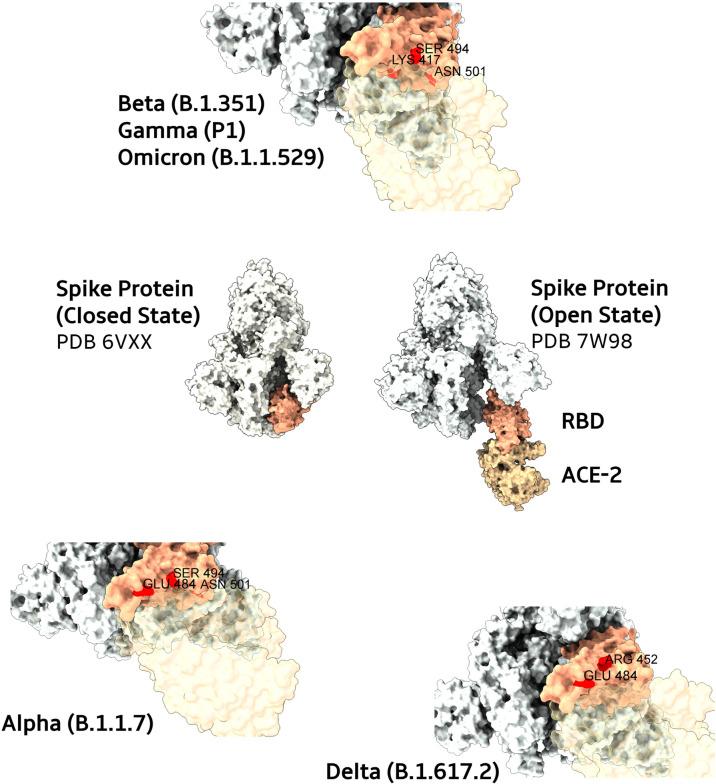
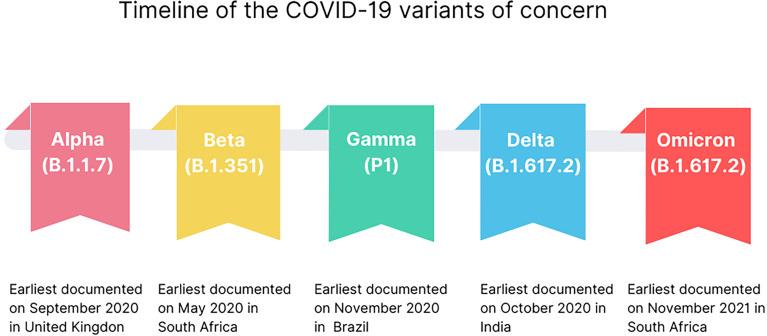
The severe acute respiratory syndrome coronavirus 2 (SARS-CoV-2) disclose the variants of concern (VOC) including Alpha (B.1.1.7), Beta (B.1.351), Gamma (P1), Delta (B.1.617.2), and Omicron (B.1.1.529). Its spike protein (S) present on the surface of the virus is recognized by the host cell receptor, the angiotensin-2 converting enzyme (ACE2) which promotes their entry into the cell. The mutations presented by VOCs are found in RBD and the N-terminal region of S protein. Therefore, mutations occurring in RBD can modify the biological and immunogenic characteristics of the virus, such as modifying the spike affinity for ACE2, increasing the virus transmissibility, or conferring the ability to escape the immune responses. The raise of a potential new SARS-CoV-2 variant capable of evading the host defenses at the same time maintaining its fitness justifies the importance of continued genetic monitoring of the pandemic coronavirus.
严重急性呼吸综合征冠状病毒 2 (SARS-CoV-2)揭示了令人关注的变种(VOC),包括 Alpha(B.1.1.7)、Beta(B.1.351)、Gamma(P1)、Delta(B.1.617.2)和奥密克戎(B.1.1.529)。其表面的刺突蛋白(S)被宿主细胞受体血管紧张素转化酶 2(ACE2)识别,从而促进它们进入细胞。VOC 中出现的突变存在于 RBD 和 S 蛋白的 N 端区域。因此,RBD 中发生的突变可以改变病毒的生物学和免疫原性特征,例如改变刺突与 ACE2 的亲和力、增加病毒的传染性,或赋予逃避免疫反应的能力。一种潜在的新型 SARS-CoV-2 变种有可能在保持其适应性的同时逃避宿主防御,这证明了持续监测大流行冠状病毒遗传变异的重要性。
 Zotero 插件