
短链碳源:利用多效性效应治疗心力衰竭
Short-Chain Carbon Sources: Exploiting Pleiotropic Effects for Heart Failure Therapy.
作者信息
Challa Azariyas A, Lewandowski E Douglas
机构信息
Division of Cardiovascular Medicine, The Ohio State University College of Medicine, Columbus, Ohio, USA.
Division of Endocrinology, Diabetes and Metabolism, Department of Internal Medicine, The Ohio State University College of Medicine, Columbus, Ohio, USA.
出版信息
JACC Basic Transl Sci. 2022 Mar 30;7(7):730-742. doi: 10.1016/j.jacbts.2021.12.010. eCollection 2022 Jul.
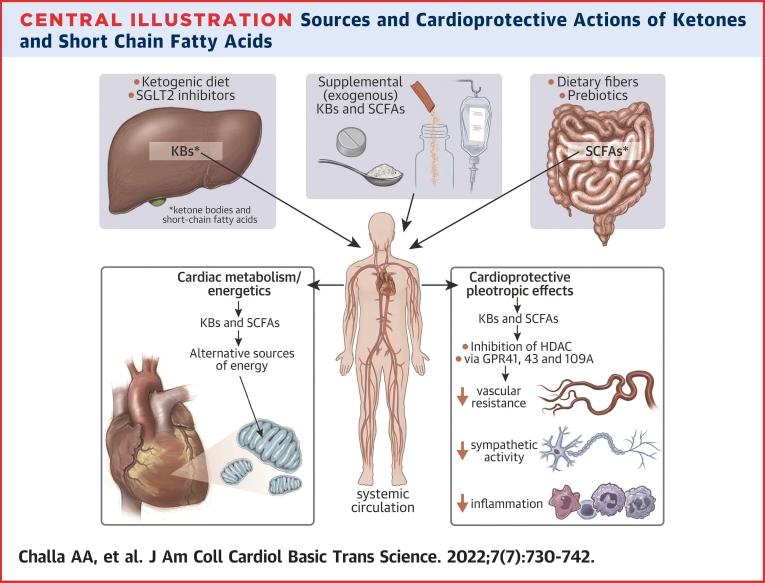
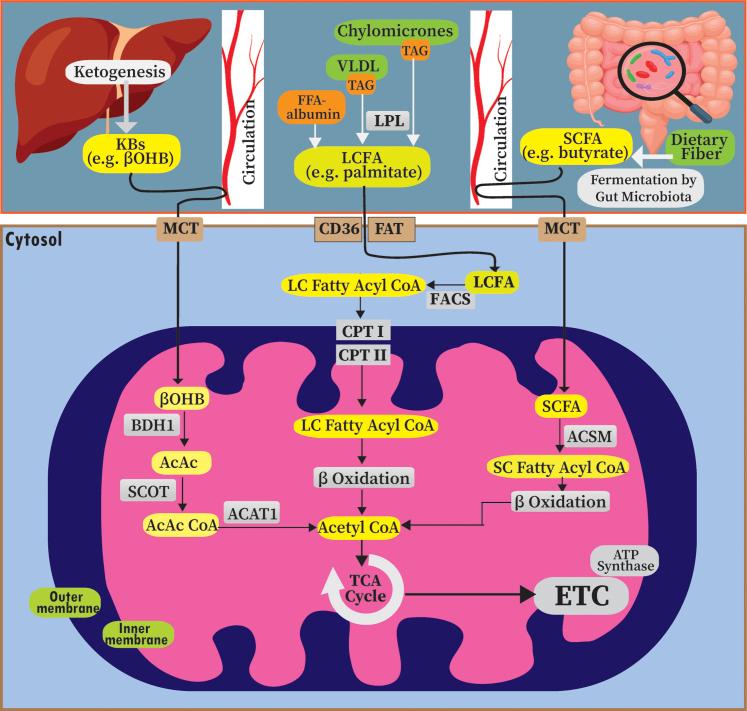
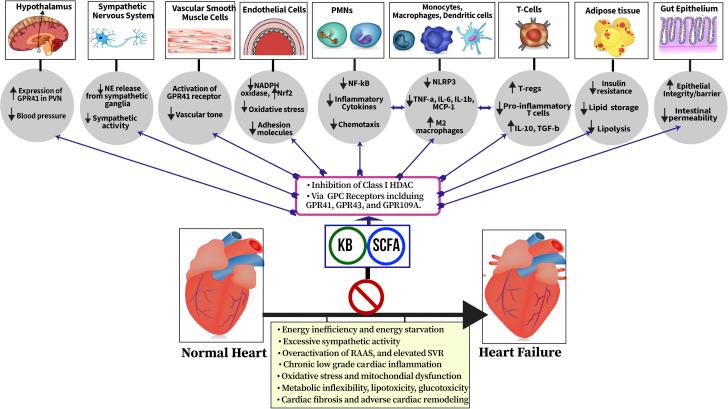
Heart failure (HF) remains the leading cause of morbidity and mortality in the developed world, highlighting the urgent need for novel, effective therapeutics. Recent studies support the proposition that improved myocardial energetics as a result of ketone body (KB) oxidation may account for the intriguing beneficial effects of sodium-glucose cotransporter-2 inhibitors in patients with HF. Similar small molecules, short-chain fatty acids (SCFAs) are now realized to be preferentially oxidized over KBs in failing hearts, contradicting the notion of KBs as a rescue "superfuel." In addition to KBs and SCFAs being alternative fuels, both exert a wide array of nonmetabolic functions, including molecular signaling and epigenetics and as effectors of inflammation and immunity, blood pressure regulation, and oxidative stress. In this review, the authors present a perspective supported by new evidence that the metabolic and unique nonmetabolic activities of KBs and SCFAs hold promise for treatment of patients with HF with reduced ejection fraction and those with HF with preserved ejection fraction.
心力衰竭(HF)仍然是发达国家发病和死亡的主要原因,这凸显了对新型有效治疗方法的迫切需求。最近的研究支持这样一种观点,即酮体(KB)氧化导致的心肌能量代谢改善可能是钠-葡萄糖协同转运蛋白2抑制剂对心力衰竭患者产生有趣有益作用的原因。类似的小分子,即短链脂肪酸(SCFA),现在发现在衰竭心脏中比酮体更优先被氧化,这与酮体作为一种救援“超级燃料”的概念相矛盾。除了作为替代燃料外,酮体和短链脂肪酸都具有广泛的非代谢功能,包括分子信号传导和表观遗传学,以及作为炎症和免疫、血压调节和氧化应激的效应器。在这篇综述中,作者提出了一个有新证据支持的观点,即酮体和短链脂肪酸的代谢及独特的非代谢活性有望用于治疗射血分数降低的心力衰竭患者和射血分数保留的心力衰竭患者。

 Zotero 插件