
嵌合抗原受体T细胞(CAR-T)受体患者重症监护病房(ICU)资源的使用:一项全院范围的研究
The use of ICU resources in CAR-T cell recipients: a hospital-wide study.
作者信息
Valade Sandrine, Darmon Michael, Zafrani Lara, Mariotte Eric, Lemiale Virginie, Bredin Swann, Dumas Guillaume, Boissel Nicolas, Rabian Florence, Baruchel André, Madelaine Isabelle, Larghero Jérôme, Brignier Anne, Lengliné Etienne, Harel Stéphanie, Arnulf Bertrand, Di Blasi Roberta, Thieblemont Catherine, Azoulay Elie
机构信息
AP-HP, Hôpital Saint-Louis, Medical ICU, 1 avenue Claude Vellefaux, 75010, Paris, France.
Université de Paris, Paris, France.
出版信息
Ann Intensive Care. 2022 Aug 17;12(1):75. doi: 10.1186/s13613-022-01036-2.
BACKGROUND
CAR-T cell (chimeric antigen receptor T) therapy has emerged as an effective treatment of refractory hematological malignancies. Intensive care management is intrinsic to CAR-T cell therapy. We aim to describe and to assess outcomes in critically ill CAR-T cell recipients.
STUDY DESIGN AND METHODS
Hospital-wide retrospective study. Consecutive CAR-T cell recipients requiring ICU admission from July 2017 and December 2020 were included.
RESULTS
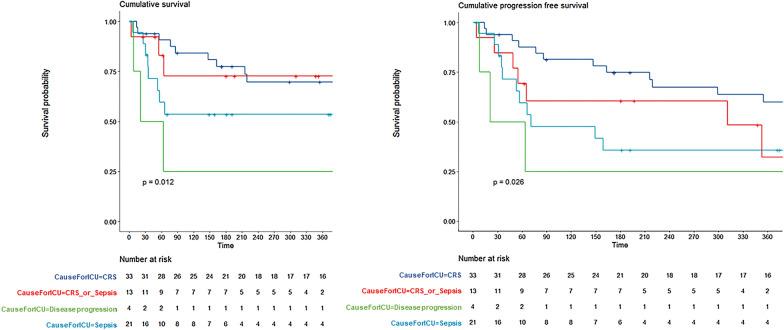
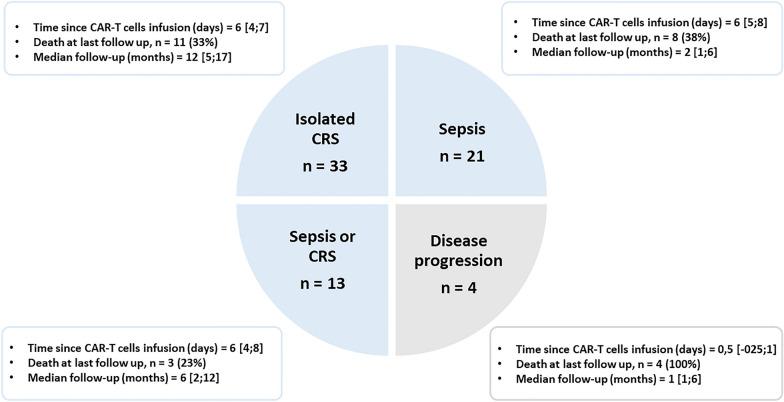
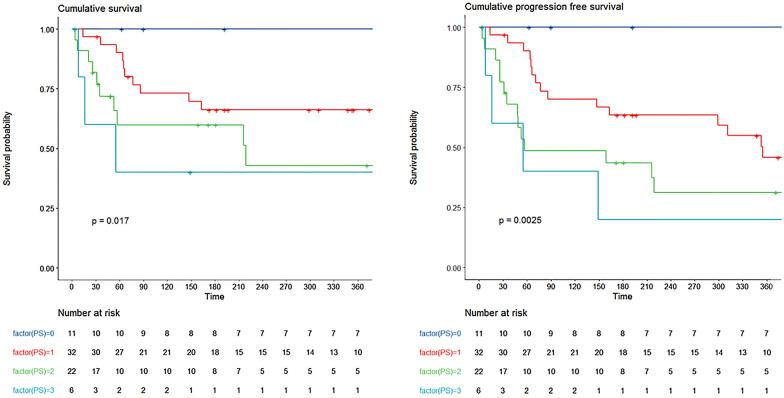
71 patients (median age 60 years [37-68]) were admitted to the ICU 6 days [4-7] after CAR-T cell infusion. Underlying malignancies included diffuse large B cell lymphoma (n = 53, 75%), acute lymphoblastic leukemia (17 patients, 24%) and multiple myeloma (n = 1, 1.45%). Performance status (PS) was 1 [1-2]. Shock was the main reason for ICU admission (n = 40, 48%). Isolated cytokine release syndrome (CRS) was the most common complication (n = 33, 46%), while 21 patients (30%) had microbiologically documented bacterial infection (chiefly catheter-related infection). Immune effector cell-associated neurotoxicity syndrome was reported in 26 (37%) patients. At ICU admission, vasopressors were required in 18 patients (25%) and invasive mechanical ventilation in two. Overall, 49 (69%) and 40 patients (56%) received tocilizumab or steroids, respectively. Determinant of mortality were the reason for ICU admission (disease progression vs. sepsis or CRS (HR 4.02 [95%CI 1.10-14.65]), Performance status (HR 1.97/point [95%CI 1.14-3.41]) and SOFA score (HR 1.16/point [95%CI 1.01-1.33]).
CONCLUSIONS
Meaningful survival could be achieved in up to half the CAR-T cell recipients. The severity of organ dysfunction is a major determinant of death, especially in patients with altered performance status or disease progression.
背景
嵌合抗原受体T细胞(CAR-T)疗法已成为难治性血液系统恶性肿瘤的有效治疗方法。重症监护管理是CAR-T细胞疗法不可或缺的一部分。我们旨在描述并评估危重症CAR-T细胞治疗接受者的治疗结果。
研究设计与方法
全院范围的回顾性研究。纳入2017年7月至2020年12月期间连续入住重症监护病房(ICU)的CAR-T细胞治疗接受者。
结果
71例患者(中位年龄60岁[37 - 68岁])在CAR-T细胞输注后6天[4 - 7天]入住ICU。基础恶性肿瘤包括弥漫性大B细胞淋巴瘤(n = 53,75%)、急性淋巴细胞白血病(17例,24%)和多发性骨髓瘤(n = 1,1.45%)。体能状态(PS)为1[1 - 2]。休克是入住ICU的主要原因(n = 40,48%)。孤立性细胞因子释放综合征(CRS)是最常见的并发症(n = 33,46%),而21例患者(30%)有微生物学证实的细菌感染(主要是导管相关感染)。26例(37%)患者报告有免疫效应细胞相关神经毒性综合征。入住ICU时,18例患者(25%)需要血管活性药物支持,2例需要有创机械通气。总体而言,分别有49例(69%)和40例(56%)患者接受了托珠单抗或类固醇治疗。死亡的决定因素包括入住ICU的原因(疾病进展与脓毒症或CRS相比(风险比[HR]4.02[95%置信区间(CI)1.10 - 14.65])、体能状态(HR 1.97/分[95%CI 1.14 - 3.41])和序贯器官衰竭评估(SOFA)评分(HR 1.16/分[95%CI 1.01 - 1.33])。
结论
多达一半的CAR-T细胞治疗接受者可实现有意义的生存。器官功能障碍的严重程度是死亡的主要决定因素,尤其是在体能状态改变或疾病进展的患者中。
 Zotero 插件