
蛋白质组学分析平台对比:利用遗传学和临床特征比较适体和抗体方法。
Proteomic profiling platforms head to head: Leveraging genetics and clinical traits to compare aptamer- and antibody-based methods.
机构信息
Division of Cardiovascular Medicine, Beth Israel Deaconess Medical Center, Boston, MA, USA.
Broad Institute of Harvard and MIT, Cambridge, MA, USA.
出版信息
Sci Adv. 2022 Aug 19;8(33):eabm5164. doi: 10.1126/sciadv.abm5164.
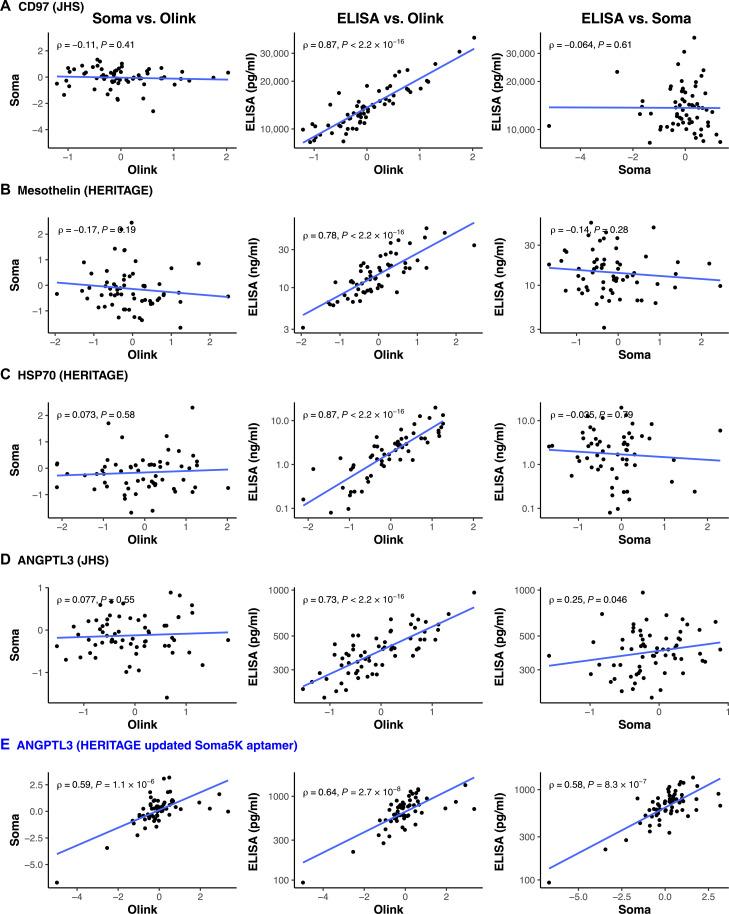
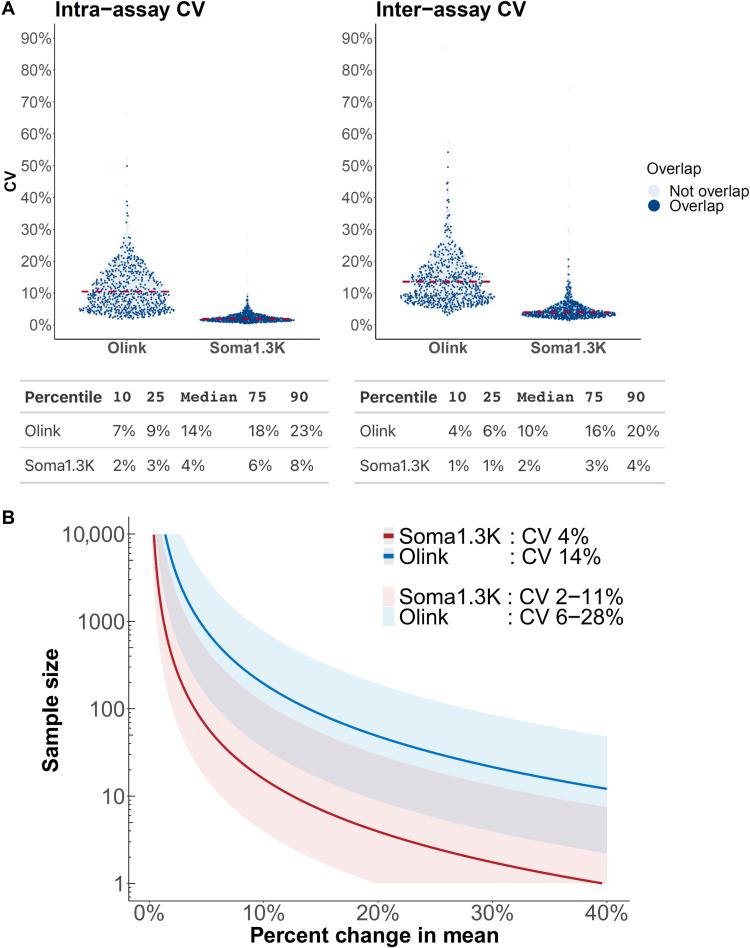
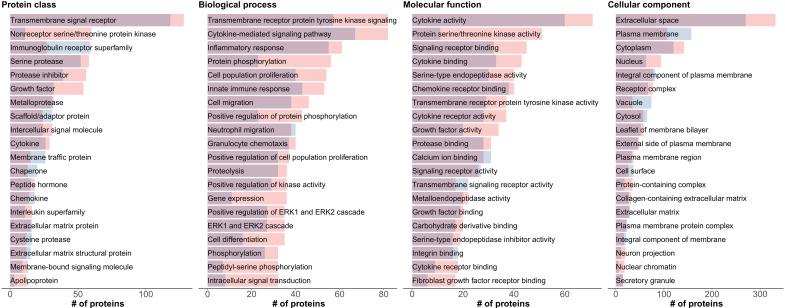
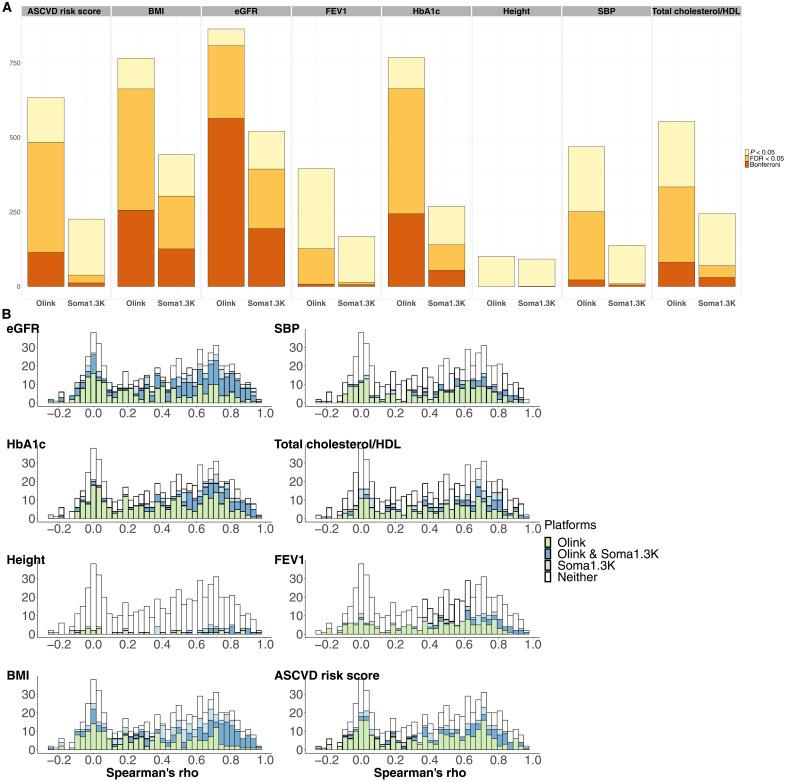
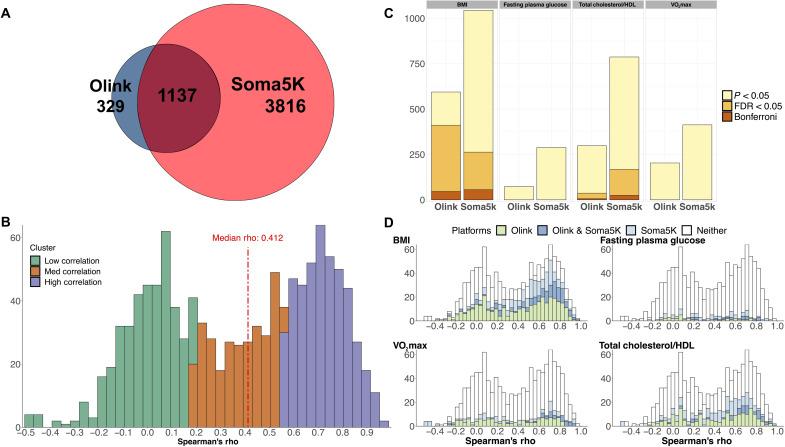
High-throughput proteomic profiling using antibody or aptamer-based affinity reagents is used increasingly in human studies. However, direct analyses to address the relative strengths and weaknesses of these platforms are lacking. We assessed findings from the SomaScan1.3K ( = 1301 reagents), the SomaScan5K platform ( = 4979 reagents), and the Olink Explore ( = 1472 reagents) profiling techniques in 568 adults from the Jackson Heart Study and 219 participants in the HERITAGE Family Study across four performance domains: precision, accuracy, analytic breadth, and phenotypic associations leveraging detailed clinical phenotyping and genetic data. Across these studies, we show evidence supporting more reliable protein target specificity and a higher number of phenotypic associations for the Olink platform, while the Soma platforms benefit from greater measurement precision and analytic breadth across the proteome.
基于抗体或适体的亲和力试剂的高通量蛋白质组学分析方法在人类研究中得到了越来越多的应用。然而,直接分析这些平台的相对优势和劣势的方法还缺乏。我们评估了 SomaScan1.3K(= 1301 种试剂)、SomaScan5K 平台(= 4979 种试剂)和 Olink Explore(= 1472 种试剂)在 568 名来自杰克逊心脏研究的成年人和 219 名来自 HERITAGE 家族研究的参与者中的发现,涵盖了四个性能领域:精度、准确性、分析广度和表型关联,利用详细的临床表型和遗传数据。在这些研究中,我们提供了支持 Olink 平台的更可靠的蛋白质靶特异性和更多表型关联的证据,而 Soma 平台则受益于更高的测量精度和整个蛋白质组的分析广度。



 Zotero 插件