
成人隐匿性自身免疫性糖尿病:关注β细胞保护和治疗。
Latent autoimmune diabetes in adults: a focus on β-cell protection and therapy.
机构信息
National Clinical Research Center for Metabolic Diseases, Key Laboratory of Diabetes Immunology (Central South University), Ministry of Education, and Department of Metabolism and Endocrinology, The Second Xiangya Hospital of Central South University, Changsha, China.
出版信息
Front Endocrinol (Lausanne). 2022 Aug 5;13:959011. doi: 10.3389/fendo.2022.959011. eCollection 2022.
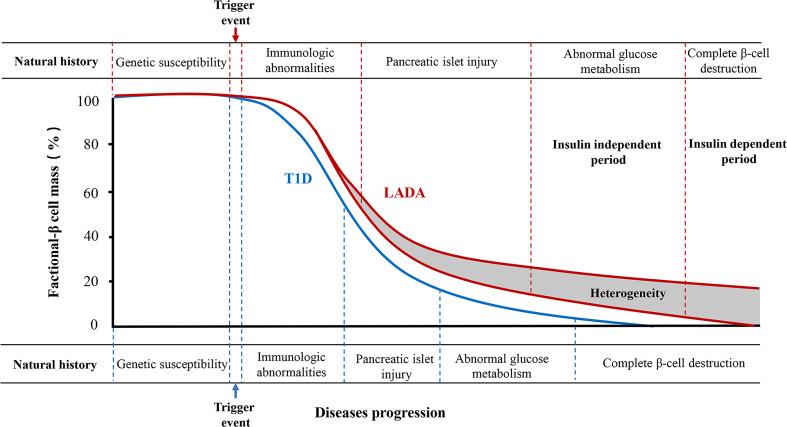
Latent autoimmune diabetes in adults (LADA) is a heterogeneous disease sharing some phenotypic, genetic, and immunological features with both type 1 and 2 diabetes. Patients with LADA have a relatively slow autoimmune process and more residual islet β-cell function at onset, allowing a time window to protect residual islet β cells and delay or inhibit disease progression. It is crucial to discover various heterogeneous factors affecting islet β-cell function for precise LADA therapy. In this review, we first describe the natural history of LADA. Thereafter, we summarize β-cell function-related heterogeneous factors in LADA, including the age of onset, body mass index, genetic background, and immune, lifestyle, and environmental factors. In parallel, we evaluate the impact of current hypoglycemic agents and immune intervention therapies for islet β-cell protection. Finally, we discuss the opportunities and challenges of LADA treatment from the perspective of islet β-cell function protection.
成人隐匿性自身免疫性糖尿病(LADA)是一种异质性疾病,与 1 型和 2 型糖尿病在表型、遗传和免疫学特征上具有一定的相似性。LADA 患者的自身免疫过程相对较慢,在发病时β细胞功能仍有一定残留,这为保护残余β细胞和延缓或抑制疾病进展提供了时间窗口。发现影响β细胞功能的各种异质性因素对于 LADA 的精准治疗至关重要。本综述首先描述了 LADA 的自然病程,然后总结了与β细胞功能相关的异质性因素,包括发病年龄、体重指数、遗传背景以及免疫、生活方式和环境因素等。同时,我们评估了目前用于保护β细胞的降糖药物和免疫干预治疗的效果。最后,我们从β细胞功能保护的角度探讨了 LADA 治疗的机遇与挑战。

 Zotero 插件