
Vδ2 T 细胞与膀胱癌患者的良好临床结果相关,其肿瘤反应性可以通过卡介苗和唑来膦酸治疗来增强。
Vδ2 T cells are associated with favorable clinical outcomes in patients with bladder cancer and their tumor reactivity can be boosted by BCG and zoledronate treatments.
机构信息
Urology Research Unit and Urology Biobank, Department of Urology, Centre Hospitalier Universitaire Vaudois, Lausanne, Switzerland.
INSERM U976, HIPI Unit (Human Immunology, Pathophysiology and Immunotherapy), Hôpital Saint-Louis, Paris, France.
出版信息
J Immunother Cancer. 2022 Aug;10(8). doi: 10.1136/jitc-2022-004880.
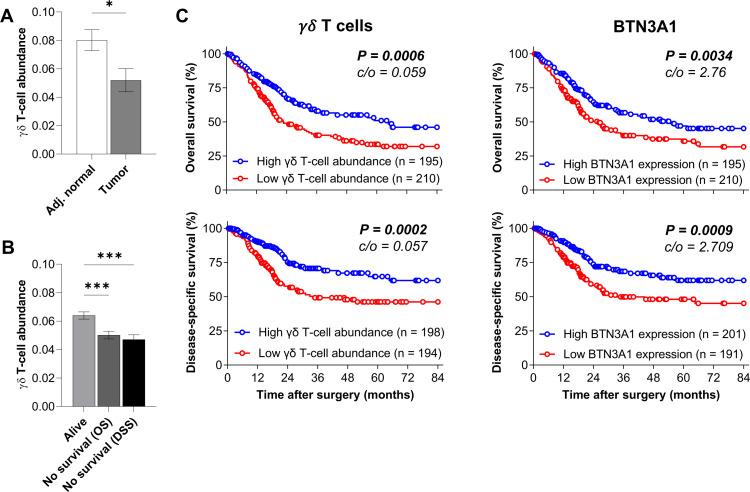
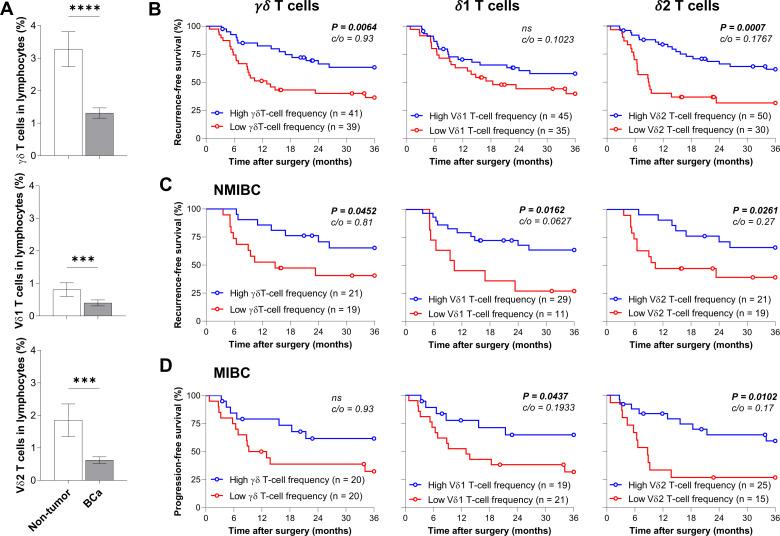
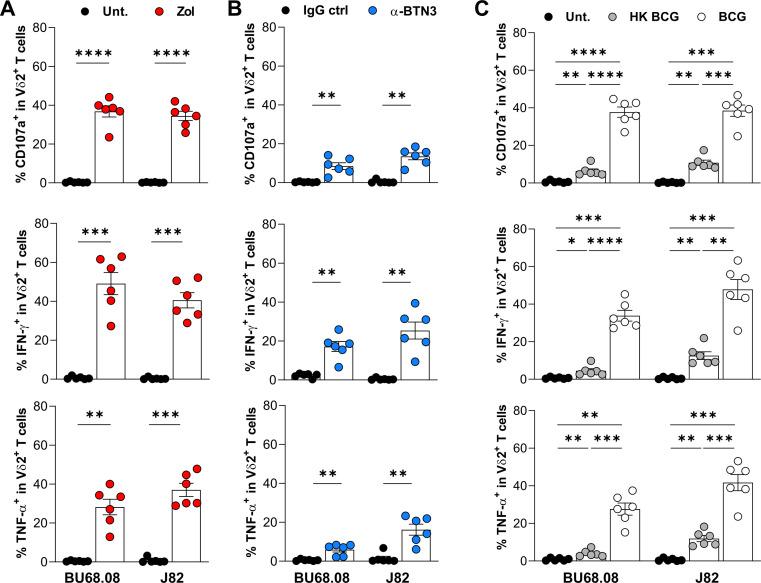
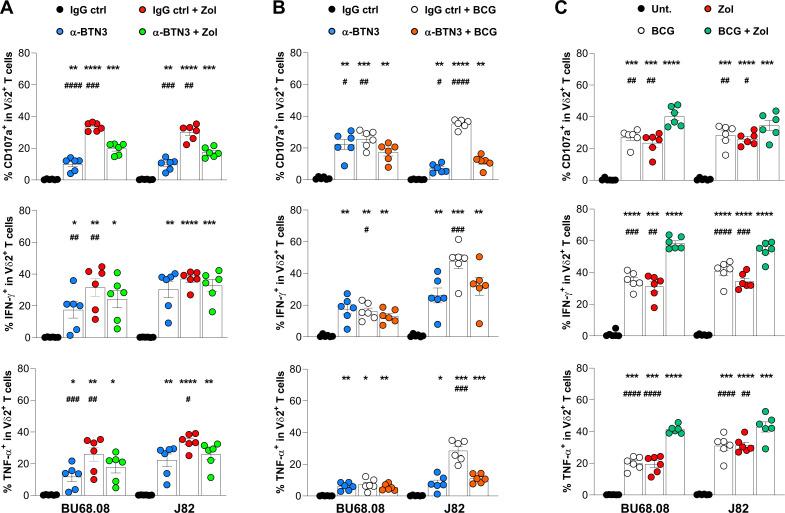
Bladder cancer is an important public health concern due to its prevalence, high risk of recurrence and associated cost of management. Although BCG instillation for urothelial cancer treatment is the gold-standard treatment for this indication, repeated BCG treatments are associated with significant toxicity and failure, underlining the necessity for alternative or complementary immunotherapy and overall for better understanding of T-cell responses generated within bladder mucosa. Tumor-infiltrating lymphocytes (TIL) have long been recognized as a crucial component of the tumor microenvironment for the control of tumor. Among TIL, unconventional γδ T cells sparked interest due to their potent antitumor functions. Although preclinical mouse xenograft models demonstrated the relevance of using γδ T cells as a novel therapy for bladder cancer (BCa), the contribution of γδ T cells in BCa patients' pathology remains unaddressed. Therefore, we first determined the proportion of intratumor γδ T cells in muscle-invasive patients with BCa by deconvoluting data from The Cancer Genome Atlas (TCGA) and the frequency of blood Vδ1, Vδ2, and total γδ T cells, by flow cytometry, from 80 patients with BCa (40 non-muscle and 40 muscle-invasive patients with BCa), as well as from 20 age-matched non-tumor patients. Then we investigated in vitro which treatment may promote BCa tumor cell recognition by γδ T cells. We observed a decrease of γδ T-cell abundance in the tumor compared with corresponding normal adjacent tissue, suggesting that the tumor microenvironment may alter γδ T cells. Yet, high intratumor γδ T-cell proportions were significantly associated with better patient survival outcomes, potentially due to Vδ2 T cells. In the blood of patients with BCa, we observed a lower frequency of total γδ, Vδ1, and Vδ2 T cells compared with non-tumor patients, similarly to the TCGA analysis. In addition, a favorable clinical outcome is associated with a high frequency of circulating γδ T cells, which might be mainly attributed to the Vδ2 T-cell subset. Furthermore, in vitro assays revealed that either BCG, Zoledronate, or anti-BTN3 agonistic antibody treatment of bladder tumor cells induced Vδ2 T-cell cytolytic (CD107a) and cytokine-production (IFN-γ and TNF-α). Strikingly, combining BCG and Zoledronate treatments significantly elicited the most quantitative and qualitative response by increasing the frequency and the polyfunctionality of bladder tumor-reactive Vδ2 T cells. Overall, our results suggest that (1) Vδ2 T cells might play a prominent role in bladder tumor control and (2) non-muscle invasive patients with BCa undergoing BCG therapy may benefit from Zoledronate administration by boosting Vδ2 T cells' antitumor activity.
膀胱癌是一个重要的公共卫生关注点,因为它的发病率高、复发风险高,以及管理费用高昂。虽然卡介苗(BCG)灌注治疗尿路上皮癌是该适应症的金标准治疗方法,但重复的 BCG 治疗与显著的毒性和失败相关,这突显了需要替代或补充免疫疗法,以及更好地了解膀胱黏膜中产生的 T 细胞反应。肿瘤浸润淋巴细胞(TIL)长期以来一直被认为是控制肿瘤的肿瘤微环境的重要组成部分。在 TIL 中,非常规的 γδ T 细胞因其强大的抗肿瘤功能而引起关注。尽管临床前小鼠异种移植模型表明使用 γδ T 细胞作为膀胱癌(BCa)的新型治疗方法具有相关性,但 γδ T 细胞在 BCa 患者病理中的作用仍未得到解决。因此,我们首先通过解卷积来自癌症基因组图谱(TCGA)的数据,确定了肌层浸润性膀胱癌患者肿瘤内 γδ T 细胞的比例,并通过流式细胞术从 80 名膀胱癌患者(40 名非肌肉和 40 名肌肉浸润性膀胱癌患者)以及 20 名年龄匹配的非肿瘤患者中确定了血液 Vδ1、Vδ2 和总 γδ T 细胞的频率。然后,我们研究了哪种治疗方法可能促进 γδ T 细胞对 BCa 肿瘤细胞的识别。我们观察到与相应的正常邻近组织相比,肿瘤中 γδ T 细胞的丰度降低,这表明肿瘤微环境可能改变 γδ T 细胞。然而,高肿瘤内 γδ T 细胞比例与患者更好的生存结局显著相关,这可能归因于 Vδ2 T 细胞。在膀胱癌患者的血液中,我们观察到总 γδ、Vδ1 和 Vδ2 T 细胞的频率与非肿瘤患者相比均降低,与 TCGA 分析相似。此外,高循环 γδ T 细胞频率与有利的临床结局相关,这可能主要归因于 Vδ2 T 细胞亚群。此外,体外实验表明,BCG、唑来膦酸或抗 BTN3 激动性抗体处理膀胱肿瘤细胞诱导 Vδ2 T 细胞细胞溶解(CD107a)和细胞因子产生(IFN-γ 和 TNF-α)。值得注意的是,BCG 和唑来膦酸联合治疗通过增加膀胱肿瘤反应性 Vδ2 T 细胞的频率和多功能性,显著引发了最定量和定性的反应。总体而言,我们的研究结果表明:(1)Vδ2 T 细胞可能在膀胱肿瘤控制中发挥突出作用;(2)接受 BCG 治疗的非肌层浸润性膀胱癌患者通过增强 Vδ2 T 细胞的抗肿瘤活性,可能受益于唑来膦酸的给药。

 Zotero 插件