
两剂蛋白亚单位疫苗 MVC-COV1901 初免后加强接种多剂 mRNA 疫苗可增强针对新型 SARS-CoV-2 变异株的体液和细胞免疫应答。
Boosting with Multiple Doses of mRNA Vaccine after Priming with Two Doses of Protein Subunit Vaccine MVC-COV1901 Elicited Robust Humoral and Cellular Immune Responses against Emerging SARS-CoV-2 Variants.
机构信息
Division of Infectious Diseases and Tropical Medicine, Department of Internal Medicine, Tri-Service General Hospitalgrid.278244.f, National Defense Medical Centergrid.260565.2, Taipei, Taiwan.
Institute of Preventive Medicine, National Defense Medical Centergrid.260565.2, Taipei, Taiwan.
出版信息
Microbiol Spectr. 2022 Oct 26;10(5):e0060922. doi: 10.1128/spectrum.00609-22. Epub 2022 Aug 25.
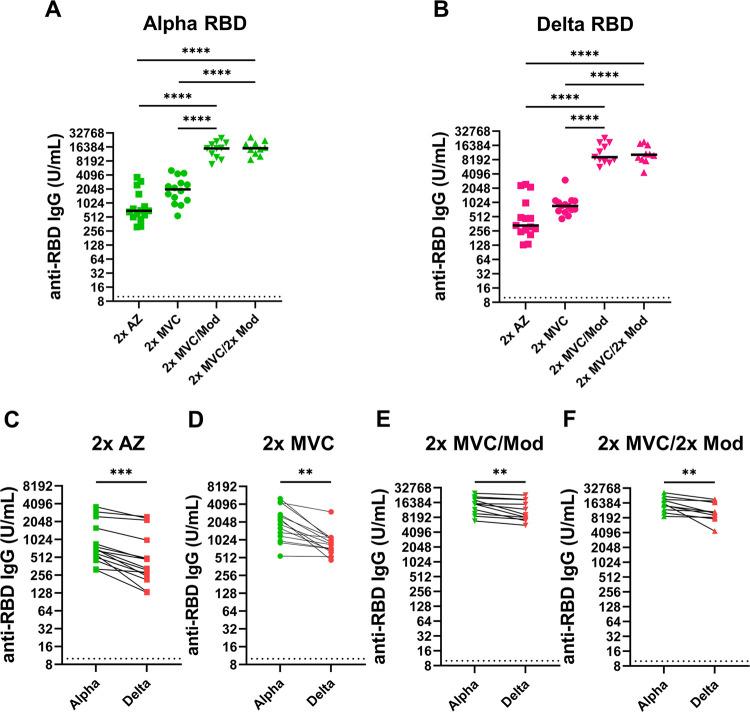
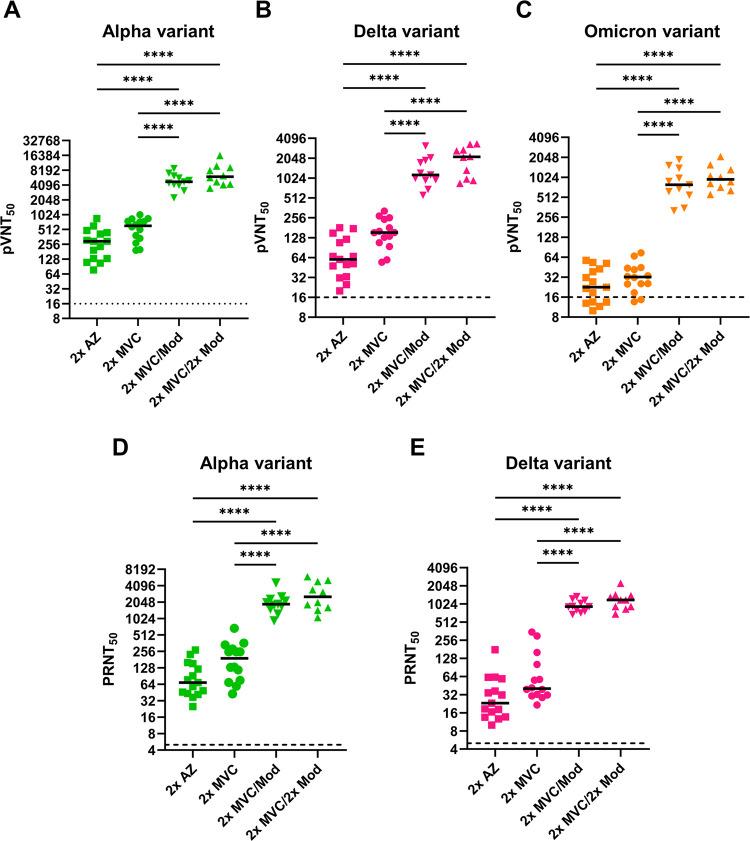
Confronted with severe acute respiratory syndrome coronavirus 2 (SARS-CoV-2) variants, such as Delta and Omicron, with high infectivity and immune evasion capacity, vaccination remains the most effective tool to prevent infection and severe illness. However, heterologous vaccination of mRNA vaccines primed with protein subunit vaccines had not been evaluated before the current study. Since subunit vaccine MVC-COV1901 (MVC) has been granted emergency use authorization in Taiwan, in this study, we explored the humoral and cellular immune responses to additional third (2× MVC/Mod) and fourth (2× MVC/2× Mod) doses of mRNA-1273 (Mod) after priming with two doses of subunit vaccine MVC against the emerging variants. We found a 12.3- to 16.1-fold increase in antibodies targeting the receptor binding domain (RBD) of the Delta variant with 2× MVC/Mod compared to two doses of MVC (2× MVC) or AZD1222 (2× AZ) regimens and a 26- to 32.2-fold improvement in neutralizing potency against the Omicron variant (BA.1). Besides, the numbers of gamma interferon (IFN-γ)-secreting T cells induced by 2× MVC/Mod were also elevated 3.5-fold and 3.7- to 4.3-fold for the wild type and Delta variant. However, boosting with a fourth dose of Mod (2× MVC/2× Mod) after the 2× MVC/Mod regimen failed to significantly improve the immune responses. Moreover, all vaccination schedules showed reduced neutralizing activity against the Omicron variant. Collectively, our results suggested that the third or fourth dose booster vaccination with mRNA vaccine after priming with two doses of protein subunit vaccine could elicit stronger humoral and cellular immune responses. These findings could provide a future global heterologous boosting strategy against COVID-19. Vaccination is the most important strategy to combat the COVID-19 outbreak; however, it remains to be determined whether heterologous prime-boost regimens could induce equal or even stronger immune responses against SARS-CoV-2. Here, we showed that boosting the additional doses of mRNA-1273 (Mod) priming with two doses of MVC-COV1901 (MVC) (2× MVC/Mod) improved humoral and cellular immunity compared to two doses of AZD1222 (2× AZ) or MVC (2× MVC) against SARS-CoV-2 variants. However, the Omicron variant showed strong immune evasion ability for all vaccination schedules. Our findings provided evidence supporting that heterologous vaccination by boosting with mRNA vaccine after priming with two doses of protein subunit vaccine could strongly promote humoral and cellular immune responses against the emerging SARS-CoV-2 variants.
面对具有高传染性和免疫逃逸能力的严重急性呼吸综合征冠状病毒 2(SARS-CoV-2)变体,如 Delta 和奥密克戎,接种疫苗仍然是预防感染和重症的最有效手段。然而,在这项研究之前,尚未评估过基于蛋白质亚单位疫苗的 mRNA 疫苗的异源接种。由于台湾已批准使用亚单位疫苗 MVC-COV1901(MVC),因此在这项研究中,我们探索了在针对新兴变体接种两剂 MVC 后,再接种三剂(2×MVC/Mod)和四剂(2×MVC/2×Mod)mRNA-1273(Mod)的体液和细胞免疫反应。我们发现,与两剂 MVC(2×MVC)或 AZD1222(2×AZ)方案相比,两剂 MVC/Mod 可使针对 Delta 变异株受体结合域(RBD)的抗体增加 12.3 至 16.1 倍,并且对奥密克戎变异株(BA.1)的中和效力提高了 26 至 32.2 倍。此外,2×MVC/Mod 方案还可使针对野生型和 Delta 变异株的γ干扰素(IFN-γ)分泌 T 细胞数量增加 3.5 倍和 3.7 至 4.3 倍。然而,在 2×MVC/Mod 方案后再接种第四剂 Mod(2×MVC/2×Mod)并不能显著提高免疫反应。此外,所有接种方案对奥密克戎变异株的中和活性均降低。总的来说,我们的结果表明,在两剂蛋白质亚单位疫苗接种后,使用 mRNA 疫苗进行第三或第四剂加强免疫可引起更强的体液和细胞免疫反应。这些发现可以为未来针对 COVID-19 的全球异源加强策略提供参考。疫苗接种是应对 COVID-19 爆发的最重要策略;然而,异源主-辅免疫方案是否能诱导出针对 SARS-CoV-2 的同等甚至更强的免疫反应仍有待确定。在这里,我们表明,与两剂 AZD1222(2×AZ)或 MVC(2×MVC)相比,用两剂 MVC-COV1901(MVC)(2×MVC/Mod)对 mRNA-1273(Mod)进行加强免疫,可改善针对 SARS-CoV-2 变异株的体液和细胞免疫。然而,所有接种方案对奥密克戎变异株均显示出较强的免疫逃逸能力。我们的研究结果为以下观点提供了证据支持:在两剂蛋白质亚单位疫苗接种后,使用 mRNA 疫苗进行异源加强免疫可强烈促进针对新兴 SARS-CoV-2 变异株的体液和细胞免疫反应。

 Zotero 插件