
miRNA与mRNA共表达的整合揭示了免疫原性癌细胞死亡中调控的关键机制。
Integration of miRNA:mRNA Co-Expression Revealed Crucial Mechanisms Modulated in Immunogenic Cancer Cell Death.
作者信息
Lamberti María Julia, Montico Barbara, Ravo Maria, Nigro Annunziata, Giurato Giorgio, Iorio Roberta, Tarallo Roberta, Weisz Alessandro, Stellato Cristiana, Steffan Agostino, Dolcetti Riccardo, Casolaro Vincenzo, Faè Damiana Antonia, Dal Col Jessica
机构信息
Department of Medicine, Surgery and Dentistry "Scuola Medica Salernitana", University of Salerno, 84081 Baronissi, SA, Italy.
INBIAS, CONICET-UNRC, Río Cuarto, Córdoba 5800, Argentina.
出版信息
Biomedicines. 2022 Aug 5;10(8):1896. doi: 10.3390/biomedicines10081896.
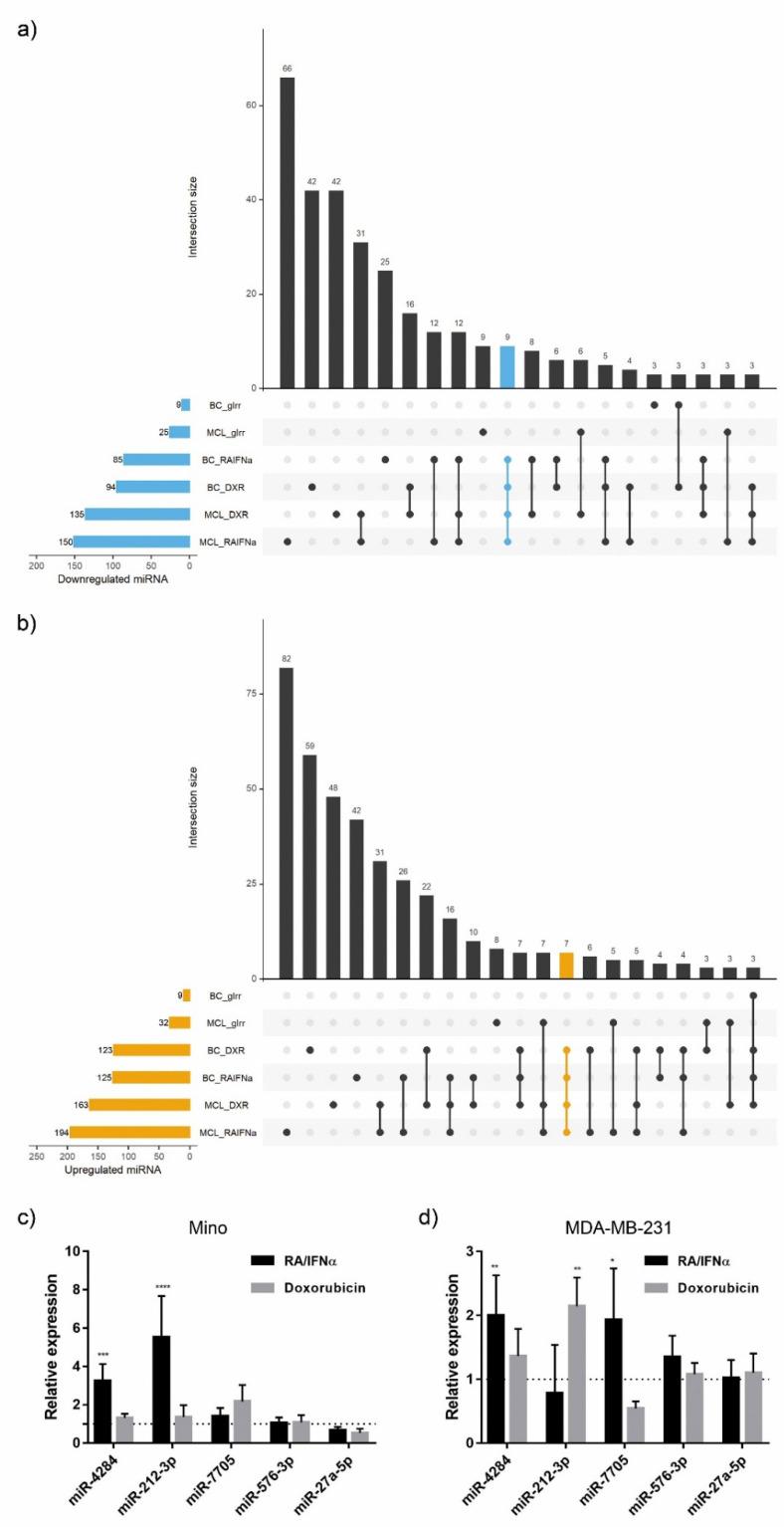
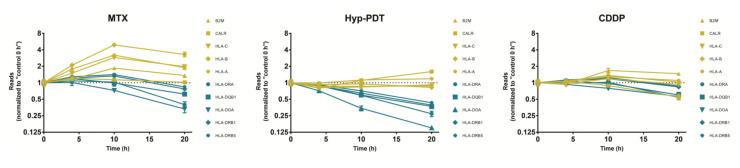
Immunogenic cell death (ICD) in cancer represents a functionally unique therapeutic response that can induce tumor-targeting immune responses. ICD is characterized by the exposure and release of numerous damage-associated molecular patterns (DAMPs), which confer adjuvanticity to dying cancer cells. The spatiotemporally defined emission of DAMPs during ICD has been well described, whereas the epigenetic mechanisms that regulate ICD hallmarks have not yet been deeply elucidated. Here, we aimed to examine the involvement of miRNAs and their putative targets using well-established in vitro models of ICD. To this end, B cell lymphoma (Mino) and breast cancer (MDA-MB-231) cell lines were exposed to two different ICD inducers, the combination of retinoic acid (RA) and interferon-alpha (IFN-α) and doxorubicin, and to non ICD inducers such as gamma irradiation. Then, miRNA and mRNA profiles were studied by next generation sequencing. Co-expression analysis identified 16 miRNAs differentially modulated in cells undergoing ICD. Integrated miRNA-mRNA functional analysis revealed candidate miRNAs, mRNAs, and modulated pathways associated with Immune System Process (GO Term). Specifically, ICD induced a distinctive transcriptional signature hallmarked by regulation of antigen presentation, a crucial step for proper activation of immune system antitumor response. Interestingly, the major histocompatibility complex class I (MHC-I) pathway was upregulated whereas class II (MHC-II) was downregulated. Analysis of MHC-II associated transcripts and HLA-DR surface expression confirmed inhibition of this pathway by ICD on lymphoma cells. miR-4284 and miR-212-3p were the strongest miRNAs upregulated by ICD associated with this event and miR-212-3p overexpression was able to downregulate surface expression of HLA-DR. It is well known that MHC-II expression on tumor cells facilitates the recruitment of CD4+ T cells. However, the interaction between tumor MHC-II and inhibitory coreceptors on tumor-associated lymphocytes could provide an immunosuppressive signal that directly represses effector cytotoxic activity. In this context, MHC-II downregulation by ICD could enhance antitumor immunity. Overall, we found that the miRNA profile was significantly altered during ICD. Several miRNAs are predicted to be involved in the regulation of MHC-I and II pathways, whose implication in ICD is demonstrated herein for the first time, which could eventually modulate tumor recognition and attack by the immune system.
癌症中的免疫原性细胞死亡(ICD)代表一种功能独特的治疗反应,可诱导针对肿瘤的免疫反应。ICD的特征是大量损伤相关分子模式(DAMP)的暴露和释放,这些分子模式赋予垂死癌细胞佐剂活性。ICD过程中DAMP的时空定义性释放已得到充分描述,而调节ICD特征的表观遗传机制尚未得到深入阐明。在此,我们旨在使用成熟的ICD体外模型研究miRNA及其假定靶点的参与情况。为此,将B细胞淋巴瘤(Mino)和乳腺癌(MDA-MB-231)细胞系暴露于两种不同的ICD诱导剂,视黄酸(RA)和干扰素-α(IFN-α)的组合以及阿霉素,以及非ICD诱导剂如γ射线照射。然后,通过下一代测序研究miRNA和mRNA谱。共表达分析确定了16种在经历ICD的细胞中差异调节的miRNA。整合的miRNA-mRNA功能分析揭示了与免疫系统过程(GO术语)相关的候选miRNA、mRNA和调节途径。具体而言,ICD诱导了一种独特的转录特征,其标志是抗原呈递的调节,这是免疫系统抗肿瘤反应正确激活的关键步骤。有趣的是,主要组织相容性复合体I类(MHC-I)途径上调,而II类(MHC-II)途径下调。对MHC-II相关转录本和HLA-DR表面表达的分析证实了ICD对淋巴瘤细胞该途径的抑制作用。miR-4284和miR-212-3p是ICD上调的与该事件相关的最强miRNA,miR-212-3p的过表达能够下调HLA-DR的表面表达。众所周知,肿瘤细胞上的MHC-II表达促进CD4+T细胞的募集。然而,肿瘤MHC-II与肿瘤相关淋巴细胞上的抑制性共受体之间的相互作用可能提供一种免疫抑制信号,直接抑制效应细胞毒性活性。在这种情况下,ICD导致的MHC-II下调可增强抗肿瘤免疫力。总体而言,我们发现ICD过程中miRNA谱发生了显著改变。预计有几种miRNA参与MHC-I和II途径的调节,本文首次证明了它们在ICD中的作用,这最终可能调节免疫系统对肿瘤的识别和攻击。




 Zotero 插件