
自噬在感染性、阻塞性和恶性气道疾病中的多方面作用
The Multifaceted Roles of Autophagy in Infectious, Obstructive, and Malignant Airway Diseases.
作者信息
Carinci Marianna, Palumbo Laura, Pellielo Giulia, Agyapong Esther Densu, Morciano Giampaolo, Patergnani Simone, Giorgi Carlotta, Pinton Paolo, Rimessi Alessandro
机构信息
Laboratory for Technologies of Advanced Therapies, Section of Experimental Medicine, Department of Medical Sciences, University of Ferrara, 44121 Ferrara, Italy.
Center of Research for Innovative Therapies in Cystic Fibrosis, University of Ferrara, Via Fossato di Mortara, 70, 44121 Ferrara, Italy.
出版信息
Biomedicines. 2022 Aug 11;10(8):1944. doi: 10.3390/biomedicines10081944.
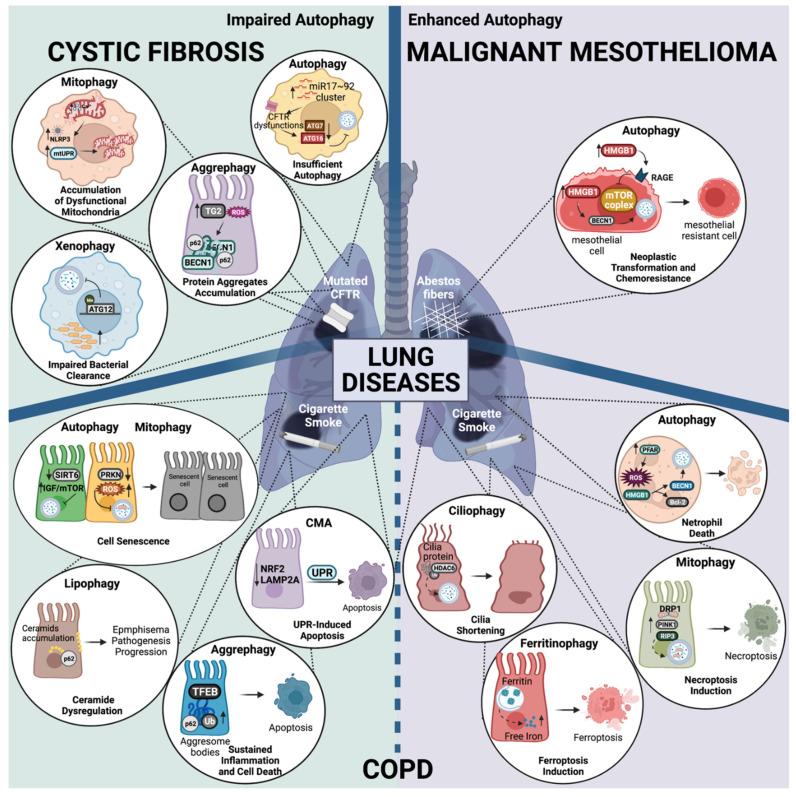
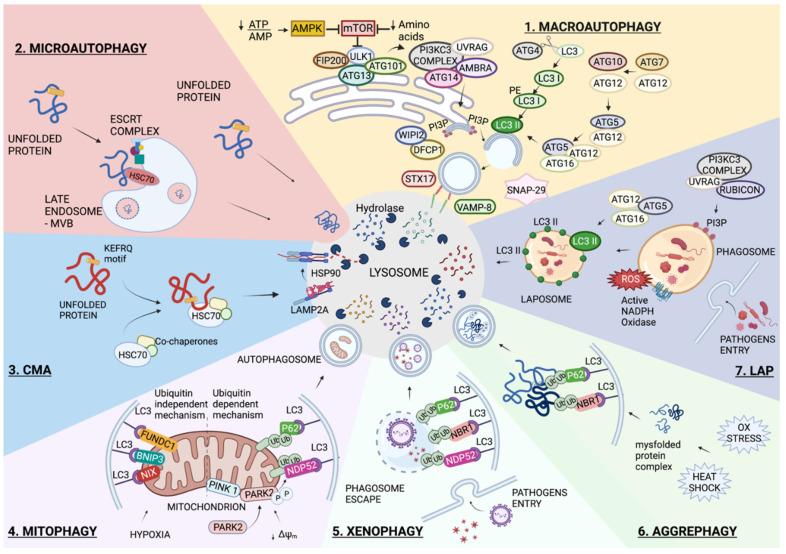
Autophagy is a highly conserved dynamic process by which cells deliver their contents to lysosomes for degradation, thus ensuring cell homeostasis. In response to environmental stress, the induction of autophagy is crucial for cell survival. The dysregulation of this degradative process has been implicated in a wide range of pathologies, including lung diseases, representing a relevant potential target with significant clinical outcomes. During lung disease progression and infections, autophagy may exert both protective and harmful effects on cells. In this review, we will explore the implications of autophagy and its selective forms in several lung infections, such as SARS-CoV-2, Respiratory Syncytial Virus (RSV) and (Mtb) infections, and different lung diseases such as Cystic Fibrosis (CF), Chronic Obstructive Pulmonary Disease (COPD), and Malignant Mesothelioma (MM).
自噬是一个高度保守的动态过程,通过该过程细胞将其内容物输送到溶酶体进行降解,从而确保细胞内环境稳定。响应环境应激时,自噬的诱导对细胞存活至关重要。这种降解过程的失调与多种病理状况有关,包括肺部疾病,这使其成为具有重大临床意义的相关潜在靶点。在肺部疾病进展和感染过程中,自噬可能对细胞产生保护和有害两种作用。在本综述中,我们将探讨自噬及其选择性形式在几种肺部感染(如严重急性呼吸综合征冠状病毒2(SARS-CoV-2)、呼吸道合胞病毒(RSV)和结核分枝杆菌(Mtb)感染)以及不同肺部疾病(如囊性纤维化(CF)、慢性阻塞性肺疾病(COPD)和恶性间皮瘤(MM))中的意义。

 Zotero 插件