
综合代谢组学和转录组学分析揭示了黄烷酮生物合成对 MeJA 响应的调控网络。
Integrative Metabolome and Transcriptome Analysis Reveals the Regulatory Network of Flavonoid Biosynthesis in Response to MeJA in Huang.
机构信息
Key Laboratory for Quality Regulation of Tropical Horticultural Plants of Hainan Province, College of Horticulture, Hainan University, Haikou 570228, China.
Ministry of Education Key Laboratory for Ecology of Tropical Islands, College of Life Sciences, Hainan Normal University, Haikou 571158, China.
出版信息
Int J Mol Sci. 2022 Aug 19;23(16):9370. doi: 10.3390/ijms23169370.
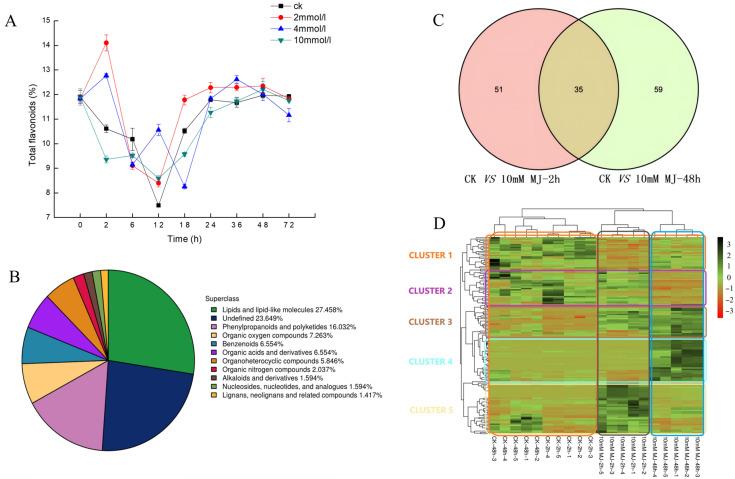
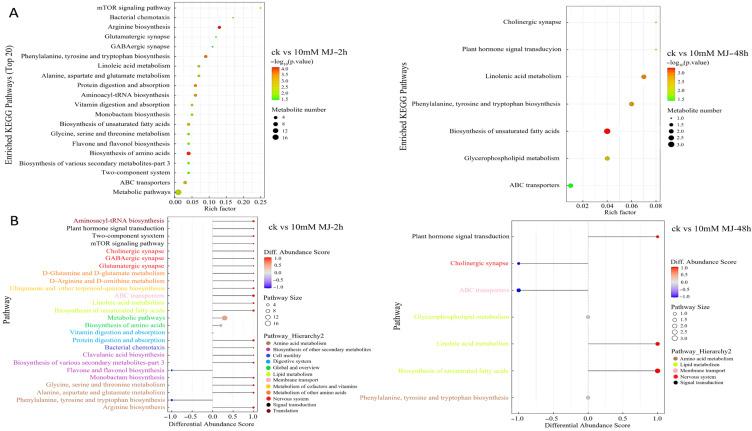
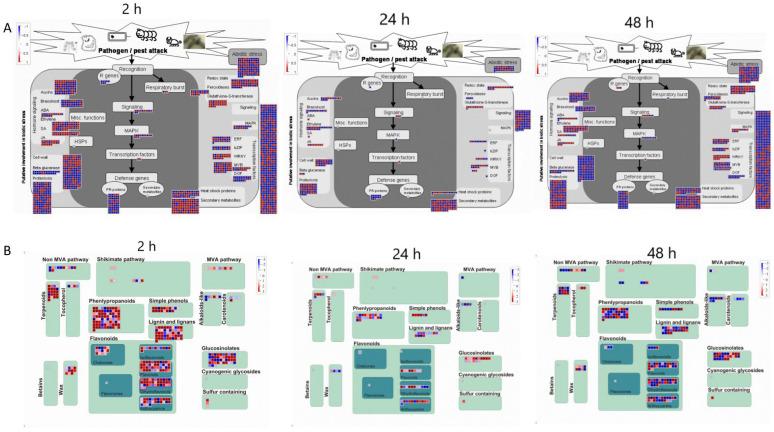
Flavonoids are secondary metabolites widely found in plants, which perform various biological activities, such as antiinflammation, antioxidation, antitumor, and so on. Huang, a species of oil-tea tree, is an important woody oil crop species widely planted on Hainan Island, which provides health benefits with its high antioxidant activity and abundant flavonoid content. However, very little is known about the overall molecular mechanism of flavonoid biosynthesis in Huang. In this study, methyl jasmonate (MeJA) is used as an inducer to change the content of secondary metabolites in . Then, the potential mechanisms of flavonoid biosynthesis in leaves in response to MeJA were analyzed by metabolomics and transcriptomics (RNA sequencing). The results showed that metabolome analysis detected 104 flavonoids and 74 fatty acyls which showed different expression patterns (increased or decreased expression). It was discovered by KEGG analysis that three differentially accumulated metabolites (cinnamaldehyde, kaempferol and quercitrin) were annotated in the phenylpropanoid biosynthesis (ko00940), flavonoid biosynthesis (ko00941), and flavone and flavonol biosynthesis (ko00944) pathways. In the transcriptome analysis, 35 different genes involved in the synthesis of flavonoids were identified by MapMan analysis. The key genes (, , , , , , ) that might be involved in the formation of flavonoid were highly expressed after 2 h of MeJA treatment. This study provides new insights and data supporting the molecular mechanism underlying the metabolism and synthesis of flavonoids in under MeJA treatment.
类黄酮是广泛存在于植物中的次生代谢物,具有多种生物活性,如抗炎、抗氧化、抗肿瘤等。黄烷酮是一种油茶,是一种重要的木本油料作物,广泛种植于海南岛,因其具有高抗氧化活性和丰富的类黄酮含量而具有健康益处。然而,对于黄烷酮中类黄酮生物合成的整体分子机制知之甚少。本研究以茉莉酸甲酯(MeJA)作为诱导剂,改变 中次生代谢物的含量。然后,通过代谢组学和转录组学(RNA 测序)分析黄烷酮生物合成对 MeJA 的潜在机制。结果表明,代谢组学分析检测到 104 种类黄酮和 74 种脂肪酸酰基,它们表现出不同的表达模式(表达增加或减少)。通过 KEGG 分析发现,三种差异积累代谢物(肉桂醛、山奈酚和槲皮苷)被注释在苯丙素生物合成(ko00940)、类黄酮生物合成(ko00941)和黄酮和黄酮醇生物合成(ko00944)途径中。在转录组分析中,通过 MapMan 分析鉴定出 35 个参与类黄酮合成的不同基因。关键基因(、、、、、、)在 MeJA 处理 2 小时后高度表达,可能参与类黄酮的形成。本研究为黄烷酮在 MeJA 处理下的代谢和合成的分子机制提供了新的见解和数据支持。





 Zotero 插件