
拟钙剂在治疗与慢性肾脏病相关的骨与矿物质紊乱中的作用。
Role of Calcimimetics in Treating Bone and Mineral Disorders Related to Chronic Kidney Disease.
作者信息
Hou Yi-Chou, Zheng Cai-Mei, Chiu Hui-Wen, Liu Wen-Chih, Lu Kuo-Cheng, Lu Chien-Lin
机构信息
Division of Nephrology, Department of Medicine, Cardinal-Tien Hospital, School of Medicine, Fu-Jen Catholic University, New Taipei City 24205, Taiwan.
Division of Nephrology, Department of Internal Medicine, Shuang Ho Hospital, School of Medicine, College of Medicine, Taipei Medical University, New Taipei City 11031, Taiwan.
出版信息
Pharmaceuticals (Basel). 2022 Jul 31;15(8):952. doi: 10.3390/ph15080952.
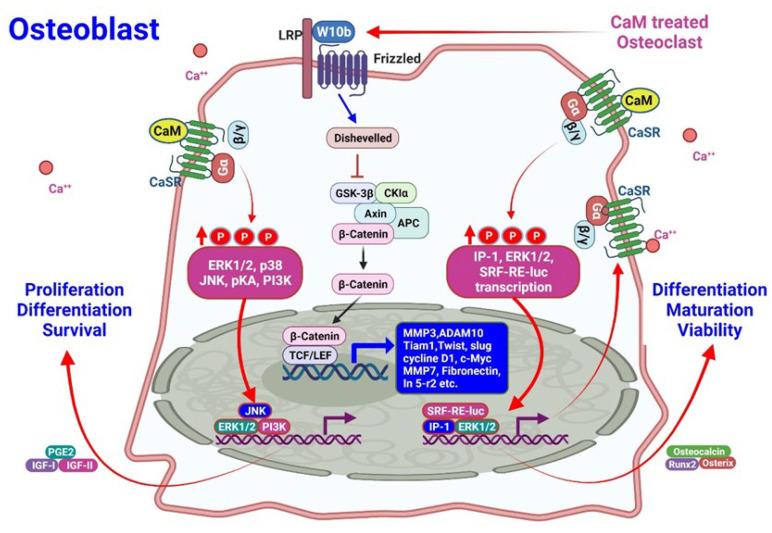
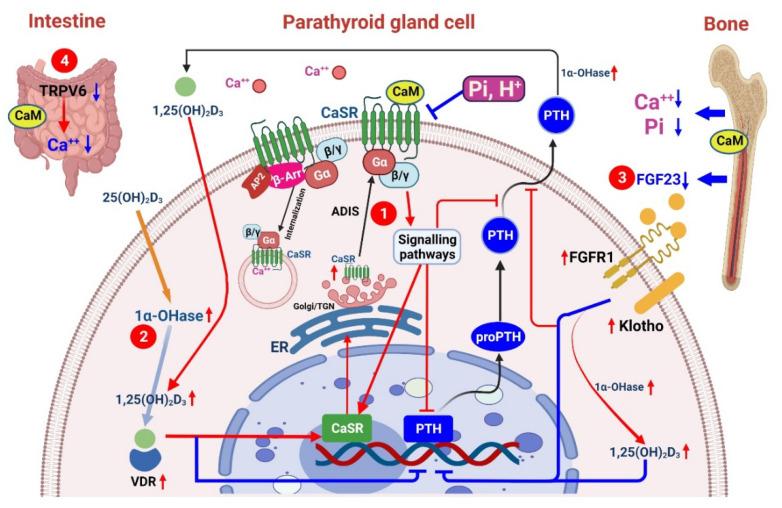
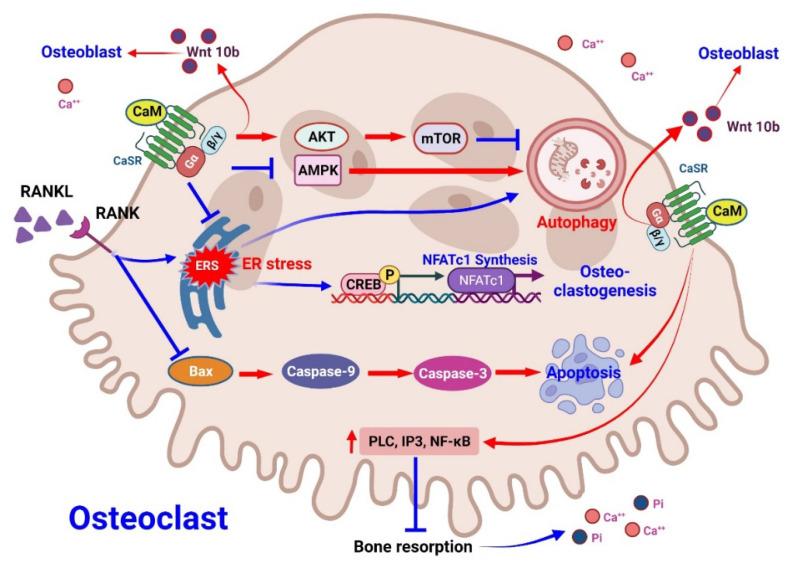
Renal osteodystrophy is common in patients with chronic kidney disease and end-stage renal disease and leads to the risks of fracture and extraosseous vascular calcification. Secondary hyperparathyroidism (SHPT) is characterized by a compensatory increase in parathyroid hormone (PTH) secretion in response to decreased renal phosphate excretion, resulting in potentiating bone resorption and decreased bone quantity and quality. Calcium-sensing receptors (CaSRs) are group C G-proteins and negatively regulate the parathyroid glands through (1) increasing CaSR insertion within the plasma membrane, (2) increasing 1,25-dihydroxy vitamin D3 within the kidney and parathyroid glands, (3) inhibiting fibroblast growth factor 23 (FGF23) in osteocytes, and (4) attenuating intestinal calcium absorption through Transient Receptor Potential Vanilloid subfamily member 6 (TRPV6). Calcimimetics (CaMs) decrease PTH concentrations without elevating the serum calcium levels or extraosseous calcification through direct interaction with cell membrane CaSRs. CaMs reduce osteoclast activity by reducing stress-induced oxidative autophagy and improving Wnt-10b release, which promotes the growth of osteoblasts and subsequent mineralization. CaMs also directly promote osteoblast proliferation and survival. Consequently, bone quality may improve due to decreased bone resorption and improved bone formation. CaMs modulate cardiovascular fibrosis, calcification, and renal fibrosis through different mechanisms. Therefore, CaMs assist in treating SHPT. This narrative review focuses on the role of CaMs in renal osteodystrophy, including their mechanisms and clinical efficacy.
肾性骨营养不良在慢性肾脏病和终末期肾病患者中很常见,并导致骨折和骨外血管钙化的风险。继发性甲状旁腺功能亢进(SHPT)的特征是甲状旁腺激素(PTH)分泌因肾磷酸盐排泄减少而代偿性增加,导致骨吸收增强以及骨量和骨质量下降。钙敏感受体(CaSRs)是C类G蛋白,通过以下方式对甲状旁腺进行负调节:(1)增加CaSR在质膜内的插入;(2)增加肾脏和甲状旁腺内的1,25-二羟基维生素D3;(3)抑制骨细胞中的成纤维细胞生长因子23(FGF23);(4)通过瞬时受体电位香草酸亚家族成员6(TRPV6)减弱肠道钙吸收。拟钙剂(CaMs)通过与细胞膜CaSRs直接相互作用降低PTH浓度,而不升高血清钙水平或骨外钙化。CaMs通过减少应激诱导的氧化自噬和改善Wnt-10b释放来降低破骨细胞活性,从而促进成骨细胞生长及随后的矿化。CaMs还直接促进成骨细胞增殖和存活。因此,由于骨吸收减少和骨形成改善,骨质量可能会提高。CaMs通过不同机制调节心血管纤维化、钙化和肾纤维化。因此,CaMs有助于治疗SHPT。本叙述性综述重点关注CaMs在肾性骨营养不良中的作用,包括其机制和临床疗效。
 Zotero 插件