
大麻二酚与两种内源性大麻素激活的G蛋白偶联受体的差异活性的相互作用结合见解和构象后果。
Interacting binding insights and conformational consequences of the differential activity of cannabidiol with two endocannabinoid-activated G-protein-coupled receptors.
作者信息
Dávila Eliud Morales, Patricio Felipe, Rebolledo-Bustillo Mariana, Garcia-Gomez David, Hernandez Juan Carlos Garcia, Sanchez-Gaytan Brenda L, Limón Ilhuicamina Daniel, Perez-Aguilar Jose Manuel
机构信息
School of Chemical Sciences, Meritorious Autonomous University of Puebla (BUAP), University City, Puebla, Mexico.
Neuropharmacology Laboratory, School of Chemical Sciences, Meritorious Autonomous University of Puebla (BUAP), University City, Puebla, Mexico.
出版信息
Front Pharmacol. 2022 Aug 9;13:945935. doi: 10.3389/fphar.2022.945935. eCollection 2022.
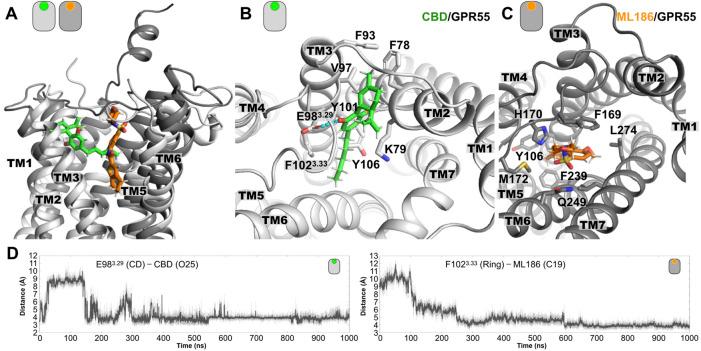
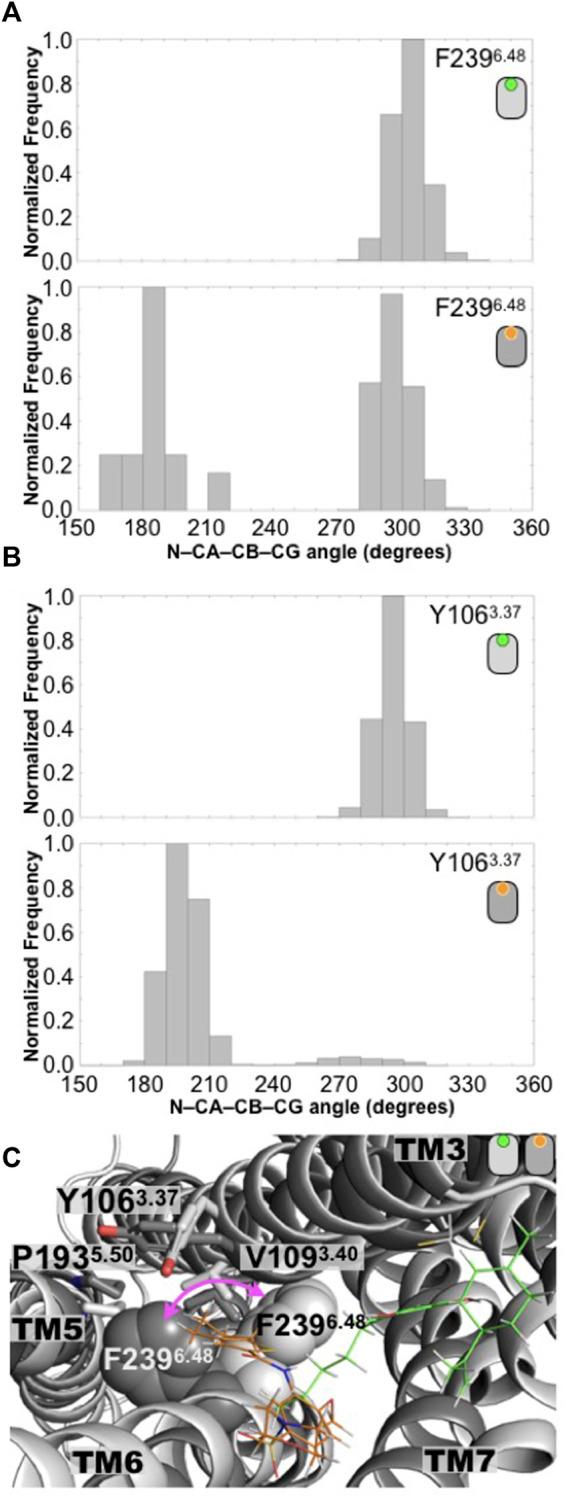
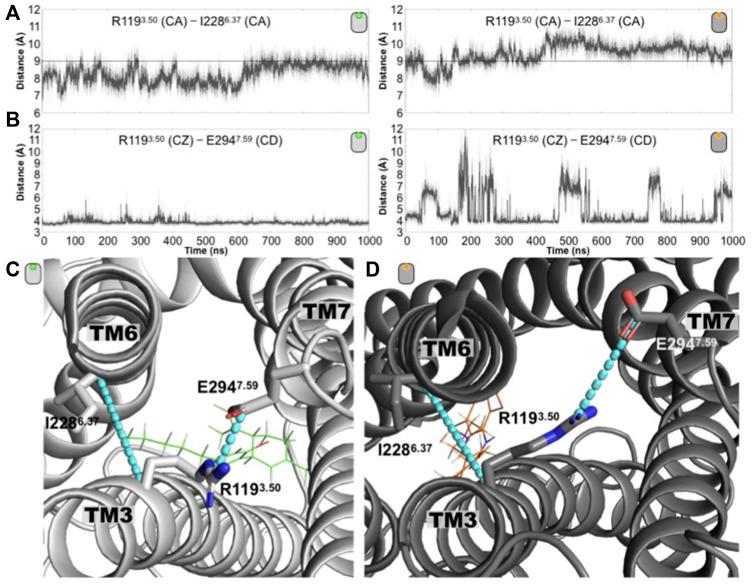
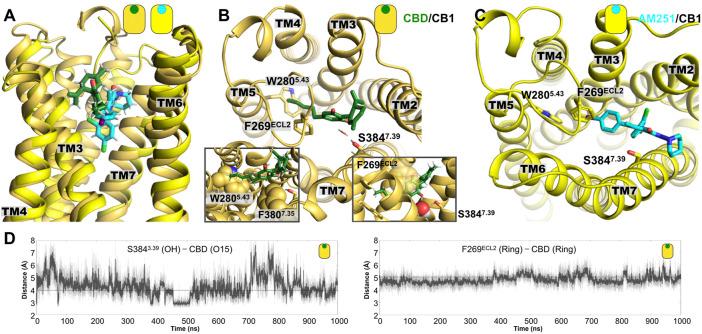
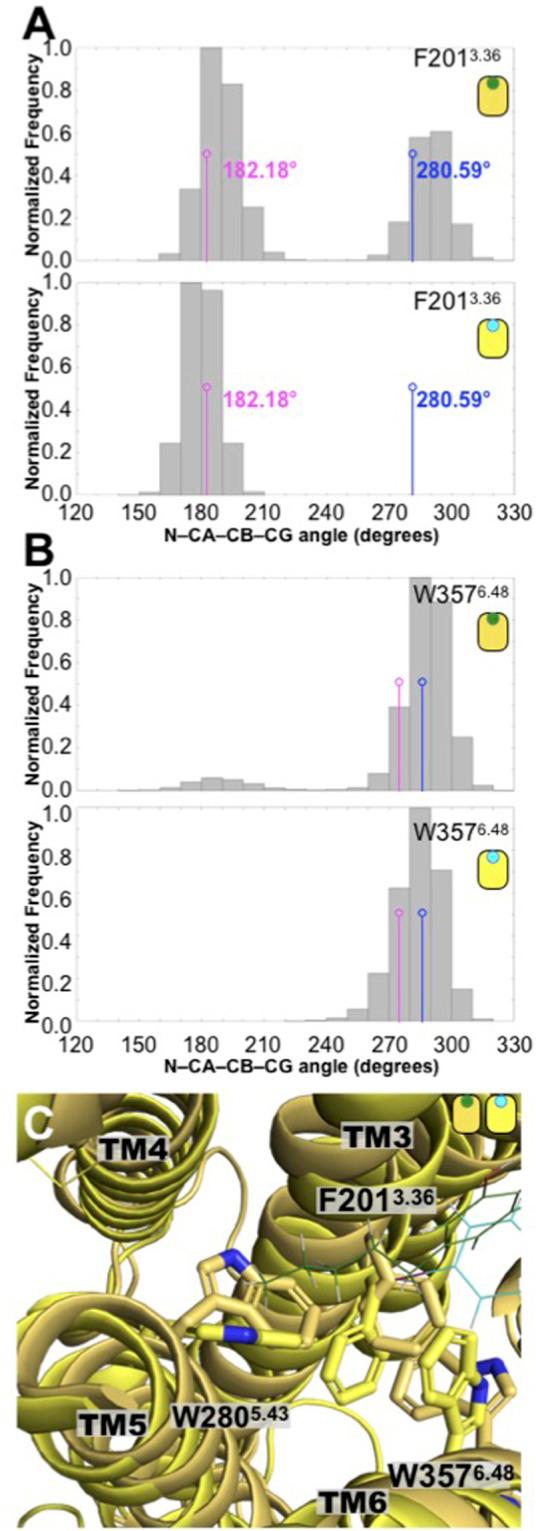
Cannabidiol (CBD), the major non-psychoactive phytocannabinoid present in the plant has displayed beneficial pharmacological effects in the treatment of several neurological disorders including, epilepsy, Parkinson's disease, and Alzheimer's disease. In particular, CBD is able to modulate different receptors in the endocannabinoid system, some of which belong to the family of G-protein-coupled receptors (GPCRs). Notably, while CBD is able to antagonize some GPCRs in the endocannabinoid system, it also seems to activate others. The details of this dual contrasting functional feature of CBD, that is, displaying antagonistic and (possible) agonistic ligand properties in related receptors, remain unknown. Here, using computational methods, we investigate the interacting determinants of CBD in two closely related endocannabinoid-activated GPCRs, the G-protein-coupled receptor 55 (GPR55) and the cannabinoid type 1 receptor (CB). While in the former, CBD has been demonstrated to function as an antagonist, the way by which CBD modulates the CB receptor remains unclear. Namely, CBD has been suggested to directly trigger receptor's activation, stabilize CB inactive conformations or function as an allosteric modulator. From microsecond-length unbiased molecular dynamics simulations, we found that the presence of the CBD ligand in the GPR55 receptor elicit conformational changes associated with antagonist-bound GPCRs. In contrast, when the GPR55 receptor is simulated in complex with the selective agonist ML186, agonist-like conformations are sampled. These results are in agreement with the proposed modulatory function of each ligand, showing that the computational techniques utilized to characterize the GPR55 complexes correctly differentiate the agonist-bound and antagonist-bound systems. Prompted by these results, we investigated the role of the CBD compound on the CB receptor using similar computational approaches. The all-atom MD simulations reveal that CBD induces conformational changes linked with agonist-bound GPCRs. To contextualize the results we looked into the CB receptor in complex with a well-established antagonist. In contrast to the CBD/CB complex, when the CB receptor is simulated in complex with the ligand antagonist AM251, inactive conformations are explored, showing that the computational techniques utilized to characterize the CB complexes correctly differentiate the agonist-bound and antagonist-bound systems. In addition, our results suggest a previously unknown sodium-binding site located in the extracellular domain of the CB receptor. From our detailed characterization, we found particular interacting loci in the binding sites of the GPR55 and the CB receptors that seem to be responsible for the differential functional features of CBD. Our work will pave the way for understanding the CBD pharmacology at a molecular level and aid in harnessing its potential therapeutic use.
大麻二酚(CBD)是植物中主要的非精神活性植物大麻素,在治疗多种神经系统疾病(包括癫痫、帕金森病和阿尔茨海默病)方面已显示出有益的药理作用。特别是,CBD能够调节内源性大麻素系统中的不同受体,其中一些属于G蛋白偶联受体(GPCR)家族。值得注意的是,虽然CBD能够拮抗内源性大麻素系统中的一些GPCR,但它似乎也能激活其他一些受体。CBD这种双重对比功能特性的细节,即在相关受体中表现出拮抗和(可能的)激动剂配体特性,仍然未知。在这里,我们使用计算方法,研究了CBD在两个密切相关的内源性大麻素激活的GPCR(G蛋白偶联受体55(GPR55)和大麻素1型受体(CB))中的相互作用决定因素。虽然在前者中,CBD已被证明具有拮抗剂的功能,但CBD调节CB受体的方式仍不清楚。也就是说,有人认为CBD直接触发受体激活、稳定CB的非活性构象或作为变构调节剂发挥作用。通过微秒级的无偏分子动力学模拟,我们发现GPR55受体中CBD配体的存在引发了与拮抗剂结合的GPCR相关的构象变化。相反,当模拟GPR55受体与选择性激动剂ML186形成复合物时,会采样到类似激动剂的构象。这些结果与每个配体提出的调节功能一致,表明用于表征GPR55复合物的计算技术能够正确区分激动剂结合和拮抗剂结合的系统。受这些结果的启发,我们使用类似的计算方法研究了CBD化合物对CB受体的作用。全原子分子动力学模拟表明,CBD诱导了与激动剂结合的GPCR相关的构象变化。为了将结果置于背景中,我们研究了与一种成熟拮抗剂形成复合物的CB受体。与CBD/CB复合物不同,当模拟CB受体与配体拮抗剂AM251形成复合物时,会探索到非活性构象,这表明用于表征CB复合物的计算技术能够正确区分激动剂结合和拮抗剂结合的系统。此外,我们的结果表明在CB受体的细胞外结构域中存在一个以前未知的钠结合位点。从我们的详细表征中,我们在GPR55和CB受体的结合位点中发现了特定的相互作用位点,这些位点似乎是CBD不同功能特性的原因。我们的工作将为在分子水平上理解CBD的药理学铺平道路,并有助于利用其潜在的治疗用途。


 Zotero 插件