
冠状病毒和其他呼吸道病毒感染的神经系统并发症。
Neurologic complications of coronavirus and other respiratory viral infections.
机构信息
Neurology Unit, Neuromotor and Rehabilitation Department, Azienda USL-IRCCS di Reggio Emilia, Reggio Emilia, Italy; Clinical and Experimental Medicine PhD Program, University of Modena and Reggio Emilia, Modena, Italy.
Department of Neurology, Landesklinikum Mistelbach-Gänserndorf, Mistelbach, Austria; Department of Neurology, Christian Doppler Medical Center, Paracelsus Medical University, Salzburg, Austria.
出版信息
Handb Clin Neurol. 2022;189:331-358. doi: 10.1016/B978-0-323-91532-8.00004-5.
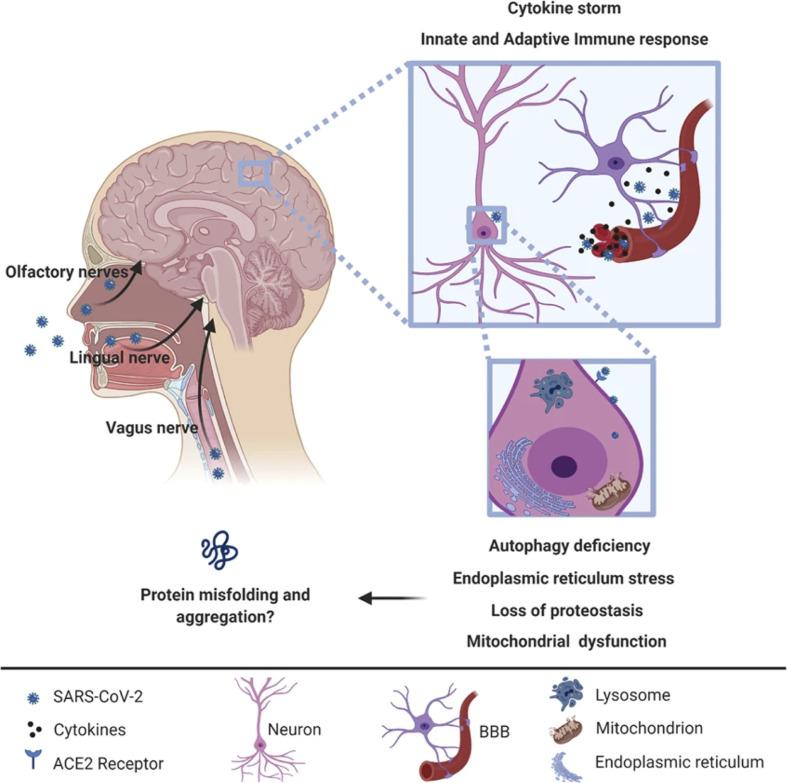
In humans, several respiratory viruses can have neurologic implications affecting both central and peripheral nervous system. Neurologic manifestations can be linked to viral neurotropism and/or indirect effects of the infection due to endothelitis with vascular damage and ischemia, hypercoagulation state with thrombosis and hemorrhages, systemic inflammatory response, autoimmune reactions, and other damages. Among these respiratory viruses, recent and huge attention has been given to the coronaviruses, especially the severe acute respiratory syndrome coronavirus 2 (SARS-CoV-2) pandemic started in 2020. Besides the common respiratory symptoms and the lung tropism of SARS-CoV-2 (COVID-19), neurologic manifestations are not rare and often present in the severe forms of the infection. The most common acute and subacute symptoms and signs include headache, fatigue, myalgia, anosmia, ageusia, sleep disturbances, whereas clinical syndromes include mainly encephalopathy, ischemic stroke, seizures, and autoimmune peripheral neuropathies. Although the pathogenetic mechanisms of COVID-19 in the various acute neurologic manifestations are partially understood, little is known about long-term consequences of the infection. These consequences concern both the so-called long-COVID (characterized by the persistence of neurological manifestations after the resolution of the acute viral phase), and the onset of new neurological symptoms that may be linked to the previous infection.
在人类中,有几种呼吸道病毒会对中枢和周围神经系统产生神经系统影响。神经系统表现可能与病毒嗜神经性和/或感染的间接影响有关,如内皮炎伴血管损伤和缺血、高凝状态伴血栓形成和出血、全身炎症反应、自身免疫反应和其他损伤。在这些呼吸道病毒中,最近冠状病毒受到了极大的关注,尤其是 2020 年开始的严重急性呼吸综合征冠状病毒 2(SARS-CoV-2)大流行。除了 SARS-CoV-2(COVID-19)的常见呼吸道症状和肺嗜性外,神经系统表现也不少见,而且常出现在感染的严重形式中。最常见的急性和亚急性症状和体征包括头痛、疲劳、肌痛、嗅觉丧失、味觉丧失、睡眠障碍,而临床综合征主要包括脑病、缺血性中风、癫痫发作和自身免疫性周围神经病。虽然 COVID-19 在各种急性神经系统表现中的发病机制部分得到了解,但对感染的长期后果知之甚少。这些后果既涉及所谓的长 COVID(急性病毒期消退后神经系统表现持续存在的特征),也涉及可能与先前感染有关的新神经系统症状的发作。
 Zotero 插件