
抗生素耐药食源性病原体从农场到餐桌的出现与传播。
Emergence and spread of antibiotic-resistant foodborne pathogens from farm to table.
作者信息
Kim Junhwan, Ahn Juhee
机构信息
Department of Biomedical Science, Kangwon National University, Chuncheon, Gangwon 24341 Republic of Korea.
Institute of Bioscience and Biotechnology, Kangwon National University, Chuncheon, 24341 Republic of Korea.
出版信息
Food Sci Biotechnol. 2022 Sep 1;31(12):1481-1499. doi: 10.1007/s10068-022-01157-1. eCollection 2022 Nov.
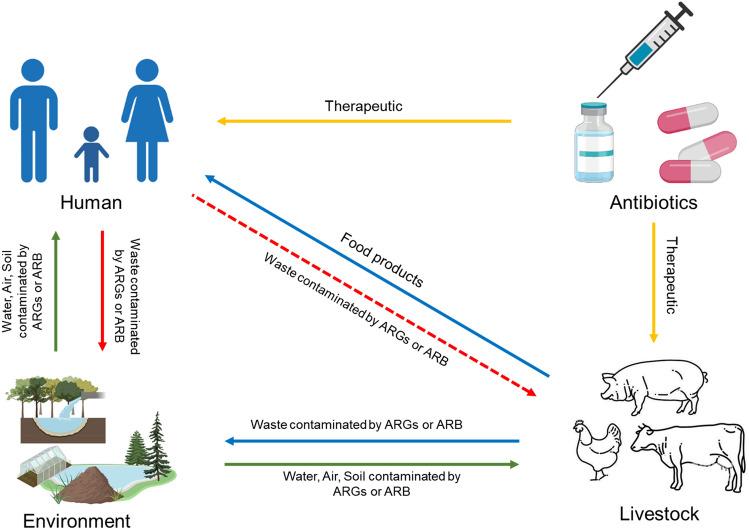
Antibiotics have been overused and misused for preventive and therapeutic purposes. Specifically, antibiotics are frequently used as growth promoters for improving productivity and performance of food-producing animals such as pigs, cattle, and poultry. The increasing use of antibiotics has been of great concern worldwide due to the emergence of antibiotic resistant bacteria. Food-producing animals are considered reservoirs for antibiotic resistance genes (ARGs) and residual antibiotics that transfer from the farm through the table. The accumulation of residual antibiotics can lead to additional antibiotic resistance in bacteria. Therefore, this review evaluates the risk of carriage and spread of antibiotic resistance through food chain and the potential impact of antibiotic use in food-producing animals on food safety. This review also includes in-depth discussion of promising antibiotic alternatives such as vaccines, immune modulators, phytochemicals, antimicrobial peptides, probiotics, and bacteriophages.
抗生素已被过度用于预防和治疗目的。具体而言,抗生素经常被用作生长促进剂,以提高猪、牛和家禽等食用动物的生产力和性能。由于抗生素耐药菌的出现,抗生素的使用日益增加已引起全球广泛关注。食用动物被认为是抗生素抗性基因(ARGs)和残留抗生素的储存库,这些抗性基因和残留抗生素会从农场转移到餐桌。残留抗生素的积累会导致细菌产生额外的抗生素耐药性。因此,本综述评估了通过食物链传播抗生素耐药性的风险以及食用动物使用抗生素对食品安全的潜在影响。本综述还深入讨论了有前景的抗生素替代品,如疫苗、免疫调节剂、植物化学物质、抗菌肽、益生菌和噬菌体。
 Zotero 插件