
超适应证用药,但有证据支持?儿科药物治疗的证据水平评价综述。
Off-Label, but on-Evidence? A Review of the Level of Evidence for Pediatric Pharmacotherapy.
机构信息
Department of Pharmacology and Toxicology, Radboud Institute for Health Sciences, Radboud University Medical Center, Nijmegen, The Netherlands.
Department of Pediatric Surgery, Erasmus MC-Sophia Children's Hospital, Rotterdam, The Netherlands.
出版信息
Clin Pharmacol Ther. 2022 Dec;112(6):1243-1253. doi: 10.1002/cpt.2736. Epub 2022 Sep 25.
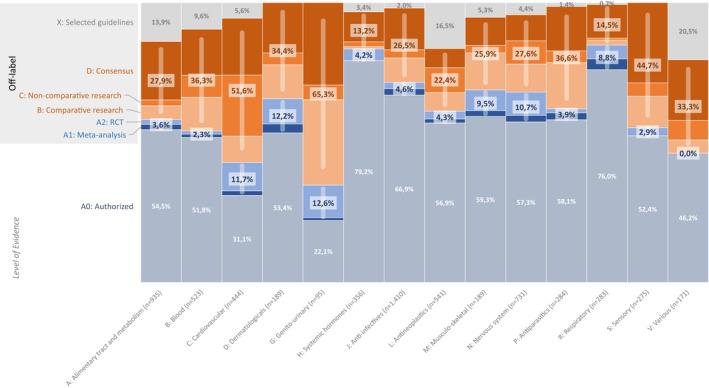
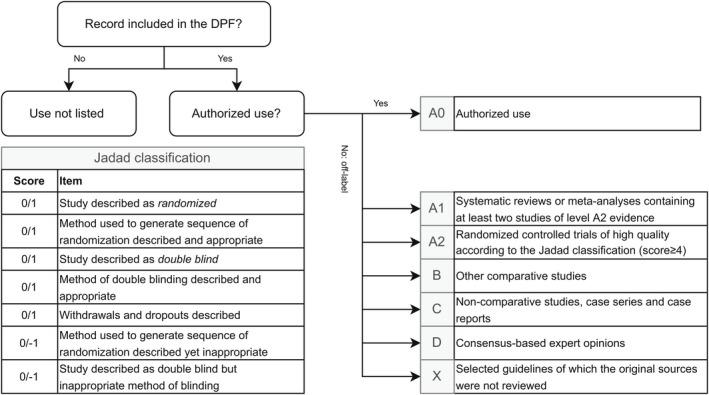
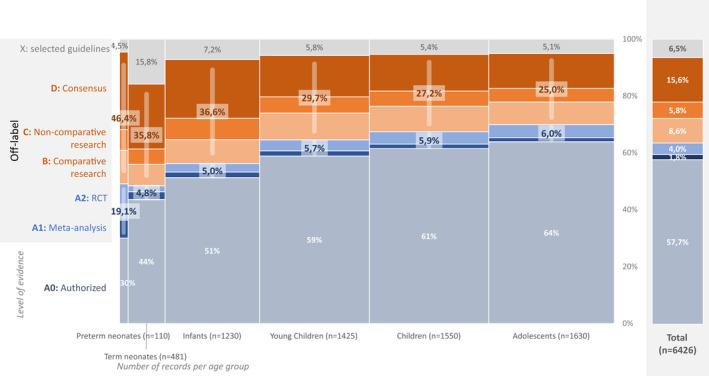
Many drugs are still prescribed off-label to the pediatric population. Although off-label drug use not supported by high level of evidence is potentially harmful, a comprehensive overview of the quality of the evidence pertaining off-label drug use in children is lacking. The Dutch Pediatric Formulary (DPF) provides best evidence-based dosing guidelines for drugs used in children. For each drug-indication-age group combination-together compiling one record-we scored the highest available level of evidence: labeled use, systematic review or meta-analysis, randomized controlled trial (RCT), comparative research, noncomparative research, or consensus-based expert opinions. For records based on selected guidelines, the original sources were not reviewed. These records were scored as guideline. A total of 774 drugs were analyzed comprising a total of 6,426 records. Of all off-label records (n = 2,718), 14% were supported by high quality evidence (4% meta-analysis or systematic reviews, 10% RCTs of high quality), 20% by comparative research, 14% by noncomparative research, 37% by consensus-based expert opinions, and 15% by selected guidelines. Fifty-eight percent of all records were authorized, increasing with age from 30% in preterm neonates (n = 110) up to 64% in adolescents (n = 1,630). Many have advocated that off-label use is only justified when supported by a high level of evidence. We show that this prerequisite would seriously limit available drug treatment for children as the underlying evidence is low across ages and drug classes. Our data identify the drugs and therapeutic areas for which evidence is clearly missing and could drive the global research agenda.
许多药物仍被超适应证用于儿科人群。虽然缺乏高质量证据支持的超适应证用药可能具有潜在危害,但对于儿童超适应证用药的证据质量,尚未进行全面评估。荷兰儿科处方集(DPF)为儿科用药提供了最佳的基于证据的剂量指南。对于每一种药物-适应证-年龄组组合(共组成一条记录),我们对最高可用证据级别进行了评分:标签使用、系统评价或荟萃分析、随机对照试验(RCT)、对照研究、非对照研究或基于共识的专家意见。对于基于选定指南的记录,并未对原始来源进行审查。这些记录的评分为指南。共分析了 774 种药物,共计 6426 条记录。所有超适应证记录(n=2718)中,14%有高质量证据支持(4%为荟萃分析或系统综述,10%为高质量 RCT),20%为对照研究,14%为非对照研究,37%为基于共识的专家意见,15%为选定的指南。所有记录中,58%得到授权,随着年龄的增长而增加,从早产儿(n=110)的 30%增加到青少年(n=1630)的 64%。许多人主张,只有在有高质量证据支持的情况下,超适应证用药才是合理的。我们的研究结果表明,这一前提条件将严重限制儿童可用的药物治疗,因为各年龄段和各药物类别下的基础证据都很低。我们的数据确定了哪些药物和治疗领域明显缺乏证据,并可能推动全球研究议程。

 Zotero 插件