
免疫检查点抑制剂在对表皮生长因子受体酪氨酸激酶抑制剂(EGFR-TKI)耐药的EGFR突变型非小细胞肺癌(NSCLC)患者中的疗效:一项系统评价和荟萃分析。
Efficacy of immune checkpoint inhibitors in EGFR-Mutant NSCLC patients with EGFR-TKI resistance: A systematic review and meta-analysis.
作者信息
Qian Xiaoyu, Guo Xiaodan, Li Ting, Hu Wei, Zhang Lin, Wu Caisheng, Ye Feng
机构信息
Fujian Provincial Key Laboratory of Innovative Drug Target Research, State Key Laboratory of Cellular Stress Biology, School of Pharmaceutical Sciences, Xiamen University, Xiamen, China.
School of Population Medicine and Public Health, Chinese Academy of Medical Sciences and Peking Union Medical College, Beijing, China.
出版信息
Front Pharmacol. 2022 Aug 22;13:926890. doi: 10.3389/fphar.2022.926890. eCollection 2022.
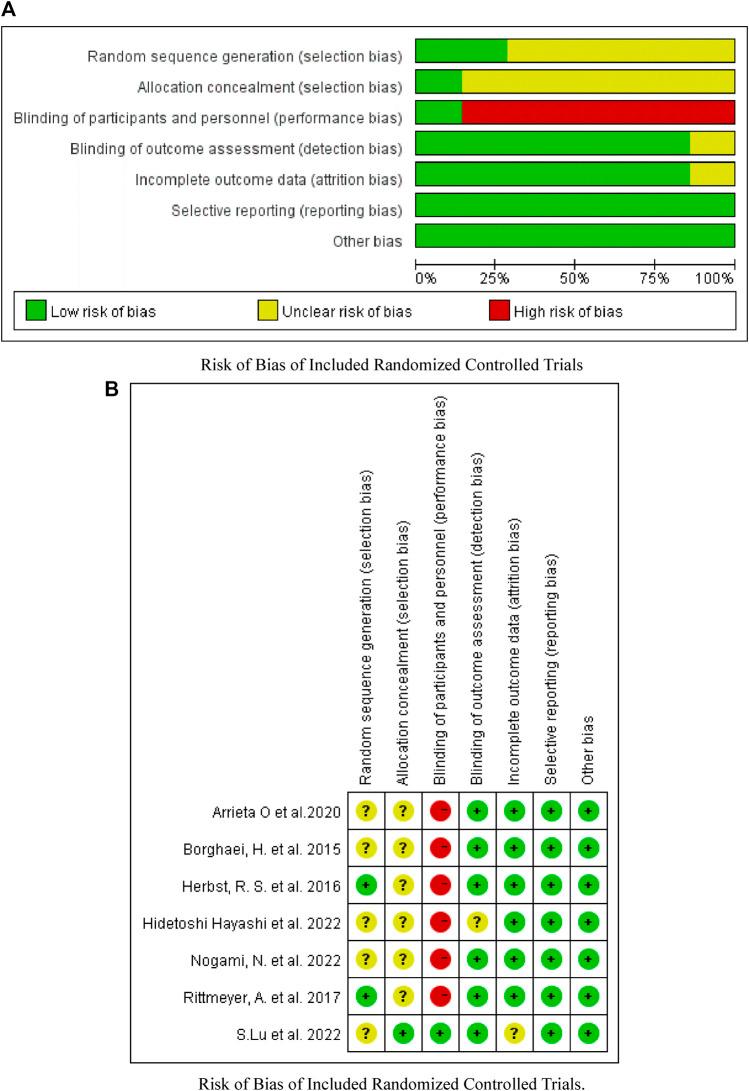
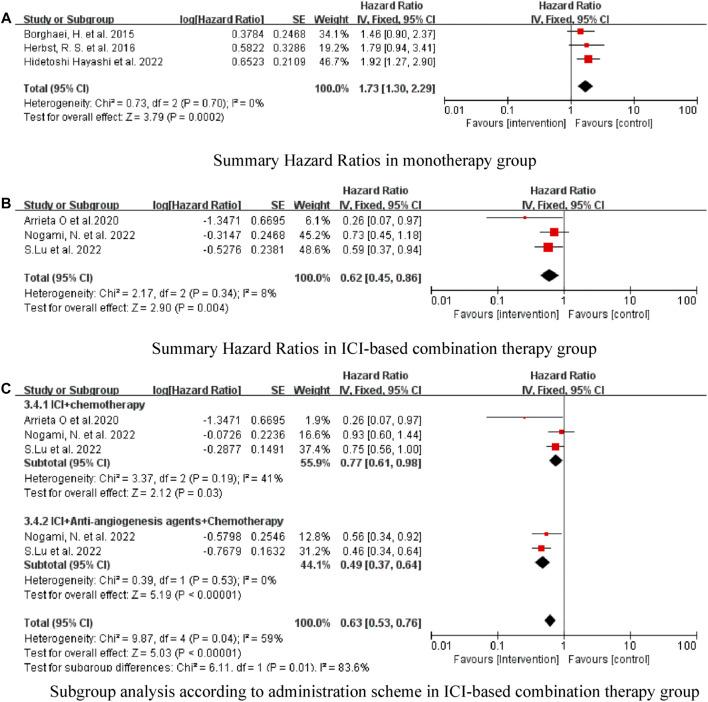
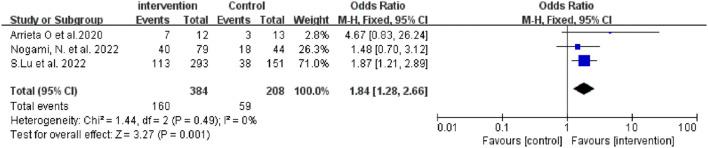
Epidermal growth factor receptor (EGFR) mutations are common in patients with non-small-cell lung cancer (NSCLC), particularly in Asian populations. Tyrosine kinase inhibitors (TKIs) are a first-line treatment in patients with mutant EGFR, but their use is often accompanied by drug resistance, which leads to disease progression. Chemotherapy and immunotherapy are the main treatment options after progression. The efficacy of immune checkpoint inhibitors (ICIs) and their combination therapy in patients with EGFR-TKI resistant is not clear. It is thus necessary to evaluate the efficacy of ICIs and ICI-based combination therapies in patients with EGFR-TKI-resistant NSCLC. We searched for randomized controlled trials (RCTs) comparing ICI therapy alone or in combination versus other therapies using PubMed, the Cochrane Library, Web of Science, EMBASE, MEDLINE, ClinicalTrials.gov, and several international conference databases, from database inception to 10 March 2022. The hazard ratio (HR) and 95% confidence interval (95% CI) for median overall survival (OS) and median progression-free survival (PFS) were evaluated. Odds ratio (OR), risk ratio (RR), and 95% CI were used as effect indicators for objective response rate (ORR) and safety data. Seven eligible RCTs were included in the present meta-analysis. The results showed that neither ICIs nor combination therapy prolonged median OS in EGFR-TKI resistant NSCLC patients (HR = 1.04, 95% CI: 0.84-1.29, = 0.73). However, compared with the control group, the patients treated with ICI-based combination therapy had better PFS (HR = 0.62, 95% CI: 0.45-0.86, = 0.004) and ORR (OR = 1.84, 95% CI: 1.28-2.66, = 0.001). ICI monotherapy did not improve the OS or PFS of NSCLC patients previously treated with EGFR-TKIs, whereas patients treated with ICI-based combination therapy had better PFS compared with those receiving conventional chemotherapy, indicating that this therapy could be offered to patients with EGFR-mutant NSCLC after progression following TKI treatment. There was no significant difference in all-grade treatment-related adverse events (TRAEs) between the combination therapy group and the control group. However, a higher incidence of discontinuation due to TRAEs was observed; this requires attention in future studies. The results of this meta-analysis provide a reference for clinical practice and future trial design. CRD42021282207.
表皮生长因子受体(EGFR)突变在非小细胞肺癌(NSCLC)患者中很常见,尤其是在亚洲人群中。酪氨酸激酶抑制剂(TKIs)是EGFR突变患者的一线治疗药物,但其使用常伴随着耐药性,从而导致疾病进展。化疗和免疫疗法是疾病进展后的主要治疗选择。免疫检查点抑制剂(ICIs)及其联合疗法在EGFR-TKI耐药患者中的疗效尚不清楚。因此,有必要评估ICIs及基于ICIs的联合疗法在EGFR-TKI耐药NSCLC患者中的疗效。我们检索了PubMed、Cochrane图书馆、科学网、EMBASE、MEDLINE、ClinicalTrials.gov以及几个国际会议数据库,以查找比较单纯ICI治疗或联合治疗与其他疗法的随机对照试验(RCTs),检索时间从数据库建立至2022年3月10日。评估了中位总生存期(OS)和中位无进展生存期(PFS)的风险比(HR)及95%置信区间(95%CI)。比值比(OR)、风险比(RR)及95%CI用作客观缓解率(ORR)和安全性数据的效应指标。本荟萃分析纳入了7项符合条件的RCTs。结果显示,在EGFR-TKI耐药的NSCLC患者中,ICIs及联合疗法均未延长中位OS(HR = 1.04,95%CI:0.84 - 1.29,P = 0.73)。然而,与对照组相比,接受基于ICIs联合疗法治疗的患者具有更好的PFS(HR = 0.62,95%CI:0.45 - 0.86,P = 0.004)和ORR(OR = 1.84,95%CI:1.28 - 2.66,P = 0.001)。ICI单药治疗未改善先前接受EGFR-TKIs治疗的NSCLC患者的OS或PFS,而接受基于ICIs联合疗法治疗的患者与接受传统化疗的患者相比具有更好的PFS,这表明该疗法可用于TKI治疗进展后的EGFR突变NSCLC患者。联合治疗组与对照组在所有级别的治疗相关不良事件(TRAEs)方面无显著差异。然而,观察到因TRAEs导致停药的发生率较高;这在未来研究中需要引起关注。本荟萃分析结果为临床实践和未来试验设计提供了参考。CRD42021282207



 Zotero 插件