
COVID-19 感染和传播包括复杂的序列多样性。
COVID-19 infection and transmission includes complex sequence diversity.
机构信息
Institute for Computational Biology, Case Western Reserve University, Cleveland, Ohio, United States of America.
Department of Population and Quantitative Health Sciences, Case Western Reserve University, Cleveland, Ohio, United States of America.
出版信息
PLoS Genet. 2022 Sep 8;18(9):e1010200. doi: 10.1371/journal.pgen.1010200. eCollection 2022 Sep.
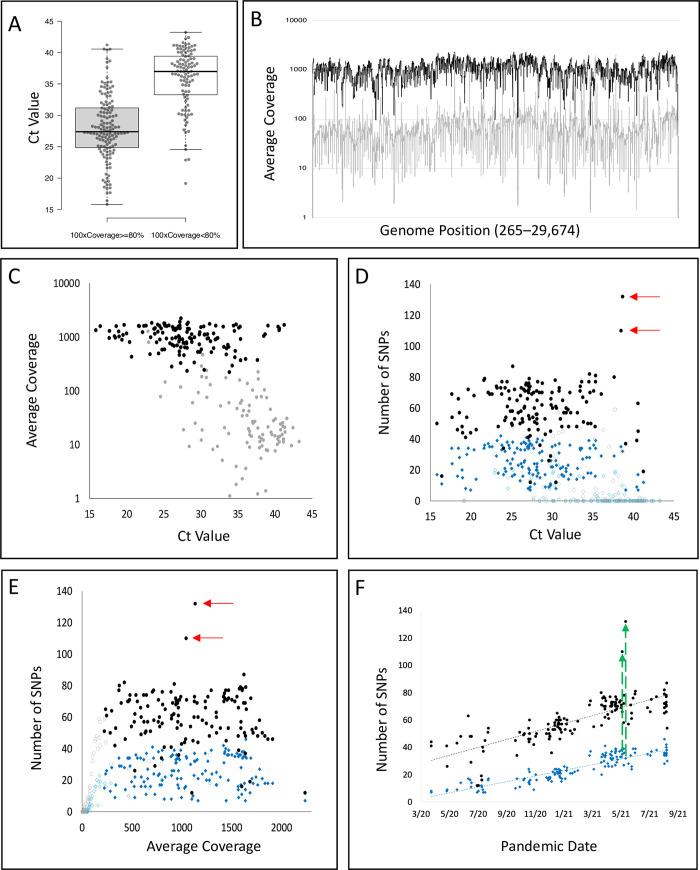
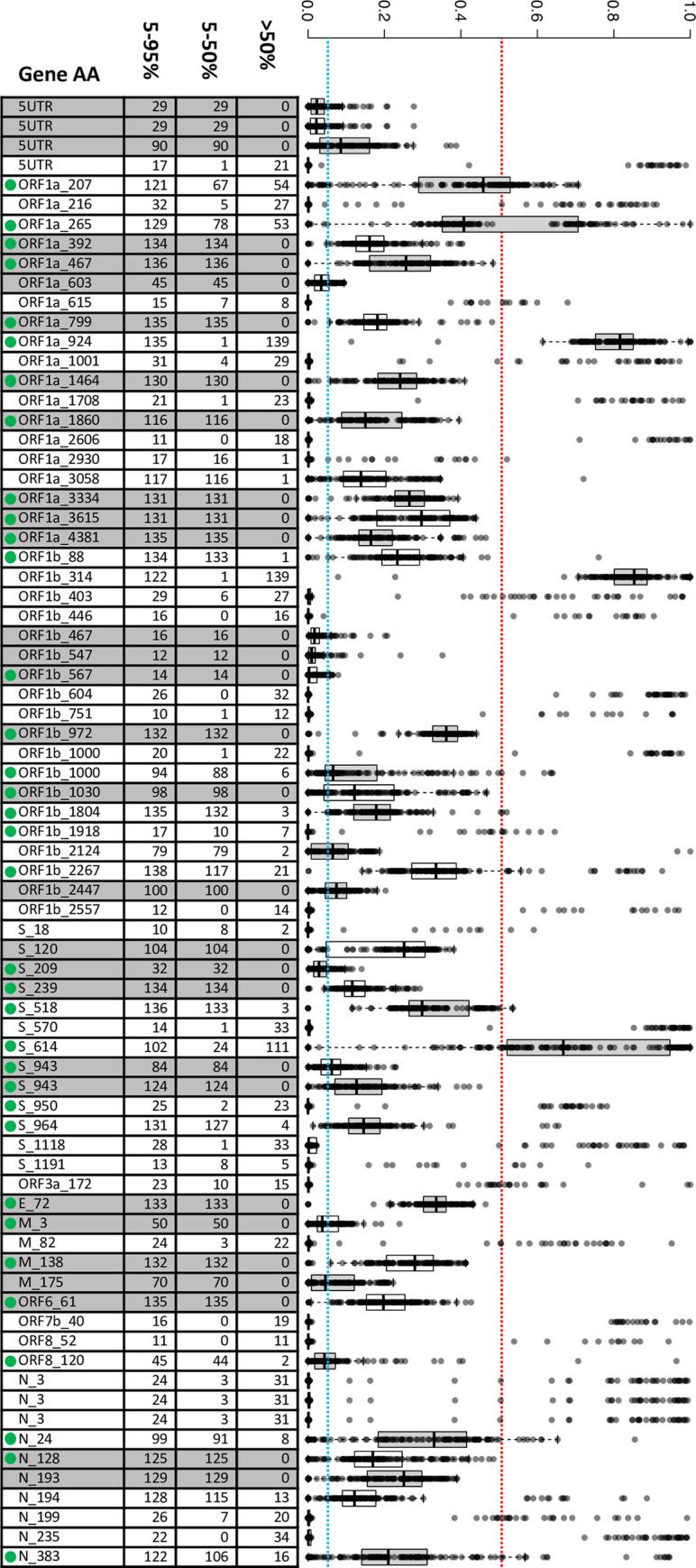
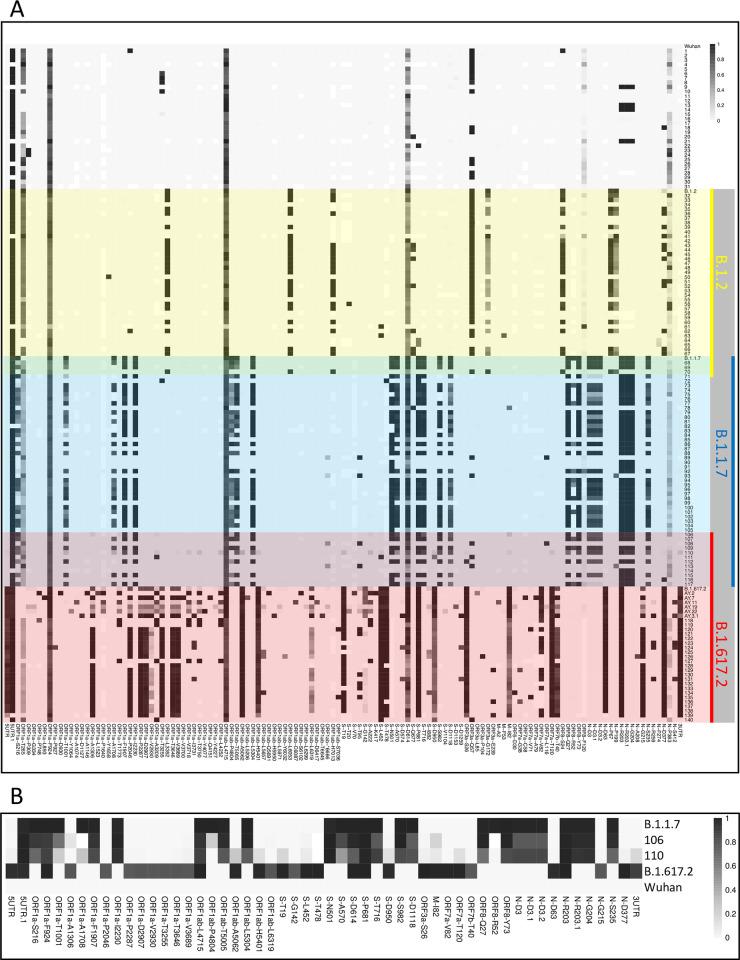
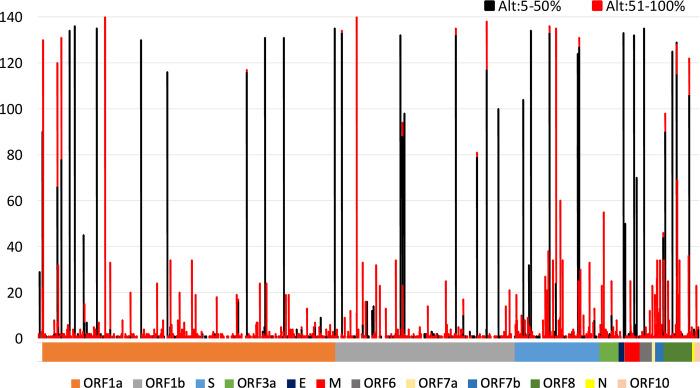
SARS-CoV-2 whole genome sequencing has played an important role in documenting the emergence of polymorphisms in the viral genome and its continuing evolution during the COVID-19 pandemic. Here we present data from over 360 patients to characterize the complex sequence diversity of individual infections identified during multiple variant surges (e.g., Alpha and Delta). Across our survey, we observed significantly increasing SARS-CoV-2 sequence diversity during the pandemic and frequent occurrence of multiple biallelic sequence polymorphisms in all infections. This sequence polymorphism shows that SARS-CoV-2 infections are heterogeneous mixtures. Convention for reporting microbial pathogens guides investigators to report a majority consensus sequence. In our study, we found that this approach would under-report sequence variation in all samples tested. As we find that this sequence heterogeneity is efficiently transmitted from donors to recipients, our findings illustrate that infection complexity must be monitored and reported more completely to understand SARS-CoV-2 infection and transmission dynamics. Many of the nucleotide changes that would not be reported in a majority consensus sequence have now been observed as lineage defining SNPs in Omicron BA.1 and/or BA.2 variants. This suggests that minority alleles in earlier SARS-CoV-2 infections may play an important role in the continuing evolution of new variants of concern.
SARS-CoV-2 全基因组测序在记录病毒基因组中的多态性及其在 COVID-19 大流行期间的持续进化方面发挥了重要作用。在这里,我们提供了来自 360 多名患者的数据,以描述在多次变体激增期间(例如 Alpha 和 Delta)鉴定的个体感染的复杂序列多样性。在我们的调查中,我们观察到大流行期间 SARS-CoV-2 序列多样性显著增加,并且所有感染中经常出现多种双等位基因序列多态性。这种序列多态性表明 SARS-CoV-2 感染是异质混合物。报告微生物病原体的惯例指导研究人员报告主要共识序列。在我们的研究中,我们发现这种方法会低估所有测试样本中的序列变异。由于我们发现这种序列异质性可以有效地从供体传播到受体,因此我们的研究结果表明,必须更全面地监测和报告感染的复杂性,以了解 SARS-CoV-2 感染和传播动态。在 Omicron BA.1 和/或 BA.2 变体中,现在已经观察到不会在主要共识序列中报告的许多核苷酸变化作为谱系定义 SNP。这表明,早期 SARS-CoV-2 感染中的少数等位基因可能在新关注变体的持续进化中发挥重要作用。

 Zotero 插件