
阿帕替尼与高三尖杉酯碱对急性髓系白血病的协同致死效应
Synergistic Lethality Effects of Apatinib and Homoharringtonine in Acute Myeloid Leukemia.
作者信息
Shi Yuanfei, Xu Dandan, Xu Yi, Shen Huafei, Zhang Yan, Ye Xiujin, Jin Jie, Cui Dawei, Xie Wanzhuo
机构信息
Department of Hematology, The First Affiliated Hospital, College of Medicine, Zhejiang University, Hangzhou, Zhejiang, China.
Department of Blood Transfusion, The First Affiliated Hospital, College of Medicine, Zhejiang University, Hangzhou, Zhejiang, China.
出版信息
J Oncol. 2022 Aug 30;2022:9005804. doi: 10.1155/2022/9005804. eCollection 2022.
PURPOSE
The significance of vascular endothelial growth factor receptor (VEGFR)-2 in numerous solid tumors and acute myeloid leukemia (AML) has been demonstrated, but Apatinib remains largely unexplored. In this study, whether Apatinib combined with homoharringtonine (HHT) kills AML cell lines and its possible mechanisms have been explored.
METHODS
AML cell lines were treated with Apatinib and HHT in different concentrations with control, Apatinib alone, HHT alone, and Apatinib combined with HHT. The changes of IC were measured by CCK8 assay, and apoptosis rate, cell cycle, and the mitochondrial membrane potential in each group were measured by flow cytometry. Finally, the possible cytotoxicity mechanism was analyzed by Western blotting.
RESULTS
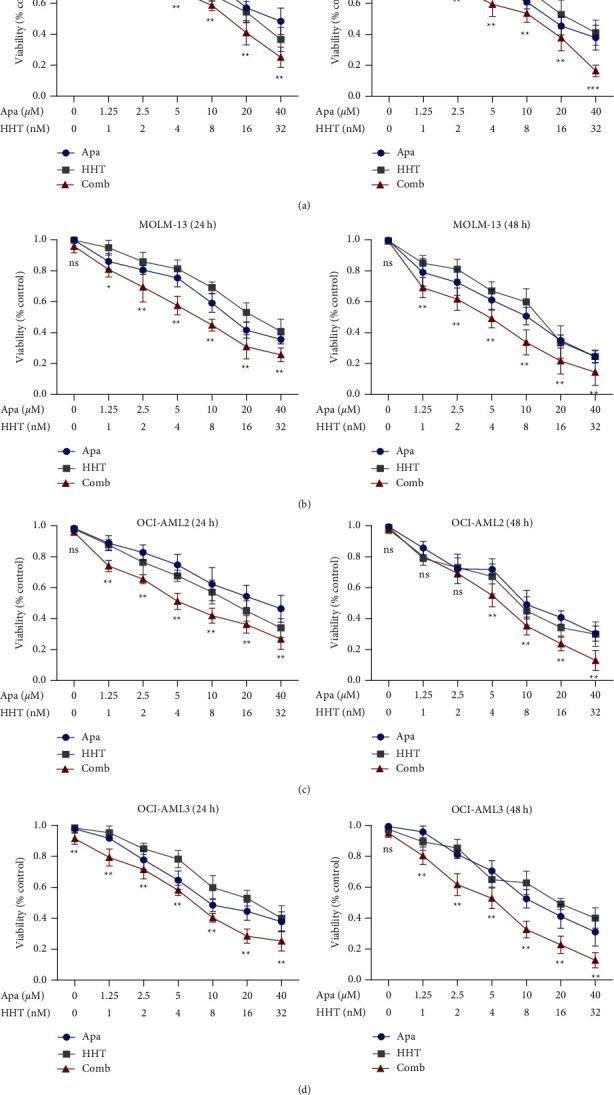
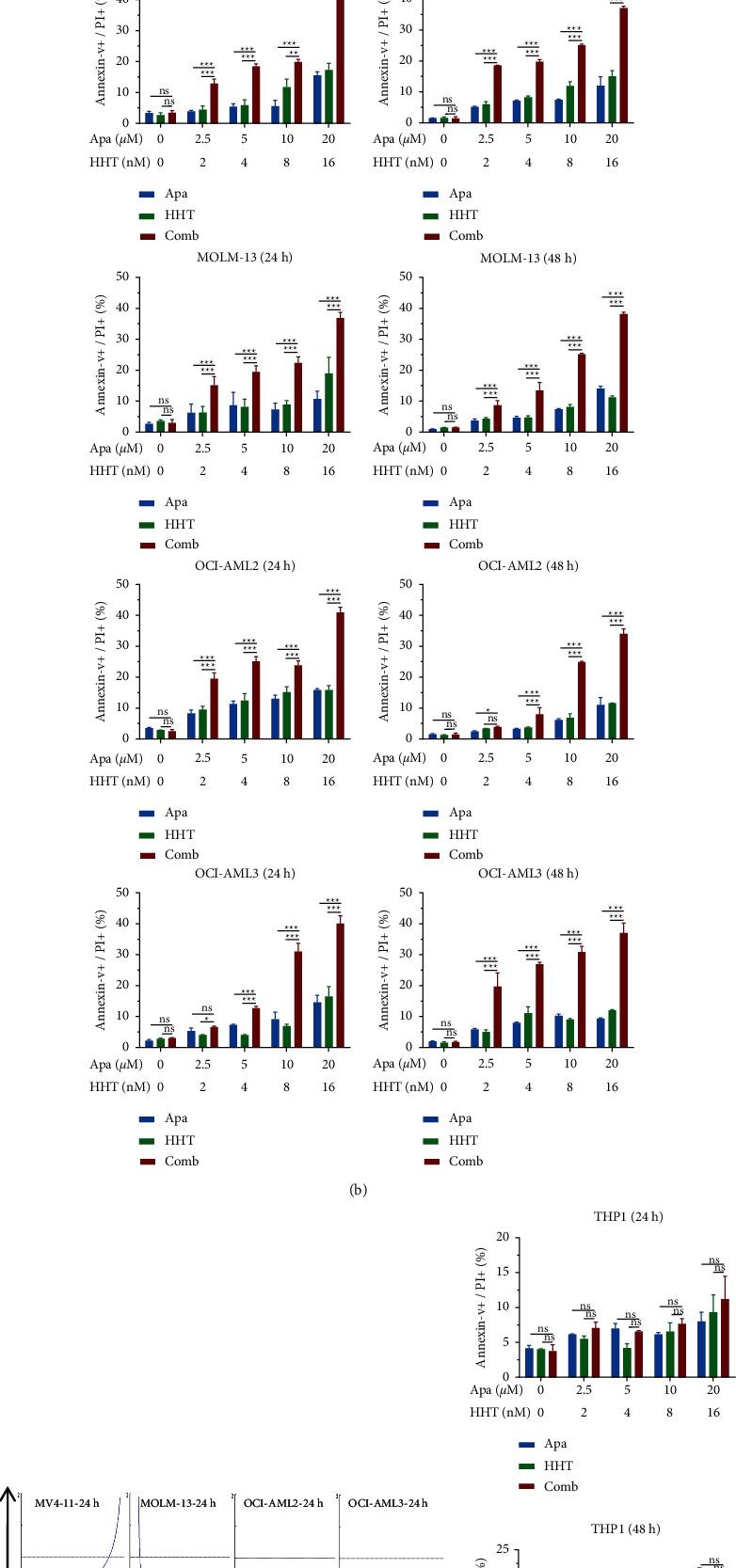
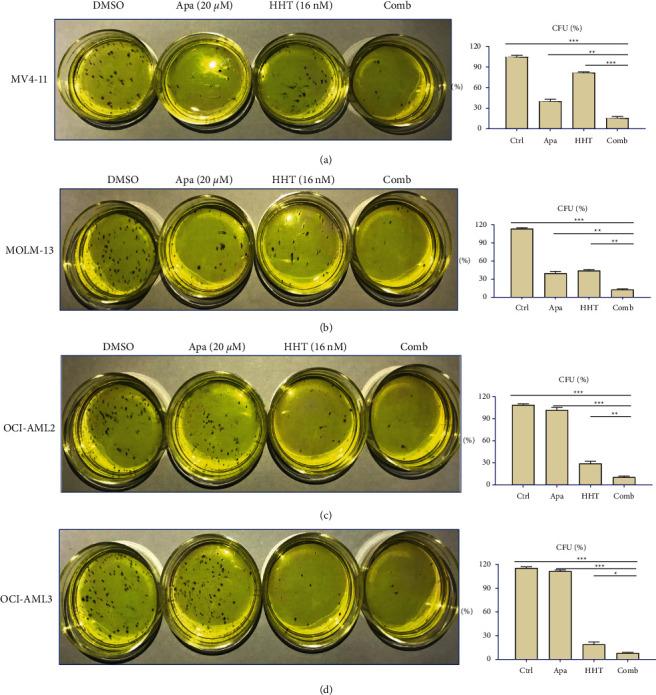
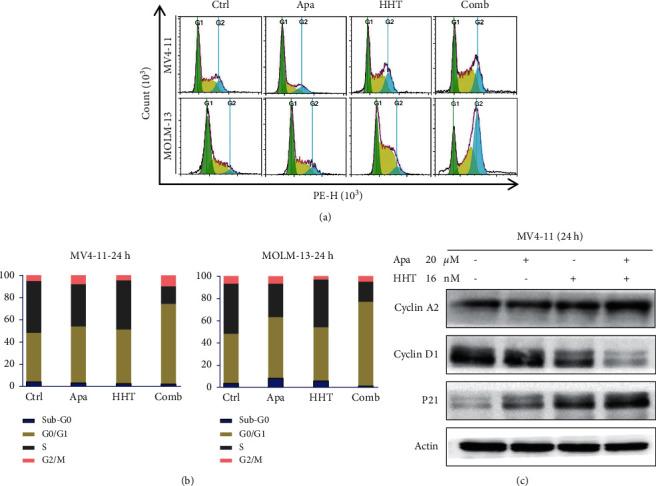
Our results noted that Apatinib combined with HHT remarkably inhibited cell proliferation, reduced the capacity of colony-forming, and induced apoptosis and cell cycle arrest in AML cells. Mechanistically, Apatinib and HHT play a role as a suppressor in the expression of VEGFR-2 and the downstream signaling cascades, such as the PI3K, MAPK, and STAT3 pathways.
CONCLUSION
Our preclinical data demonstrate that Apatinib combined with HHT exerts a better antileukemia effect than Apatinib alone by inhibiting the VEGFR-2 signaling pathway, suggesting the potential role of Apatinib and HHT in the treatment of AML. This study provides clinicians with innovative combination therapies and new therapeutic targets for the treatment of AML.
目的
血管内皮生长因子受体(VEGFR)-2在多种实体瘤和急性髓系白血病(AML)中的重要性已得到证实,但阿帕替尼在很大程度上仍未被探索。在本研究中,探讨了阿帕替尼联合高三尖杉酯碱(HHT)对AML细胞系的杀伤作用及其可能机制。
方法
用不同浓度的阿帕替尼和HHT处理AML细胞系,并设置对照组、单独使用阿帕替尼组、单独使用HHT组以及阿帕替尼联合HHT组。通过CCK8法检测IC的变化,采用流式细胞术检测各组的凋亡率、细胞周期和线粒体膜电位。最后,通过蛋白质免疫印迹法分析可能的细胞毒性机制。
结果
我们的结果表明,阿帕替尼联合HHT可显著抑制AML细胞的增殖,降低集落形成能力,并诱导细胞凋亡和细胞周期阻滞。机制上,阿帕替尼和HHT在VEGFR-2及其下游信号级联反应(如PI3K、MAPK和STAT3通路)的表达中起抑制作用。
结论
我们的临床前数据表明,阿帕替尼联合HHT通过抑制VEGFR-2信号通路,比单独使用阿帕替尼具有更好的抗白血病效果,提示阿帕替尼和HHT在AML治疗中的潜在作用。本研究为临床医生提供了治疗AML的创新联合疗法和新的治疗靶点。

 Zotero 插件