
通过去除微通道消声角实现无残留的声流操控微颗粒。
Residue-free acoustofluidic manipulation of microparticles via removal of microchannel anechoic corner.
机构信息
Department of Mechanical Engineering, Chonnam National University, 77 Yongbong-ro, Buk-gu, Gwangju 61186, Republic of Korea.
Control and Manipulation of Microscale Living Objects, Central Institute for Translational Cancer Research (TranslaTUM), Department of Electrical and Computer Engineering, Technical University of Munich, Einsteinstraße 25, Munich 81675, Germany.
出版信息
Ultrason Sonochem. 2022 Sep;89:106161. doi: 10.1016/j.ultsonch.2022.106161. Epub 2022 Sep 6.
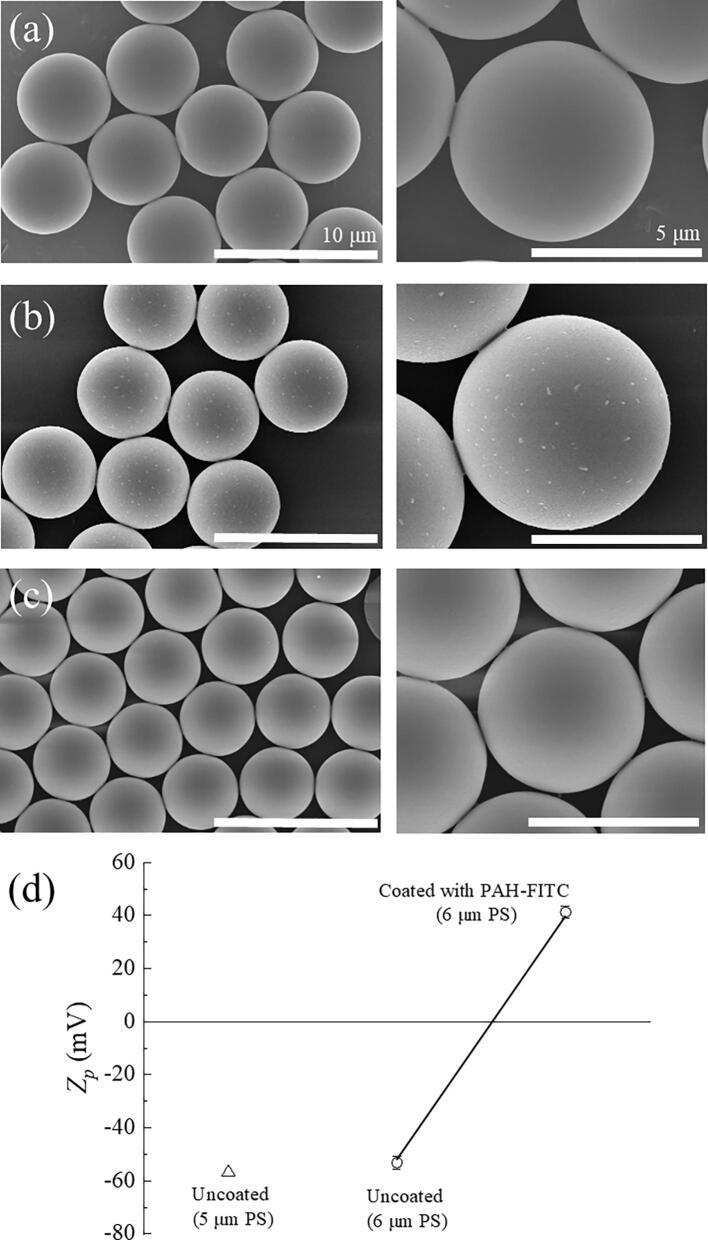
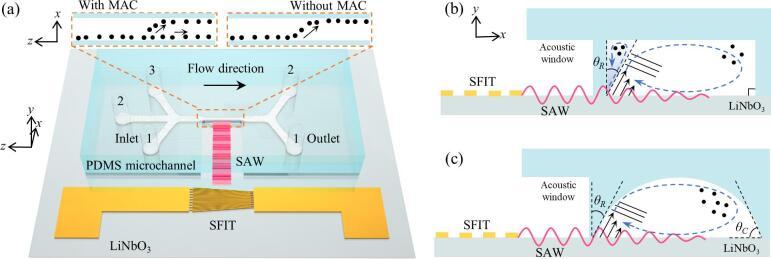
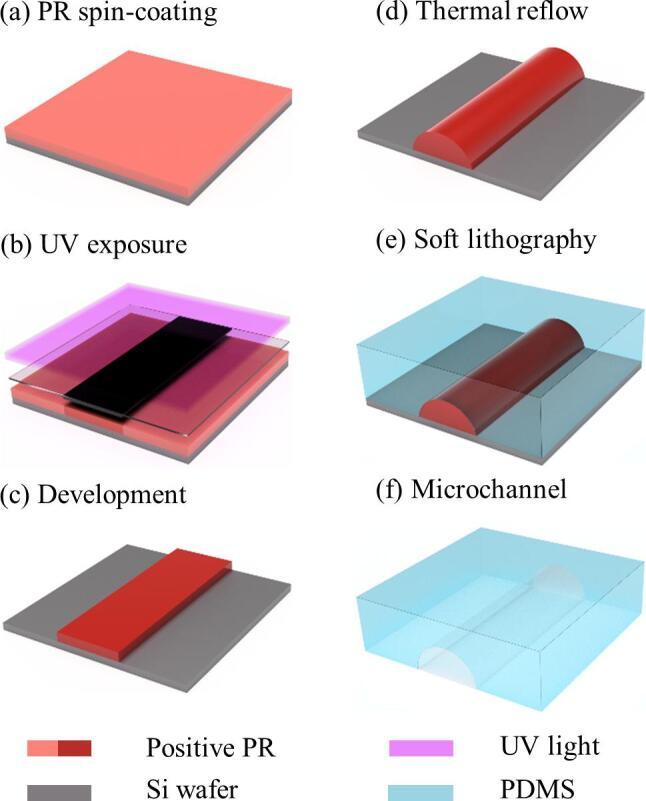
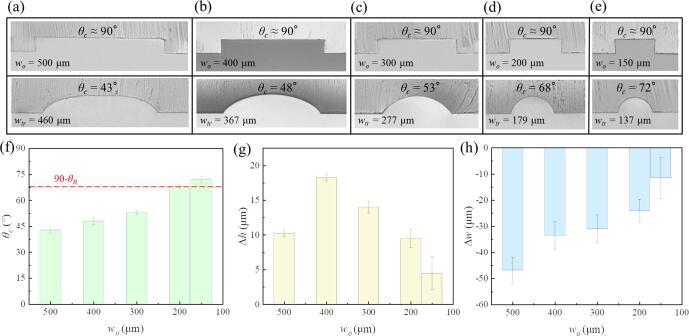
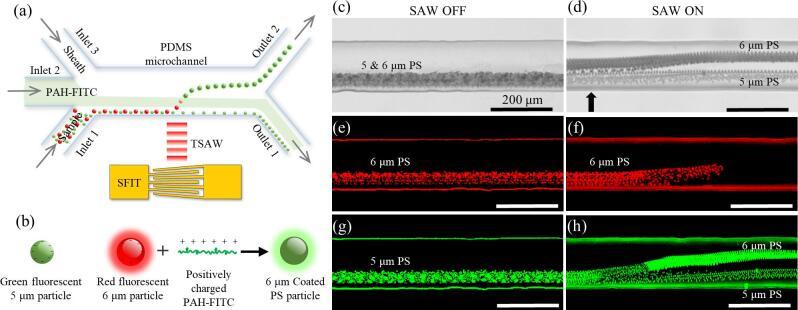
Surface acoustic wave (SAW)-based acoustofluidics has shown significant promise to manipulate micro/nanoscale objects for biomedical applications, e.g. cell separation, enrichment, and sorting. A majority of the acoustofluidic devices utilize microchannels with rectangular cross-section where the acoustic waves propagate in the direction perpendicular to the sample flow. A region with weak acoustic wave intensity, termed microchannel anechoic corner (MAC), is formed inside a rectangular microchannel of the acoustofluidic devices where the ultrasonic waves refract into the fluid at the Rayleigh angle with respect to the normal to the substrate. Due to the absence of a strong acoustic field within the MAC, the microparticles flowing adjacent to the microchannel wall remain unaffected by a direct SAW-induced acoustic radiation force (ARF). Moreover, an acoustic streaming flow (ASF) vortex produced within the MAC pulls the particles further into the corner and away from the direct ARF influence. Therefore, a residue of particles continues to flow past the SAWs without intended deflection, causing a decrease in microparticle manipulation efficiency. In this work, we introduce a cross-type acoustofluidic device composed of a half-circular microchannel, fabricated through a thermal reflow of a positive photoresist mold, to overcome the limitations associated with rectangular microchannels, prone to the MAC formation. We investigated the effects of different microchannel cross-sectional shapes with varying contact angles on the microparticle deflection in a continuous flow and found three distinct regimes of particle deflection. By systematically removing the MAC out of the microchannel cross-section, we achieved residue-free acoustofluidic microparticle manipulation via SAW-induced ARF inside a half-circular microchannel. The proposed method was applied to efficient fluorescent coating of the microparticles in a size-selective manner without any residue particles left undeflected in the MAC.
基于表面声波(SAW)的声流控技术在生物医学应用中表现出了对微/纳米尺度物体的强大操控能力,例如细胞分离、富集和分类。大多数声流控器件采用矩形横截面的微通道,声波在垂直于样品流动的方向上传播。在声流控器件的矩形微通道内部形成了一个声波强度较弱的区域,称为微通道无声角(MAC),在该区域中,超声波以相对于基底法向的瑞利角折射进入流体。由于 MAC 内部没有强声场,因此紧邻微通道壁流动的微颗粒不会受到直接的 SAW 诱导声辐射力(ARF)的影响。此外,MAC 内产生的声流(ASF)涡旋将颗粒进一步拉入角落,并使其远离直接的 ARF 影响。因此,一部分颗粒继续流过 SAW 而不发生预期的偏转,导致微颗粒操控效率降低。在这项工作中,我们引入了一种由半圆形微通道组成的十字型声流控器件,该器件通过正光刻胶模具的热回流来制造,以克服容易形成 MAC 的矩形微通道的局限性。我们研究了不同具有不同接触角的微通道横截面形状对连续流中微颗粒偏转的影响,并发现了颗粒偏转的三个明显阶段。通过系统地从微通道横截面中去除 MAC,我们实现了在半圆形微通道内通过 SAW 诱导的 ARF 进行无残留的声流控微颗粒操控。该方法被应用于高效地以尺寸选择性方式对微颗粒进行荧光涂覆,而没有任何残留颗粒在 MAC 中未发生偏转。


 Zotero 插件