
富含个人防护设备(PPE)污染的基什岛,波斯湾。
Abundance and characterization of personal protective equipment (PPE) polluting Kish Island, Persian Gulf.
机构信息
Environmental Research Laboratory, School of Civil Engineering, Iran University of Science and Technology, Tehran, Iran.
Environmental Research Laboratory, School of Civil Engineering, Iran University of Science and Technology, Tehran, Iran.
出版信息
Sci Total Environ. 2023 Jan 1;854:158678. doi: 10.1016/j.scitotenv.2022.158678. Epub 2022 Sep 11.
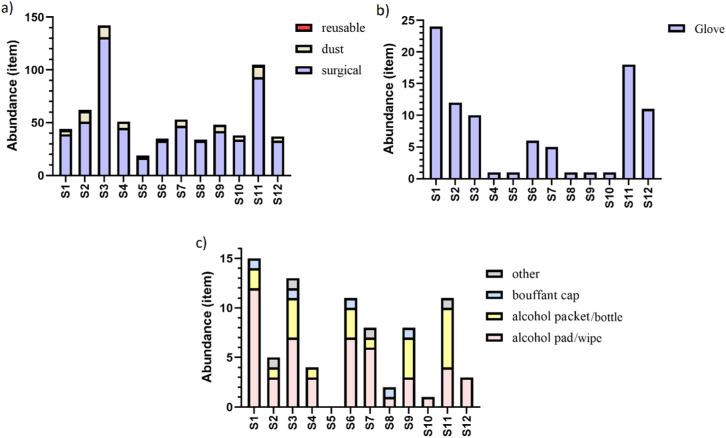
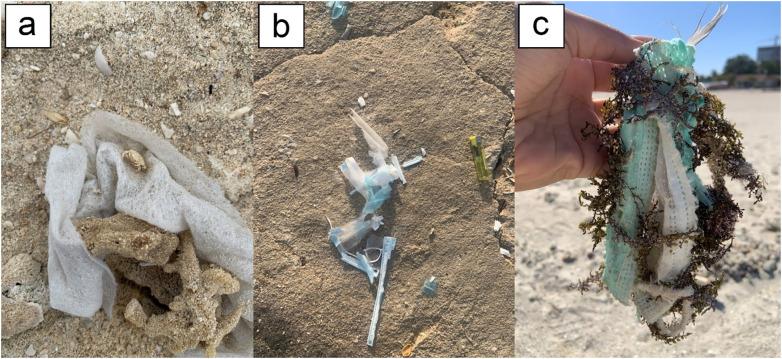
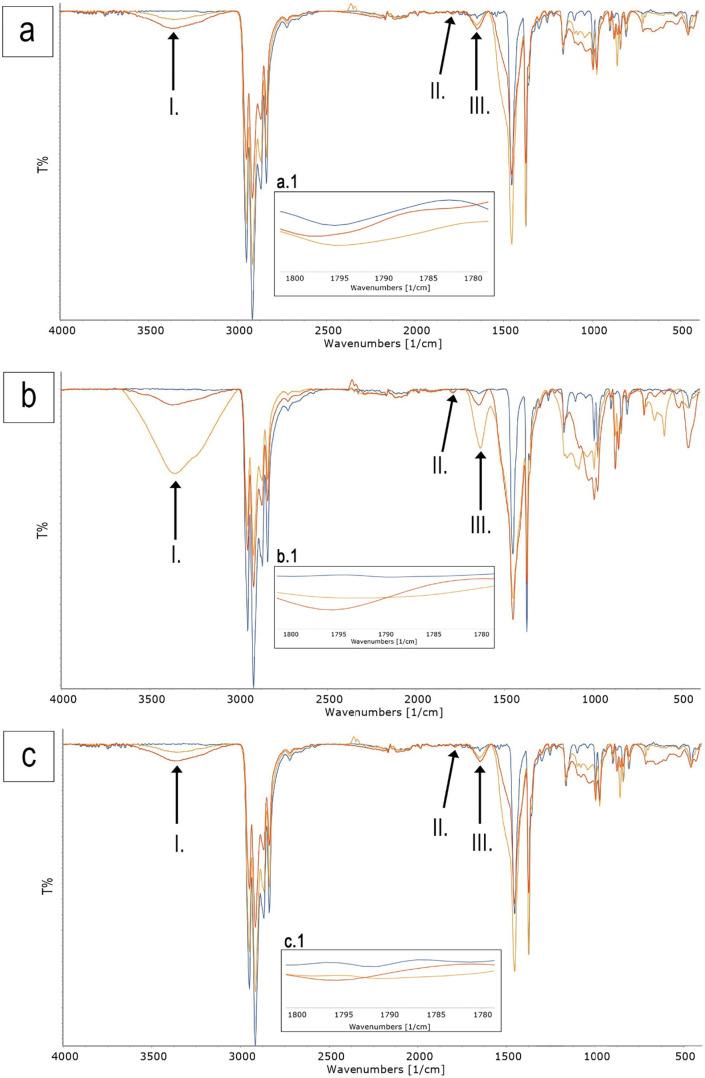
Plastic pollution is one of the major environmental threats the world is facing nowadays, which was exacerbated during the COVID-19 pandemic. In particular, multiple reports of single-use plastics driven by the pandemic, namely personal protective equipment (PPE) (e.g., face masks and gloves), contaminating coastal areas have been published. However, most studies focused solely on counting and visually characterizing this type of litter. In the present study, we complement conventional reports by characterizing this type of litter through chemical-analytical techniques. Standardized sampling procedures were carried out in Kish Island, The Persian Gulf, resulting in an average density of 2.34 × 10 PPE/m. Fourier transformed infrared spectroscopy confirmed the polymeric composition of weathered face masks and showed the occurrence of additional absorption bands associated with the photooxidation of the polymer backbone. On the other hand, the three layers of typical surgical face masks showed different non-woven structures, as well as signs of physical degradation (ruptures, cracks, rough surfaces), possibly leading to the release of microplastics. Furthermore, elemental mapping through energy-dispersive X-ray spectroscopy showed that the middle layer of the masks allocated more elements of external origin (e.g., Na, Cl, Ca, Mg) than the outer and inner layers. This is likely to the overall higher surface area of the middle layer. Furthermore, our evidence indicates that improperly disposed PPE is already having an impact on a number of organisms in the study area.
塑料污染是当今世界面临的主要环境威胁之一,而在 COVID-19 大流行期间,这一问题进一步加剧。特别是,有多项报告指出,大流行期间推动了一次性塑料的使用,即个人防护设备(PPE)(例如口罩和手套),已污染了沿海地区。然而,大多数研究仅专注于计数和直观地表征这种垃圾。在本研究中,我们通过化学分析技术来补充对这种垃圾的常规报告。在波斯湾的基什岛进行了标准化采样程序,结果平均密度为 2.34×10 PPE/m。傅里叶变换红外光谱证实了风化口罩的聚合物组成,并显示出与聚合物主链光氧化相关的额外吸收带的出现。另一方面,典型的外科口罩的三层显示出不同的无纺结构,以及物理降解(破裂、裂缝、粗糙表面)的迹象,这可能导致微塑料的释放。此外,通过能量色散 X 射线光谱进行的元素映射表明,口罩的中间层比外层和内层分配了更多来自外部的元素(例如 Na、Cl、Ca、Mg)。这可能是由于中间层的总表面积更大。此外,我们的证据表明,处理不当的 PPE 已经对研究区域内的许多生物产生了影响。




 Zotero 插件