
多马鲁单抗在杜氏肌营养不良症儿科患者中的群体 PK 和 PD 分析。
Population PK and PD Analysis of Domagrozumab in Pediatric Patients with Duchenne Muscular Dystrophy.
机构信息
Pfizer Inc., Groton, Connecticut, USA.
Pfizer Ltd., Sandwich, UK.
出版信息
Clin Pharmacol Ther. 2022 Dec;112(6):1291-1302. doi: 10.1002/cpt.2747. Epub 2022 Oct 4.
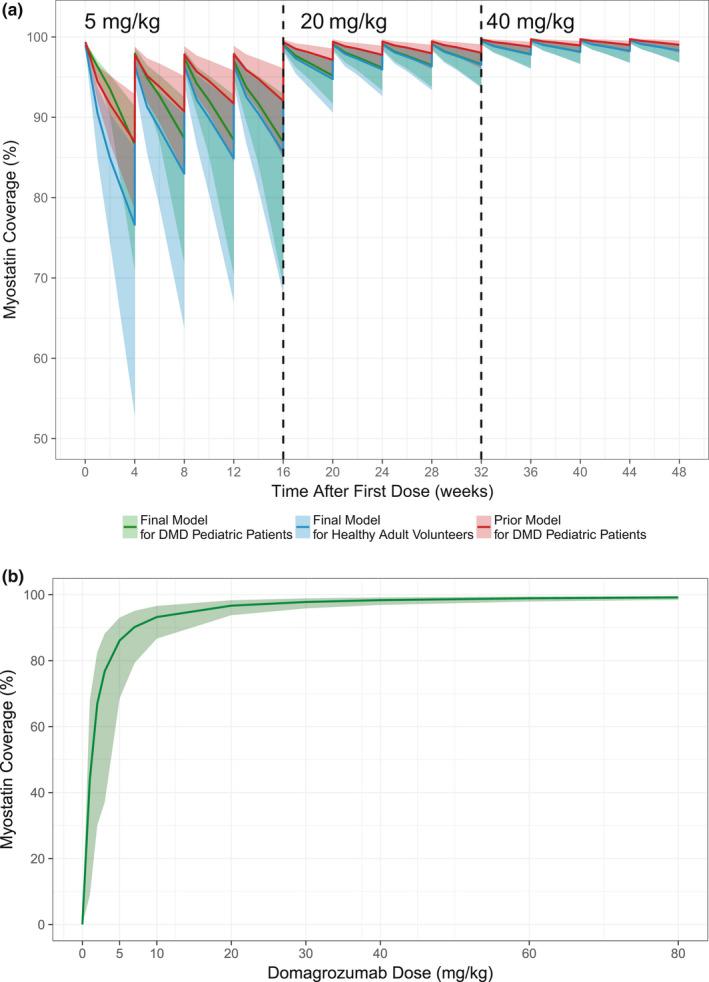
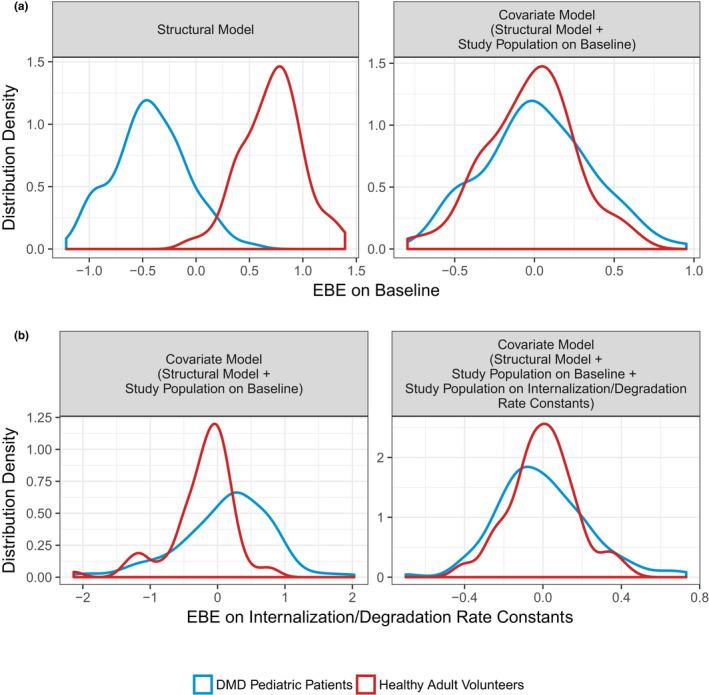
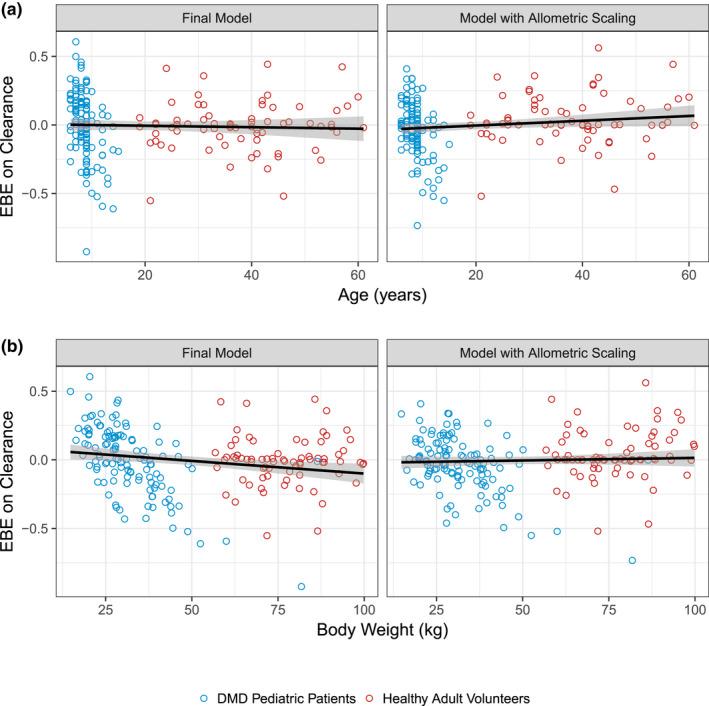
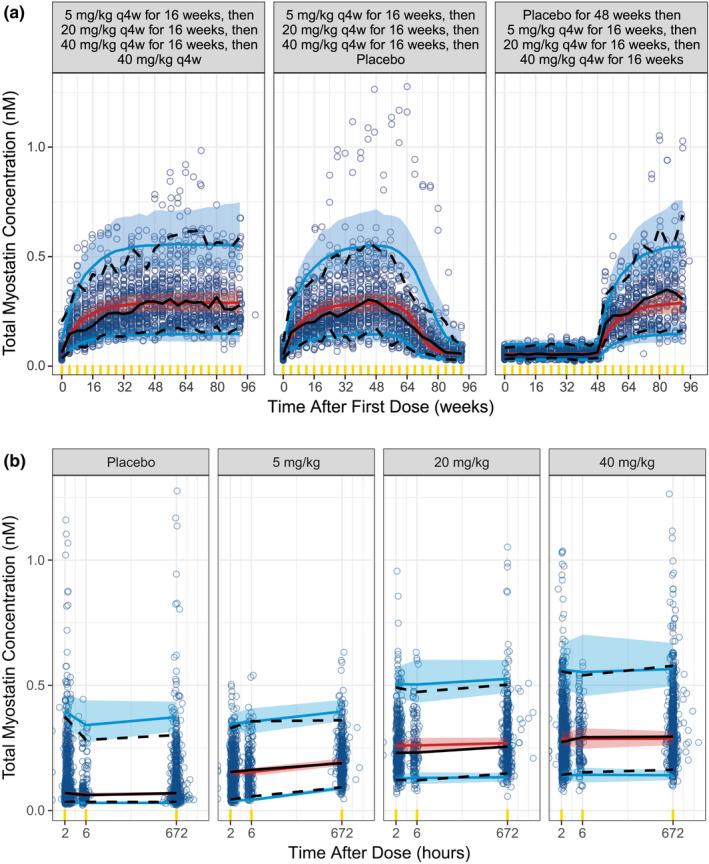
Myostatin, a negative regulator of skeletal muscle growth, is a therapeutic target in muscle-wasting diseases. Domagrozumab, a humanized recombinant monoclonal antibody, binds myostatin and inhibits activity. Domagrozumab was investigated in a phase II trial (NCT02310763) as a potential treatment for boys with Duchenne muscular dystrophy (DMD). Pharmacokinetic/pharmacodynamic (PK/PD) modeling is vital in clinical trial design, particularly for determining dosing regimens in pediatric populations. This analysis sought to establish the PK/PD relationship between free domagrozumab and total myostatin concentrations in pediatric patients with DMD using a prior semimechanistic model developed from a phase I study in healthy adult volunteers (NCT01616277) and following inclusion of phase II data. The refined model was developed using a multiple-step approach comprising structural, random effects, and covariate model development; assessment of model adequacy (goodness-of-fit); and predictive performance. Differences in PKs/PDs between healthy adult volunteers and pediatric patients with DMD were quantitatively accounted for and evaluated by predicting myostatin coverage (the percentage of myostatin bound by domagrozumab). The final model parameter estimates and semimechanistic target-mediated drug disposition structure sufficiently described both domagrozumab and myostatin concentrations in pediatric patients with DMD, and most population parameters were comparable with the prior model (in healthy adult volunteers). Predicted myostatin coverage for phase II patients with DMD was consistently > 90%. Baseline serum myostatin was ~ 65% lower than in healthy adult volunteers. This study provides insights into the regulation of myostatin in healthy adults and pediatric patients with DMD. Clinicaltrials.gov identifiers: NCT01616277 and NCT02310763.
肌肉生长抑制素(Myostatin)是一种负向调节骨骼肌生长的物质,是肌肉消耗性疾病的治疗靶点。Domagrozumab 是一种人源化重组单克隆抗体,可与肌肉生长抑制素结合并抑制其活性。在一项 II 期临床试验(NCT02310763)中,Domagrozumab 被研究作为治疗杜氏肌营养不良症(DMD)男孩的潜在药物。药代动力学/药效动力学(PK/PD)模型在临床试验设计中至关重要,特别是在确定儿科人群的给药方案时。本分析旨在使用先前在健康成年志愿者(NCT01616277)的 I 期研究中开发的半机理模型以及纳入 II 期数据,建立 DMD 儿科患者游离 Domagrozumab 与总肌肉生长抑制素浓度之间的 PK/PD 关系。该模型是通过采用结构、随机效应和协变量模型开发、模型充分性评估(拟合优度)和预测性能等多步骤方法进行开发的。通过预测肌肉生长抑制素覆盖率(被 Domagrozumab 结合的肌肉生长抑制素百分比),定量解释并评估了健康成年志愿者和 DMD 儿科患者之间的 PK/PD 差异。最终模型参数估计和半机理靶向介导的药物处置结构充分描述了 DMD 儿科患者的 Domagrozumab 和肌肉生长抑制素浓度,并且大多数群体参数与之前的模型(健康成年志愿者)相当。预测的 DMD 二期患者的肌肉生长抑制素覆盖率始终>90%。基线血清肌肉生长抑制素比健康成年志愿者低约 65%。本研究深入了解了健康成年人和 DMD 儿科患者中肌肉生长抑制素的调节机制。临床试验注册号:NCT01616277 和 NCT02310763。

 Zotero 插件