
观测站:行为衰老的高通量探索
The Observatory: High-throughput exploration of behavioral aging.
作者信息
Kerr Rex A, Roux Antoine E, Goudeau Jérôme, Kenyon Cynthia
机构信息
Calico Life Sciences LLC, South San Francisco, CA, United States.
出版信息
Front Aging. 2022 Aug 29;3:932656. doi: 10.3389/fragi.2022.932656. eCollection 2022.
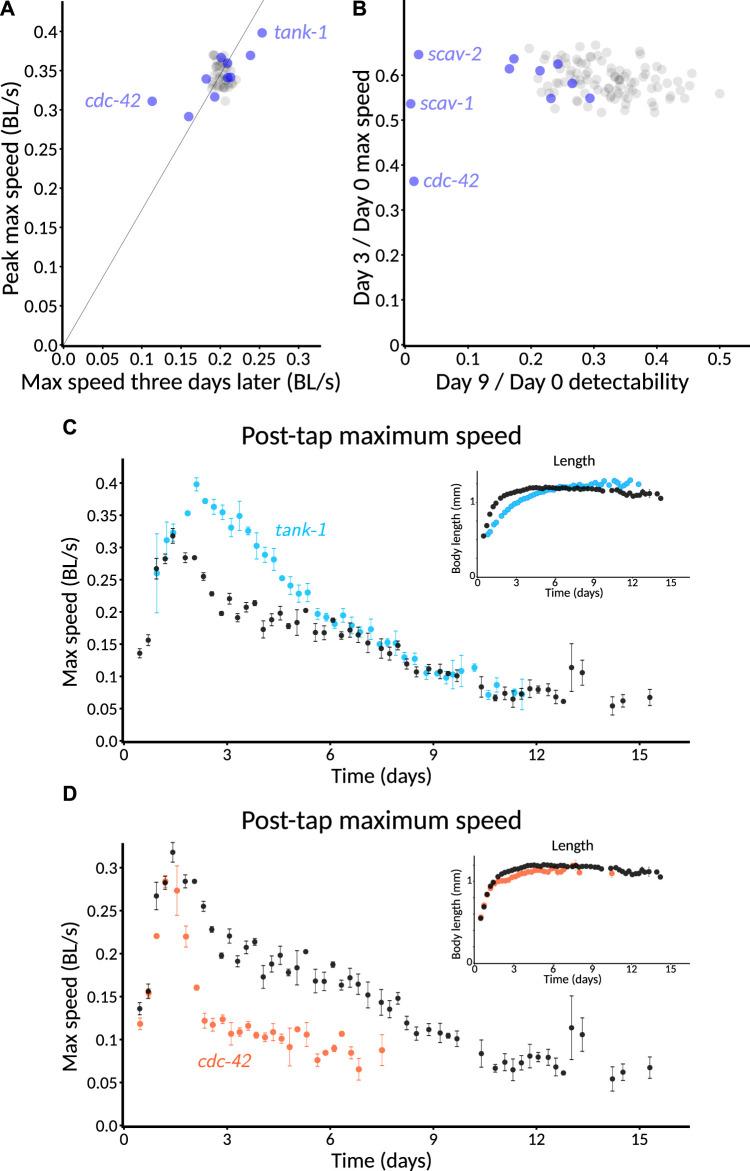
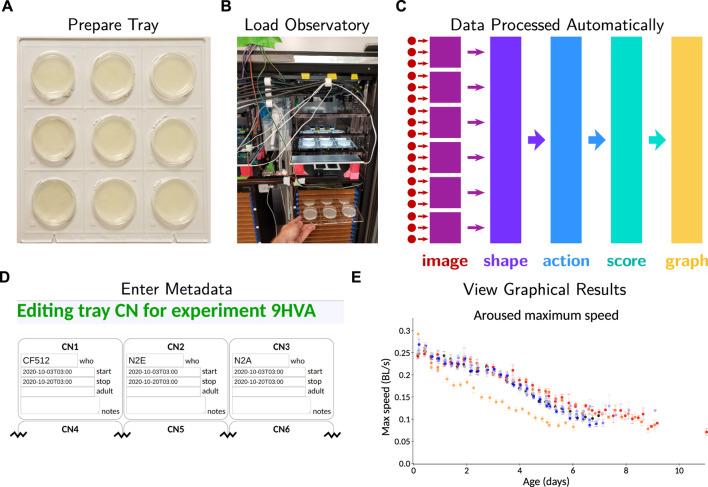
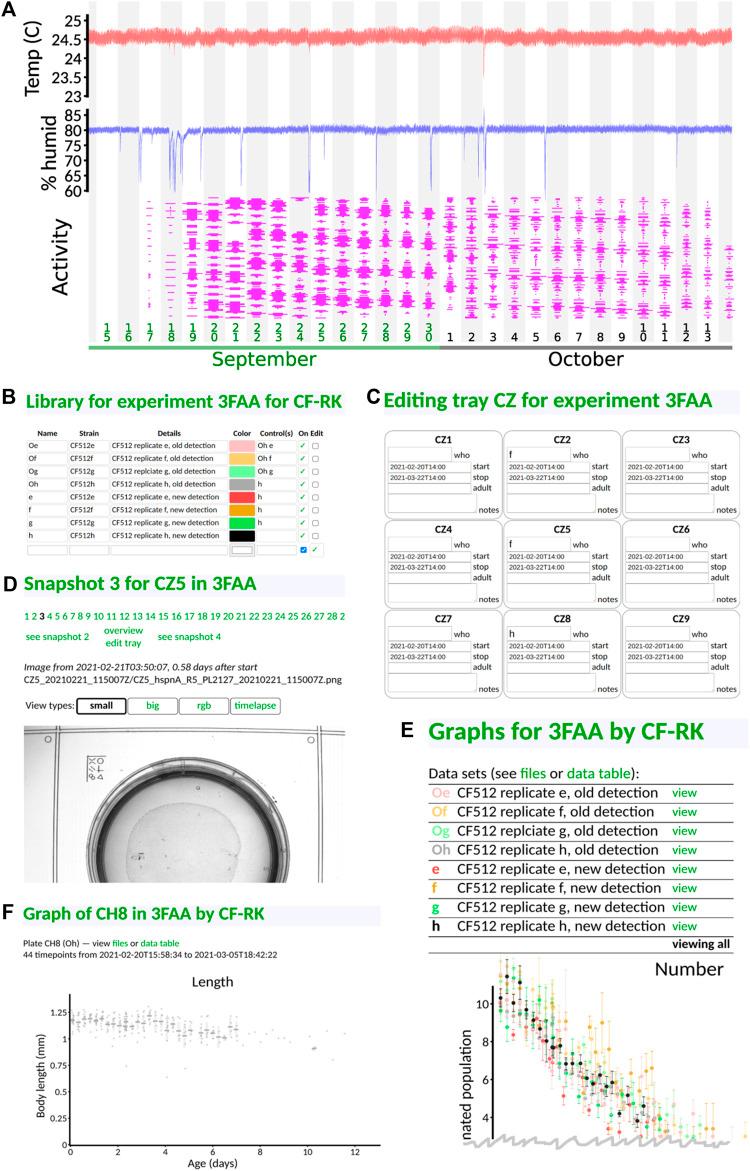
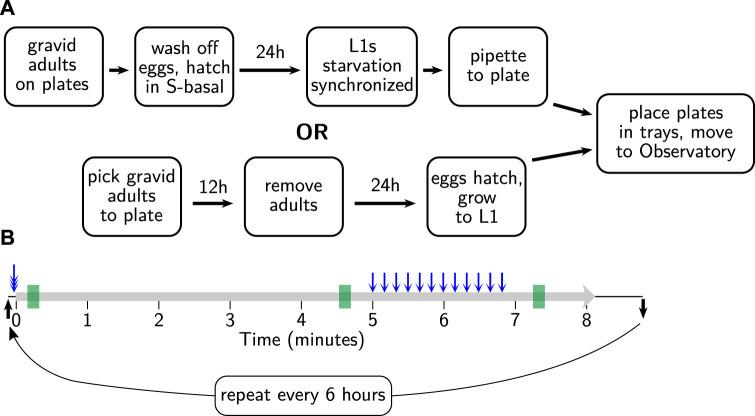
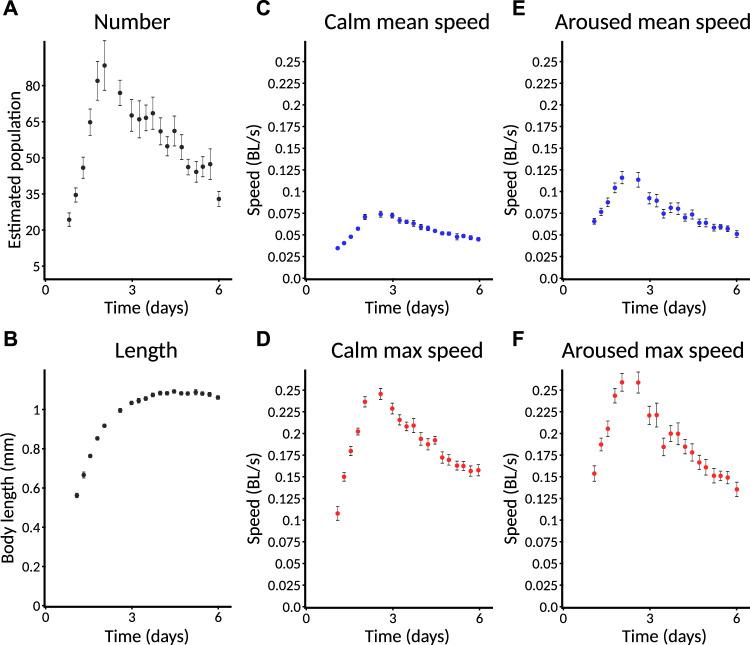
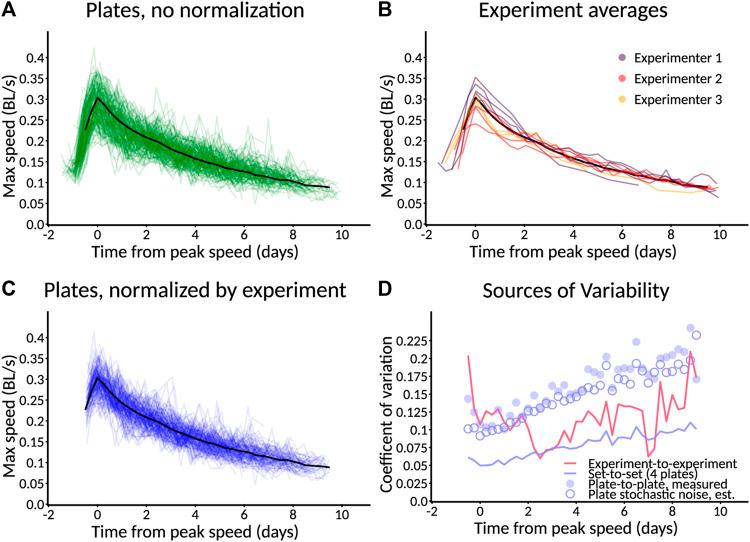
Organisms undergo a variety of characteristic changes as they age, suggesting a substantial commonality in the mechanistic basis of aging. Experiments in model organisms have revealed a variety of cellular systems that impact lifespan, but technical challenges have prevented a comprehensive evaluation of how these components impact the trajectory of aging, and many components likely remain undiscovered. To facilitate the deeper exploration of aging trajectories at a sufficient scale to enable primary screening, we have created the Observatory, an automated system for monitoring the behavior of group-housed throughout their lifespans. One Observatory consists of a set of computers running custom software to control an incubator containing custom imaging and motion-control hardware. In its standard configuration, the Observatory cycles through trays of standard 6 cm plates, running four assays per day on up to 576 plates per incubator. High-speed image processing captures a range of behavioral metrics, including movement speed and stimulus-induced turning, and a data processing pipeline continuously computes summary statistics. The Observatory software includes a web interface that allows the user to input metadata and view graphs of the trajectory of behavioral aging as the experiment unfolds. Compared to the manual use of a plate-based tracker, the Observatory reduces the effort required by close to two orders of magnitude. Within the Observatory, reducing the function of known lifespan genes with RNA interference (RNAi) gives the expected phenotypic changes, including extended motility in and progeria in . Lifespans scored manually from worms raised in conventional conditions match those scored from images captured by the Observatory. We have used the Observatory for a small candidate-gene screen and identified an extended youthful vigor phenotype for and a progeric phenotype for . By utilizing the Observatory, it is now feasible to conduct whole-genome screens for an aging-trajectory phenotype, thus greatly increasing our ability to discover and analyze new components of the aging program.
生物体在衰老过程中会经历各种特征性变化,这表明衰老的机制基础存在很大的共性。对模式生物的实验揭示了多种影响寿命的细胞系统,但技术挑战阻碍了对这些成分如何影响衰老轨迹的全面评估,而且许多成分可能仍未被发现。为了在足够的规模上促进对衰老轨迹的深入探索以进行初步筛选,我们创建了“观测站”,这是一个用于在群体饲养的生物体整个生命周期内监测其行为的自动化系统。一个观测站由一组运行定制软件的计算机组成,用于控制一个包含定制成像和运动控制硬件的培养箱。在其标准配置中,观测站循环处理标准6厘米培养皿的托盘,每个培养箱每天对多达576个培养皿进行四项测定。高速图像处理可捕获一系列行为指标,包括运动速度和刺激诱导的转向,并且数据处理管道会持续计算汇总统计数据。观测站软件包括一个网络界面,允许用户输入元数据并在实验进行过程中查看行为衰老轨迹的图表。与手动使用基于平板的追踪器相比,观测站将所需的工作量减少了近两个数量级。在观测站内,通过RNA干扰(RNAi)降低已知寿命基因的功能会产生预期的表型变化,包括秀丽隐杆线虫的运动能力延长和早衰症。在传统条件下饲养的线虫手动记录的寿命与观测站捕获的图像记录的寿命相匹配。我们已经使用观测站进行了一个小型候选基因筛选,并确定了秀丽隐杆线虫的延长年轻活力表型和早衰表型。通过利用观测站,现在可以针对衰老轨迹表型进行全基因组筛选,从而大大提高我们发现和分析衰老程序新成分的能力。




 Zotero 插件