
高脂血症导致心肌损伤的机制:近期研究综述。
Mechanisms of Myocardial Damage Due to Hyperlipidemia: A Review of Recent Studies.
机构信息
Department of Clinical Medicine, Weifang Medical University, Weifang, Shandong, China (mainland).
Department of Cardiology, Affiliated Hospital of Weifang Medical University, Weifang, Shandong, China (mainland).
出版信息
Med Sci Monit. 2022 Sep 16;28:e937051. doi: 10.12659/MSM.937051.
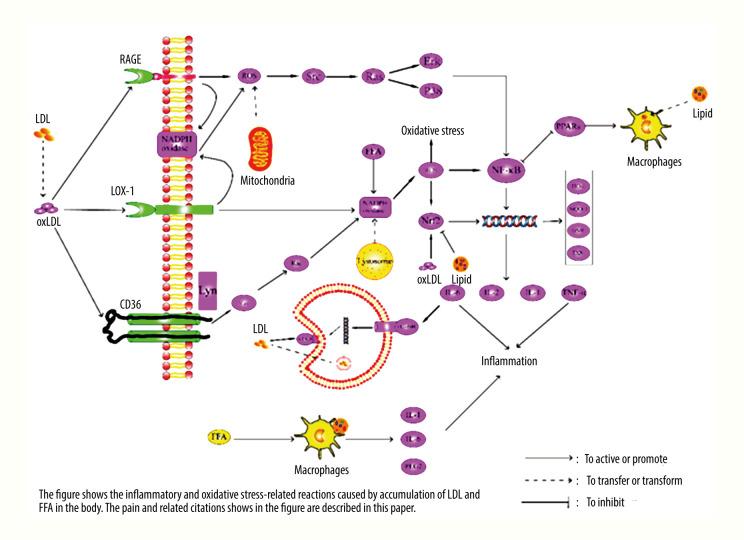
Myocardial injury and necrosis caused by hyperlipidemia have been investigated by several researchers. Their pathogenesis and molecular basis are different from those of the more common clinical ischemic myocardial injury. Hyperlipidemia leads to peroxide accumulation in the cardiomyocytes, causes lipid overload, decreases the antioxidant capacity of the body, and promotes the inflammatory response. Furthermore, hyperlipidemia causes changes in the structure and function of mitochondria in the cardiomyocytes, which results in their injury and necrosis. Many previous studies have shown that metabolic diseases (eg, obesity and diabetes) and chemical poisoning can lead to hyperlipidemic myocardial injury and necrosis. Moreover, it has been observed that this pathological process can be inhibited by many small molecular substances. In the clinic, myocardial damage can be prevented or reduced by lowering the levels of triglyceride and cholesterol. Myocardial damage can also be regulated via the molecular pathway of myocardial injury caused by hyperlipidemia so that the disease can be treated. The present article reviewed the recent findings reported on the mechanisms of myocardial damage due to hyperlipidemia.
已有多位研究人员研究了高血脂引起的心肌损伤和坏死。其发病机制和分子基础与更为常见的临床缺血性心肌损伤不同。高血脂会导致心肌细胞中过氧化物的积累,引起脂质过载,降低身体的抗氧化能力,并促进炎症反应。此外,高血脂还会导致心肌细胞中线粒体的结构和功能发生变化,从而导致其损伤和坏死。许多先前的研究表明,代谢性疾病(如肥胖和糖尿病)和化学中毒会导致高血脂性心肌损伤和坏死。此外,人们还观察到,许多小分子物质可以抑制这一病理过程。在临床上,通过降低甘油三酯和胆固醇的水平,可以预防或减少心肌损伤。还可以通过调控高血脂引起的心肌损伤的分子通路来调节心肌损伤,从而治疗疾病。本文综述了近年来关于高血脂引起心肌损伤机制的研究进展。

 Zotero 插件