
PYCR1表达在癌症中的生存及临床病理意义:一项荟萃分析。
Survival and clinicopathological significance of PYCR1 expression in cancer: A meta-analysis.
作者信息
Li Yue, Xu Jiahuan, Bao Pengchen, Wei Zhijing, Pan Lei, Zhou Jiawei, Wang Wei
机构信息
Department of Respiratory and Critical Care Medicine, The First Hospital of China Medical University, Shenyang, China.
China Medical University, Shenyang, China.
出版信息
Front Oncol. 2022 Sep 2;12:985613. doi: 10.3389/fonc.2022.985613. eCollection 2022.
BACKGROUND
Proline metabolism is closely related to the occurrence and development of cancer. Δ1-Pyrroline-5-carboxylate reductase (PYCR) is the last enzyme in proline biosynthesis. As one of the enzyme types, PYCR1 takes part in the whole process of the growth, invasion, and drug resistance of cancer cells. This study investigated PYCR1 expressions in cancers together with their relationship to clinical prognosis.
METHODS
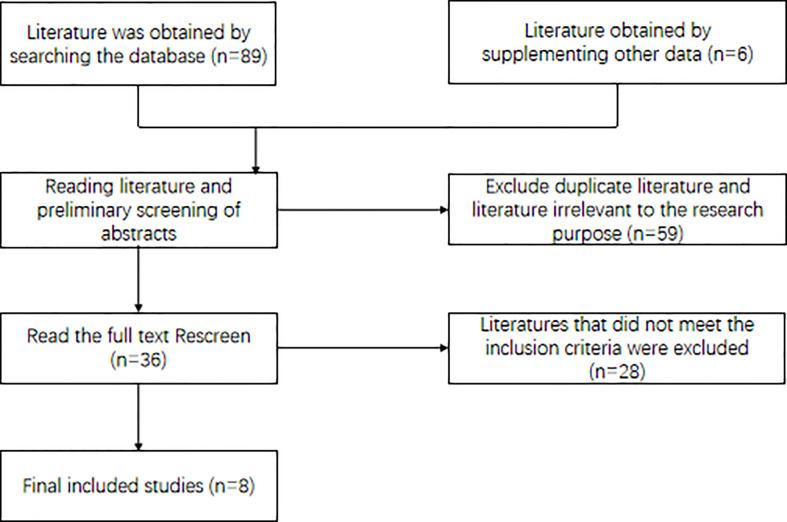
A thorough database search was performed in PubMed, EMBASE, and Cochrane Library. RevMan5.3 software was used for the statistical analysis.
RESULTS
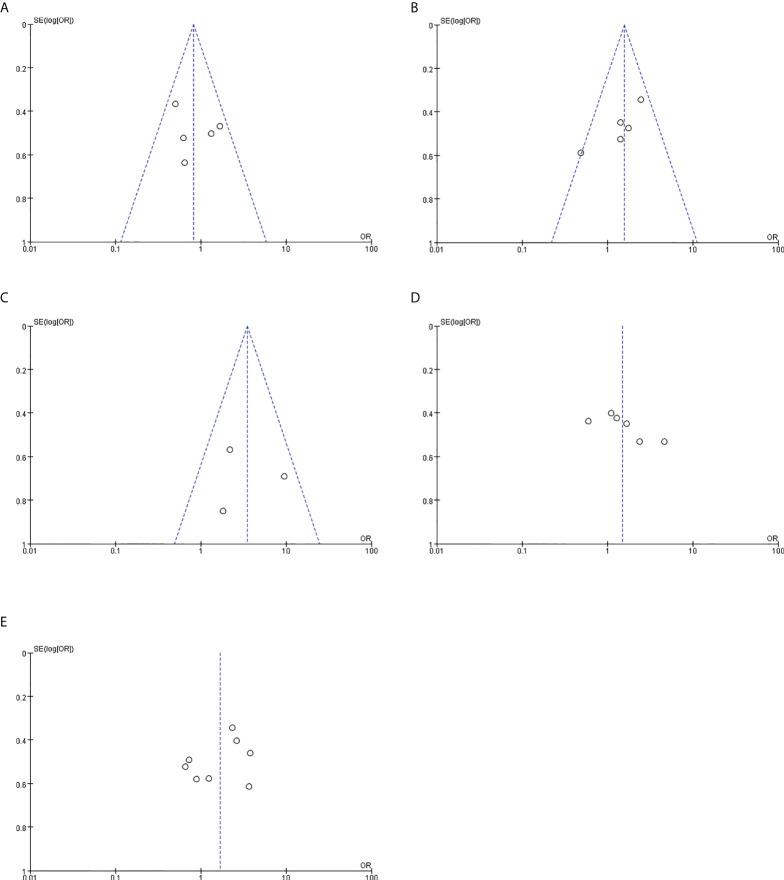
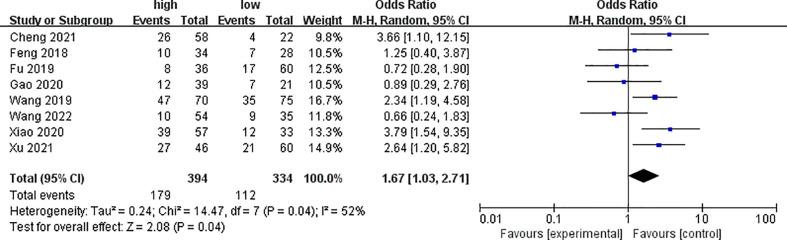
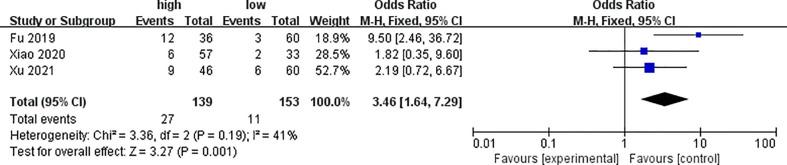
Eight articles were selected, and 728 cancer patients were enrolled. The cancer types include lung, stomach, pancreatic ductal adenocarcinoma, hepatocellular carcinoma, and renal cell carcinoma. The meta-analysis results showed that the expression of PYCR1 was higher in the clinical stage III-IV group than that in the clinical stage I-II group (OR = 1.67, 95%CI: 1.03-2.71), higher in the lymph node metastasis group than in the non-lymph node metastasis group (OR = 1.57, 95%CI: 1.06-2.33), and higher in the distant metastasis group than in the non-distant metastasis group (OR = 3.46, 95%CI: 1.64-7.29). However, there was no statistical difference in PYCR1 expression between different tumor sizes (OR = 1.50, 95%CI: 0.89-2.53) and degrees of differentiation (OR = 0.82, 95%CI: 0.54-1.24).
CONCLUSION
PYCR1 had a high expression in various cancers and was associated with cancer volume and metastasis. The higher the PYCR1 expression was, the poorer the cancer prognosis was. The molecular events and biological processes mediated by PYCR1 might be the underlying mechanisms of metastasis.
背景
脯氨酸代谢与癌症的发生发展密切相关。Δ1-吡咯啉-5-羧酸还原酶(PYCR)是脯氨酸生物合成的最后一种酶。作为酶类型之一,PYCR1参与癌细胞生长、侵袭和耐药的全过程。本研究调查了PYCR1在癌症中的表达及其与临床预后的关系。
方法
在PubMed、EMBASE和Cochrane图书馆进行全面的数据库检索。使用RevMan5.3软件进行统计分析。
结果
选取8篇文章,纳入728例癌症患者。癌症类型包括肺癌、胃癌、胰腺导管腺癌、肝细胞癌和肾细胞癌。荟萃分析结果显示,临床III-IV期组的PYCR1表达高于临床I-II期组(OR = 1.67,95%CI:1.03-2.71),淋巴结转移组高于无淋巴结转移组(OR = 1.57,95%CI:1.06-2.33),远处转移组高于无远处转移组(OR = 3.46,95%CI:1.64-7.29)。然而,不同肿瘤大小(OR = 1.50,95%CI:0.89-2.53)和分化程度(OR = 0.82,95%CI:0.54-1.24)的PYCR1表达无统计学差异。
结论
PYCR1在多种癌症中高表达,且与癌体积和转移相关。PYCR1表达越高,癌症预后越差。PYCR1介导的分子事件和生物学过程可能是转移的潜在机制。


 Zotero 插件