
最大的菌根异养兰花谱系的极度缩小、分化和重排质体基因组。
The extremely reduced, diverged and reconfigured plastomes of the largest mycoheterotrophic orchid lineage.
机构信息
State Key Laboratory of Systematic and Evolutionary Botany, Institute of Botany, Chinese Academy of Sciences, Beijing, 100093, China.
School of Life Sciences, Nanchang University, Nanchang, 330031, China.
出版信息
BMC Plant Biol. 2022 Sep 20;22(1):448. doi: 10.1186/s12870-022-03836-x.
BACKGROUND
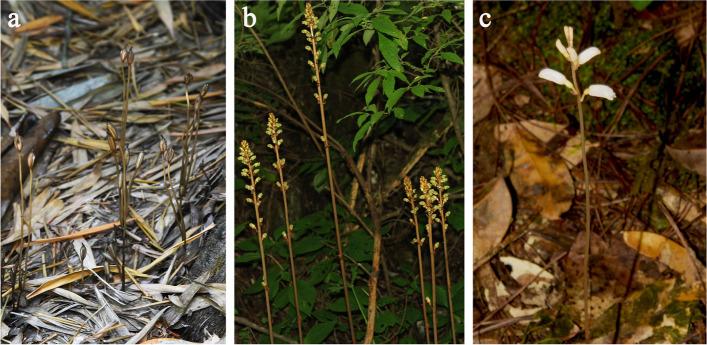
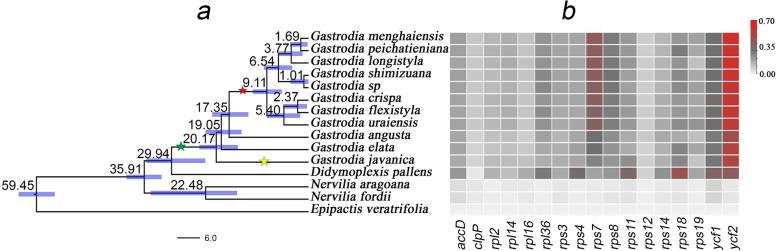
Plastomes of heterotrophic plants have been greatly altered in structure and gene content, owing to the relaxation of selection on photosynthesis-related genes. The orchid tribe Gastrodieae is the largest and probably the oldest mycoheterotrophic clade of the extant family Orchidaceae. To characterize plastome evolution across members of this key important mycoheterotrophic lineage, we sequenced and analyzed the plastomes of eleven Gastrodieae members, including representative species of two genera, as well as members of the sister group Nervilieae.
RESULTS
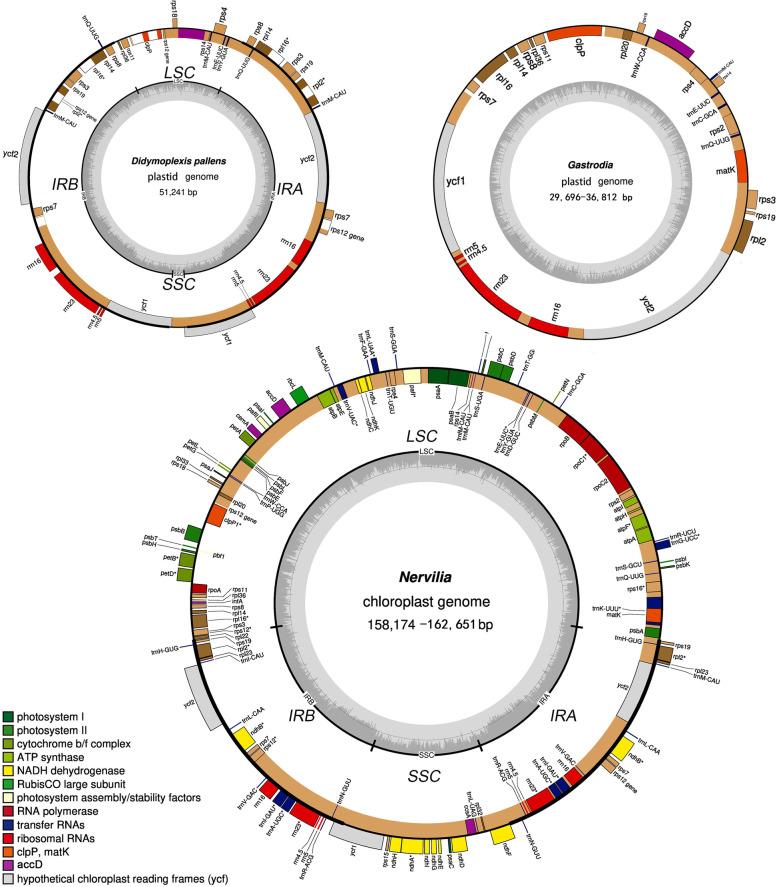
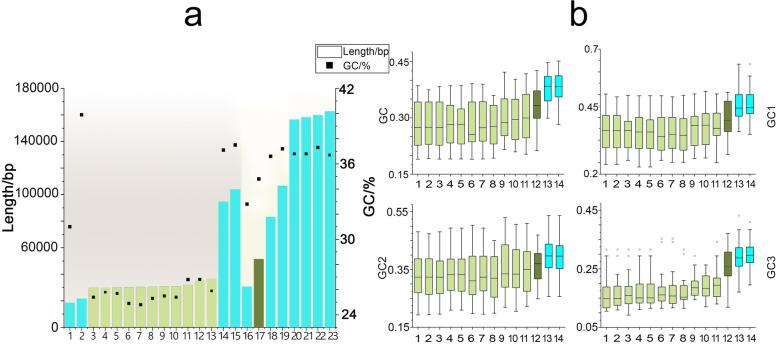
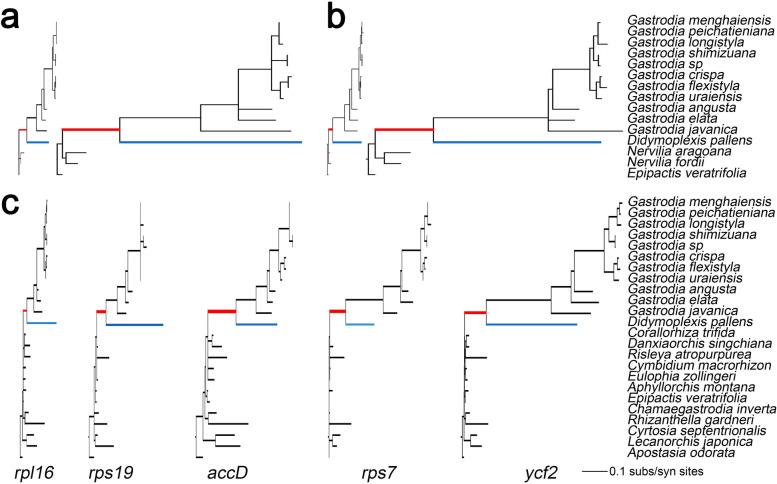
The plastomes of Gastrodieae members contain 20 protein-coding, four rRNA and five tRNA genes. Evolutionary analysis indicated that all rrn genes were transferred laterally and together, forming an rrn block in the plastomes of Gastrodieae. The plastome GC content of Gastrodia species ranged from 23.10% (G. flexistyla) to 25.79% (G. javanica). The plastome of Didymoplexis pallens contains two copies each of ycf1 and ycf2. The synonymous and nonsynonymous substitution rates were very high in the plastomes of Gastrodieae among mycoheterotrophic species in Orchidaceae and varied between genes.
CONCLUSIONS
The plastomes of Gastrodieae are greatly reduced and characterized by low GC content, rrn block formation, lineage-specific reconfiguration and gene content, which might be positively selected. Overall, the plastomes of Gastrodieae not only serve as an excellent model for illustrating the evolution of plastomes but also provide new insights into plastome evolution in parasitic plants.
背景
由于光合作用相关基因的选择放松,异养植物的质体已经在结构和基因组成上发生了巨大的改变。兰科天麻属是现存兰科中最大的、可能也是最古老的菌根异养分支。为了描述这个重要的菌根异养谱系中各成员的质体进化,我们对 11 种天麻属成员的质体进行了测序和分析,包括两个属的代表种,以及姐妹群神经兰属的成员。
结果
天麻属成员的质体含有 20 个蛋白编码基因、4 个 rRNA 基因和 5 个 tRNA 基因。进化分析表明,所有 rrn 基因都发生了横向转移,并一起形成了质体 rrn 块。天麻属物种的质体 GC 含量范围为 23.10%(G. flexistyla)至 25.79%(G. javanica)。Didymoplexis pallens 的质体含有两个拷贝的 ycf1 和 ycf2。天麻属质体中同义替换率和非同义替换率在兰科菌根异养植物中都非常高,且在基因之间存在差异。
结论
天麻属的质体大大减少,其特征为低 GC 含量、rrn 块的形成、谱系特异性的重排和基因组成,这可能是受到了正选择。总的来说,天麻属的质体不仅为质体进化提供了一个很好的模型,也为寄生植物的质体进化提供了新的见解。
 Zotero 插件