
奈玛特韦片/利托那韦片组合包装用于 COVID-19 的预防和治疗。
Nirmatrelvir combined with ritonavir for preventing and treating COVID-19.
机构信息
Department of Anaesthesiology, Intensive Care, Emergency and Pain Medicine, University Hospital Würzburg, Würzburg, Germany.
Cochrane Metabolic and Endocrine Disorders Group, Institute of General Practice, Medical Faculty of the Heinrich-Heine University Düsseldorf, Düsseldorf, Germany.
出版信息
Cochrane Database Syst Rev. 2022 Sep 20;9(9):CD015395. doi: 10.1002/14651858.CD015395.pub2.
BACKGROUND
Oral nirmatrelvir/ritonavir (Paxlovid®) aims to avoid severe COVID-19 in asymptomatic people or those with mild symptoms, thereby decreasing hospitalization and death. Due to its novelty, there are currently few published study results. It remains to be evaluated for which indications and patient populations the drug is suitable. OBJECTIVES: To assess the efficacy and safety of nirmatrelvir/ritonavir (Paxlovid®) plus standard of care compared to standard of care with or without placebo, or any other intervention for treating COVID-19 and for preventing SARS-CoV-2 infection. To explore equity aspects in subgroup analyses. To keep up to date with the evolving evidence base using a living systematic review (LSR) approach and make new relevant studies available to readers in-between publication of review updates.
SEARCH METHODS
We searched the Cochrane COVID-19 Study Register, Scopus, and WHO COVID-19 Global literature on coronavirus disease database, identifying completed and ongoing studies without language restrictions and incorporating studies up to 11 July 2022. This is a LSR. We conduct monthly update searches that are being made publicly available on the open science framework (OSF) platform.
SELECTION CRITERIA
Studies were eligible if they were randomized controlled trials (RCTs) comparing nirmatrelvir/ritonavir plus standard of care with standard of care with or without placebo, or any other intervention for treatment of people with confirmed COVID-19 diagnosis, irrespective of disease severity or treatment setting, and for prevention of SARS-CoV-2 infection. We screened all studies for research integrity. Studies were ineligible if they had been retracted, or if they were not prospectively registered including appropriate ethics approval.
DATA COLLECTION AND ANALYSIS
We followed standard Cochrane methodology and used the Cochrane risk of bias 2 tool. We rated the certainty of evidence using the GRADE approach for the following outcomes: 1. to treat outpatients with mild COVID-19; 2. to treat inpatients with moderate-to-severe COVID-19: mortality, clinical worsening or improvement, quality of life, (serious) adverse events, and viral clearance; 3. to prevent SARS-CoV-2 infection in post-exposure prophylaxis (PEP); and 4. pre-exposure prophylaxis (PrEP) scenarios: SARS-CoV-2 infection, development of COVID-19 symptoms, mortality, admission to hospital, quality of life, and (serious) adverse events. We explored inequity by subgroup analysis for elderly people, socially-disadvantaged people with comorbidities, populations from LICs and LMICs, and people from different ethnic and racial backgrounds.
MAIN RESULTS
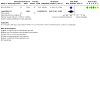
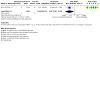
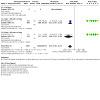
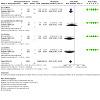
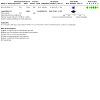
As of 11 July 2022, we included one RCT with 2246 participants in outpatient settings with mild symptomatic COVID-19 comparing nirmatrelvir/ritonavir plus standard of care with standard of care plus placebo. Trial participants were unvaccinated, without previous confirmed SARS-CoV-2 infection, had a symptom onset of no more than five days before randomization, and were at high risk for progression to severe disease. Prohibited prior or concomitant therapies included medications highly dependent on CYP3A4 for clearance and CYP3A4 inducers. We identified eight ongoing studies. Nirmatrelvir/ritonavir for treating COVID-19 in outpatient settings with asymptomatic or mild disease For the specific population of unvaccinated, high-risk patients nirmatrelvir/ritonavir plus standard of care compared to standard of care plus placebo may reduce all-cause mortality at 28 days (risk ratio (RR) 0.04, 95% confidence interval (CI) 0.00 to 0.68; 1 study, 2224 participants; estimated absolute effect: 11 deaths per 1000 people receiving placebo compared to 0 deaths per 1000 people receiving nirmatrelvir/ritonavir; low-certainty evidence, and admission to hospital or death within 28 days (RR 0.13, 95% CI 0.07 to 0.27; 1 study, 2224 participants; estimated absolute effect: 61 admissions or deaths per 1000 people receiving placebo compared to eight admissions or deaths per 1000 people receiving nirmatrelvir/ritonavir; low-certainty evidence). Nirmatrelvir/ritonavir plus standard of care may reduce serious adverse events during the study period compared to standard of care plus placebo (RR 0.24, 95% CI 0.15 to 0.41; 1 study, 2224 participants; low-certainty evidence). Nirmatrelvir/ritonavir plus standard of care probably has little or no effect on treatment-emergent adverse events (RR 0.95, 95% CI 0.82 to 1.10; 1 study, 2224 participants; moderate-certainty evidence), and probably increases treatment-related adverse events such as dysgeusia and diarrhoea during the study period compared to standard of care plus placebo (RR 2.06, 95% CI 1.44 to 2.95; 1 study, 2224 participants; moderate-certainty evidence). Nirmatrelvir/ritonavir plus standard of care probably decreases discontinuation of study drug due to adverse events compared to standard of care plus placebo (RR 0.49, 95% CI 0.30 to 0.80; 1 study, 2224 participants; moderate-certainty evidence). No study results were identified for improvement of clinical status, quality of life, and viral clearance. Subgroup analyses for equity Most study participants were younger than 65 years (87.1% of the : modified intention to treat (mITT1) population with 2085 participants), of white ethnicity (71.5%), and were from UMICs or HICs (92.1% of study centres). Data on comorbidities were insufficient. The outcome 'admission to hospital or death' was investigated for equity: age (< 65 years versus ≥ 65 years) and ethnicity (Asian versus Black versus White versus others). There was no difference between subgroups of age. The effects favoured treatment with nirmatrelvir/ritonavir for the White ethnic group. Estimated effects in the other ethnic groups included the line of no effect (RR = 1). No subgroups were reported for comorbidity status and World Bank country classification by income level. No subgroups were reported for other outcomes. Nirmatrelvir/ritonavir for treating COVID-19 in inpatient settings with moderate to severe disease No studies available. Nirmatrelvir/ritonavir for preventing SARS-CoV-2 infection (PrEP and PEP) No studies available.
AUTHORS' CONCLUSIONS: There is low-certainty evidence that nirmatrelvir/ritonavir reduces the risk of all-cause mortality and hospital admission or death based on one trial investigating unvaccinated COVID-19 participants without previous infection that were at high risk and with symptom onset of no more than five days. There is low- to moderate-certainty evidence that nirmatrelvir/ritonavir is safe in people without prior or concomitant therapies including medications highly dependent on CYP3A4. Regarding equity aspects, except for ethnicity, no differences in effect size and direction were identified. No evidence is available on nirmatrelvir/ritonavir to treat hospitalized people with COVID-19 and to prevent a SARS-CoV-2 infection. We will continually update our search and make search results available on OSF.
背景
口服奈玛特韦/利托那韦(Paxlovid®)旨在避免无症状或轻症 COVID-19 患者发展为重症,从而减少住院和死亡。由于其新颖性,目前发表的研究结果很少。尚需评估该药适用于哪些指征和患者人群。
目的
评估奈玛特韦/利托那韦(Paxlovid®)联合标准治疗与标准治疗加安慰剂或任何其他干预措施治疗 COVID-19 和预防 SARS-CoV-2 感染的疗效和安全性。探索亚组分析中的公平性问题。使用正在进行的系统评价(LSR)方法,及时了解不断发展的证据基础,并在每次更新综述之间为读者提供新的相关研究。
检索方法
我们检索了 Cochrane COVID-19 研究注册库、Scopus 和世界卫生组织 COVID-19 全球冠状病毒疾病数据库,纳入了已完成和正在进行的研究,无语言限制,并纳入了截至 2022 年 7 月 11 日的研究。这是一个 LSR。我们每月进行一次更新搜索,并将其在开放科学框架(OSF)平台上公开。
选择标准
如果研究是将奈玛特韦/利托那韦联合标准治疗与标准治疗加安慰剂或任何其他干预措施治疗确诊 COVID-19 患者(无论疾病严重程度或治疗环境如何),以及预防 SARS-CoV-2 感染的随机对照试验(RCT),我们将对所有研究进行筛选,以确保研究的完整性。如果研究已被撤回,或者如果研究没有前瞻性注册,包括适当的伦理批准,则不符合纳入标准。
数据收集和分析
我们遵循了标准的 Cochrane 方法,并使用了 Cochrane 偏倚风险 2 工具。我们使用 GRADE 方法评估了以下结局的证据确定性:1. 治疗门诊轻症 COVID-19;2. 治疗住院中度至重度 COVID-19:死亡率、临床改善或恶化、生活质量、(严重)不良事件和病毒清除;3. 预防 SARS-CoV-2 感染的暴露前预防(PEP);4. 预防前预防(PrEP):SARS-CoV-2 感染、COVID-19 症状发展、死亡率、住院、生活质量和(严重)不良事件。我们通过亚组分析探索了公平性问题,包括老年人、有合并症的社会弱势群体、来自低中等收入国家和中低收入国家的人群,以及来自不同种族和民族背景的人群。
主要结果
截至 2022 年 7 月 11 日,我们纳入了一项包含 2246 名门诊有症状轻症 COVID-19 患者的 RCT,比较了奈玛特韦/利托那韦联合标准治疗与标准治疗加安慰剂。试验参与者未接种疫苗,无既往确诊 SARS-CoV-2 感染,症状发作不超过随机分组前 5 天,且有进展为重症疾病的高风险。禁止同时或先前使用的治疗方法包括高度依赖 CYP3A4 清除的药物和 CYP3A4 诱导剂。我们发现了八项正在进行的研究。奈玛特韦/利托那韦治疗门诊无症状或轻症 COVID-19 患者对于未接种疫苗、高风险的 COVID-19 患者,奈玛特韦/利托那韦联合标准治疗与标准治疗加安慰剂相比,可能降低 28 天全因死亡率(风险比(RR)0.04,95%置信区间(CI)0.00 至 0.68;1 项研究,2224 名参与者;估计绝对效果:安慰剂组每 1000 人中有 11 人死亡,奈玛特韦/利托那韦组每 1000 人中有 0 人死亡;低确定性证据,以及 28 天内住院或死亡(RR 0.13,95% CI 0.07 至 0.27;1 项研究,2224 名参与者;估计绝对效果:安慰剂组每 1000 人中有 61 人住院或死亡,奈玛特韦/利托那韦组每 1000 人中有 8 人住院或死亡;低确定性证据)。奈玛特韦/利托那韦联合标准治疗可能降低研究期间的严重不良事件(RR 0.24,95% CI 0.15 至 0.41;1 项研究,2224 名参与者;低确定性证据)。奈玛特韦/利托那韦联合标准治疗可能对治疗期间的不良事件(RR 0.95,95% CI 0.82 至 1.10;1 项研究,2224 名参与者;中等确定性证据)和可能增加治疗期间的不良事件,如味觉障碍和腹泻(RR 2.06,95% CI 1.44 至 2.95;1 项研究,2224 名参与者;中等确定性证据),与标准治疗加安慰剂相比,奈玛特韦/利托那韦联合标准治疗可能降低因不良事件而停止研究药物的比例(RR 0.49,95% CI 0.30 至 0.80;1 项研究,2224 名参与者;中等确定性证据)。没有研究结果表明改善临床状况、生活质量和病毒清除。
公平性亚组分析
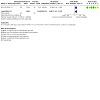
大多数研究参与者年龄小于 65 岁(2085 名参与者中的改良意向治疗(mITT1)人群的 87.1%),为白种人(71.5%),来自中等偏高收入国家或高收入国家(研究中心的 92.1%)。关于合并症的数据不足。“住院或死亡”的结局是为了公平性而进行的调查:年龄(<65 岁与≥65 岁)和种族(亚洲人与黑人与白人与其他人)。在年龄方面没有发现亚组差异。对于白人种族群体,治疗效果有利于奈玛特韦/利托那韦。在其他种族群体中,估计的效果包括无效应线(RR=1)。没有报告种族和世界银行按收入水平划分的国家分类的合并症状况。对于其他结局,没有报告亚组。奈玛特韦/利托那韦治疗住院中度至重度 COVID-19 患者:无研究结果。奈玛特韦/利托那韦预防 SARS-CoV-2 感染(PEP 和 PrEP):无研究结果。
作者结论
有低确定性证据表明,奈玛特韦/利托那韦可降低未接种疫苗、无既往感染且症状发作不超过 5 天的 COVID-19 高风险患者的全因死亡率和住院或死亡风险,基于一项纳入无先前或同时治疗包括高度依赖 CYP3A4 清除的药物和 CYP3A4 诱导剂的 COVID-19 参与者的试验。有低至中等确定性证据表明,奈玛特韦/利托那韦在无此类先前或同时治疗的情况下是安全的。除了种族之外,没有发现公平性方面的效果大小和方向的差异。没有证据表明奈玛特韦/利托那韦可用于治疗住院 COVID-19 患者或预防 SARS-CoV-2 感染。我们将继续更新我们的搜索,并在 OSF 上提供搜索结果。



 Zotero 插件