
FLT3-ITD 急性髓系白血病中的 DNA 损伤积累和修复缺陷:对克隆进化和疾病进展的影响。
DNA damage accumulation and repair defects in FLT3-ITD acute myeloid leukemia: Implications for clonal evolution and disease progression.
机构信息
Department of Surgical Sciences, Uppsala University, Uppsala, Sweden.
出版信息
Hematol Oncol. 2023 Feb;41(1):26-38. doi: 10.1002/hon.3076. Epub 2022 Sep 28.
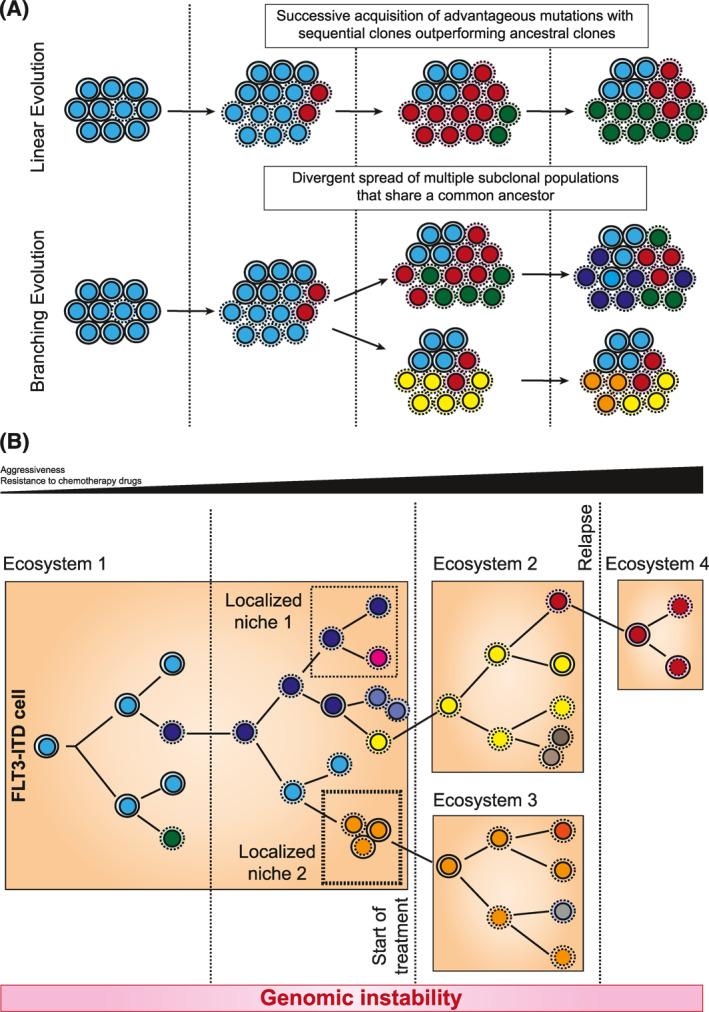
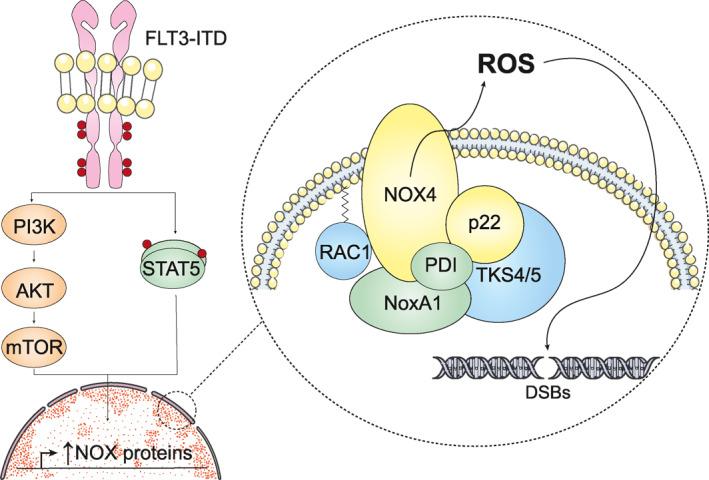
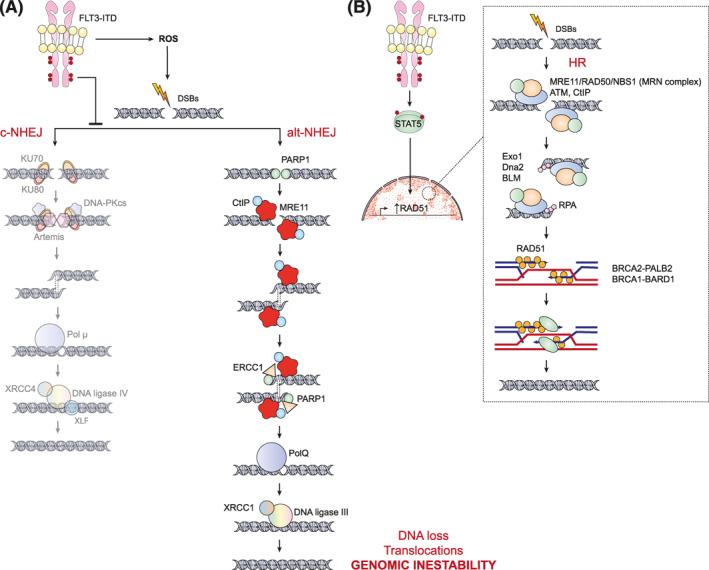
Acute myeloid leukemia is a group of hematological diseases that have a high mortality rate. During the development of this pathology, hematopoietic cells acquire chromosomal rearrangements and multiple genetic mutations, including FLT3-ITD. FLT3-ITD is a marker associated with a poor clinical prognosis and involves the activation of pathways such as PI3K/AKT, MAPK/ERK, and JAK/STAT that favor the survival and proliferation of leukemic cells. In addition, FLT3-ITD leads to overproduction of reactive oxygen species and defective DNA damage repair, both implicated in the appearance of new mutations and leukemic clones. Thus, the purpose of this review is to illustrate the molecular mechanisms through which FLT3-ITD generates genetic instability and how it facilitates clonal evolution with the generation of more resistant and aggressive cells. Likewise, this article discusses the feasibility of combined therapies with FLT3 inhibitors and inhibitors of DNA repair pathways.
急性髓细胞白血病是一组具有高死亡率的血液系统疾病。在该病理的发展过程中,造血细胞获得染色体重排和多种基因突变,包括 FLT3-ITD。FLT3-ITD 是与不良临床预后相关的标志物,涉及 PI3K/AKT、MAPK/ERK 和 JAK/STAT 等途径的激活,有利于白血病细胞的存活和增殖。此外,FLT3-ITD 导致活性氧的过度产生和 DNA 损伤修复的缺陷,这两者都与新突变和白血病克隆的出现有关。因此,本综述的目的是阐明 FLT3-ITD 产生遗传不稳定性的分子机制,以及它如何通过产生更具耐药性和侵袭性的细胞来促进克隆进化。同样,本文还讨论了联合应用 FLT3 抑制剂和 DNA 修复途径抑制剂的治疗可行性。

 Zotero 插件