
外泌体蛋白在癌症诊断、预后和治疗中的最新作用。
The updated role of exosomal proteins in the diagnosis, prognosis, and treatment of cancer.
机构信息
Thyroid Surgery Center, West China Hospital of Sichuan University, Chengdu, China.
出版信息
Exp Mol Med. 2022 Sep;54(9):1390-1400. doi: 10.1038/s12276-022-00855-4. Epub 2022 Sep 22.
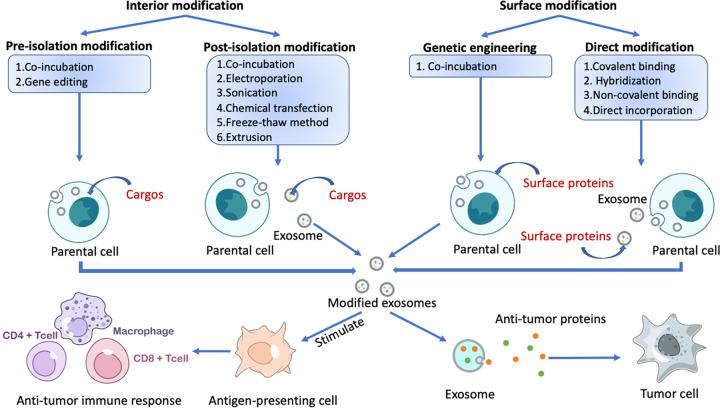
Exosomes are vesicles encompassed by a lipid bilayer that are released by various living cells. Exosomal proteins are encapsulated within the membrane or embedded on the surface. As an important type of exosome cargo, exosomal proteins can reflect the physiological status of the parent cell and play an essential role in cell-cell communication. Exosomal proteins can regulate tumor development, including tumor-related immune regulation, microenvironment reconstruction, angiogenesis, epithelial-mesenchymal transition, metastasis, etc. The features of exosomal proteins can provide insight into exosome generation, targeting, and biological function and are potential sources of markers for cancer diagnosis, prognosis, and treatment. Here, we summarize the effects of exosomal proteins on cancer biology, the latest progress in the application of exosomal proteins in cancer diagnosis and prognosis, and the potential contribution of exosomal proteins in cancer therapeutics and vaccines.
外泌体是由脂质双层所包裹的囊泡,由各种活细胞释放。外泌体蛋白被包裹在膜内或嵌入在表面。作为外泌体货物的重要类型,外泌体蛋白可以反映母细胞的生理状态,并在细胞间通讯中发挥重要作用。外泌体蛋白可以调节肿瘤的发生发展,包括肿瘤相关的免疫调节、微环境重建、血管生成、上皮-间充质转化、转移等。外泌体蛋白的特征可以深入了解外泌体的生成、靶向和生物学功能,并且是癌症诊断、预后和治疗的潜在标志物来源。在这里,我们总结了外泌体蛋白对癌症生物学的影响、外泌体蛋白在癌症诊断和预后中的最新应用进展,以及外泌体蛋白在癌症治疗和疫苗中的潜在贡献。


 Zotero 插件