
银屑病皮损中 mTORC1 的活性是通过结节性硬化复合物的异常调节介导的。
mTORC1 Activity in Psoriatic Lesions Is Mediated by Aberrant Regulation through the Tuberous Sclerosis Complex.
机构信息
Department of Dermatology, University Hospital, Goethe University Frankfurt, 60590 Frankfurt am Main, Germany.
出版信息
Cells. 2022 Sep 13;11(18):2847. doi: 10.3390/cells11182847.
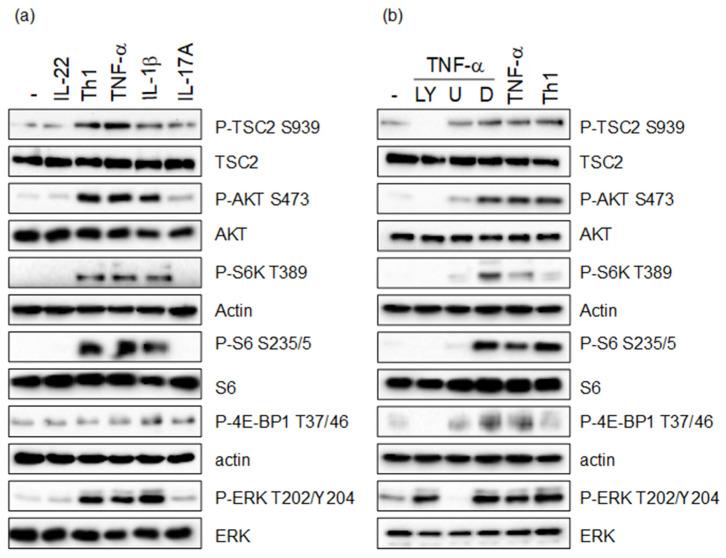
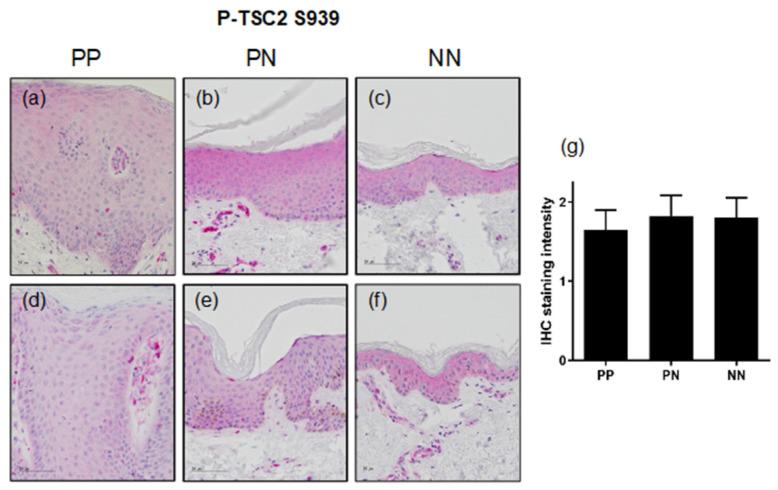
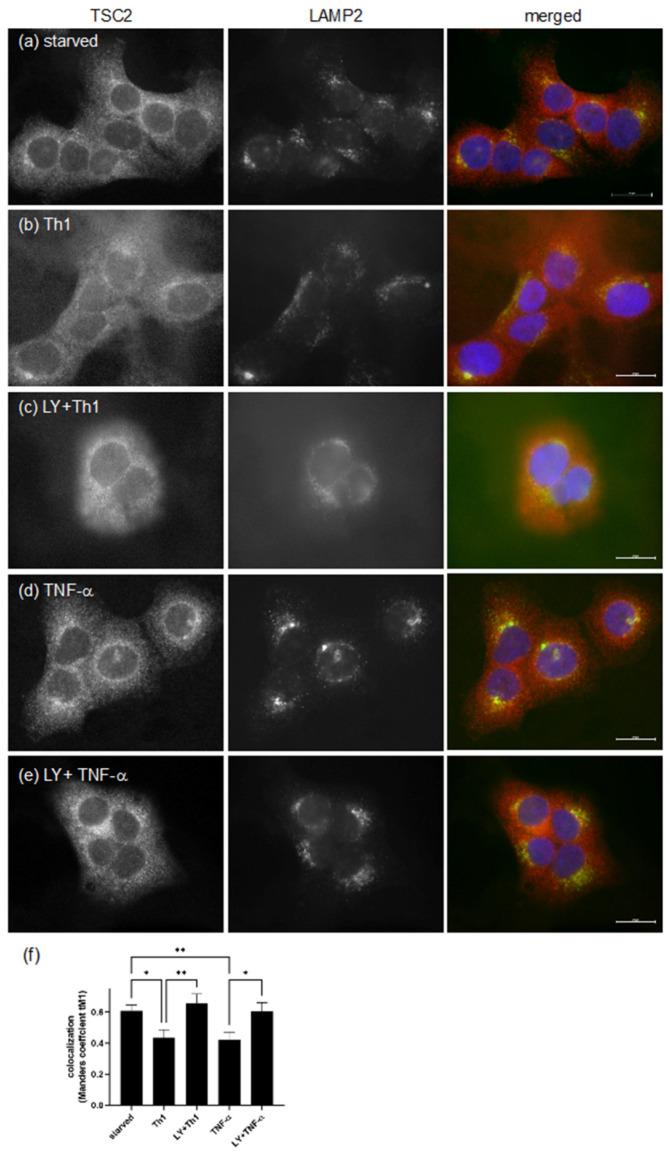
In the basal, proliferative layer of healthy skin, the mTOR complex 1 (mTORC1) is activated, thus regulating proliferation while preventing differentiation. When cells leave the proliferative, basal compartment, mTORC1 signaling is turned off, which allows differentiation. Under inflammatory conditions, this switch is hijacked by cytokines and prevents proper differentiation. It is currently unknown how mTORC1 is regulated to mediate these effects on keratinocyte differentiation. In other tissues, mTORC1 activity is controlled through various pathways via the tuberous sclerosis complex (TSC). Thus, we investigated whether the TS complex is regulated by proinflammatory cytokines and contributes to the pathogenesis of psoriasis. TNF-α as well as IL-1β induced the phosphorylation of TSC2, especially on S939 via the PI3-K/AKT and MAPK pathway. Surprisingly, increased TSC2 phosphorylation could not be detected in psoriasis patients. Instead, TSC2 was strongly downregulated in lesional psoriatic skin compared to non-lesional skin of the same patients or healthy skin. In vitro inflammatory cytokines induced dissociation of TSC2 from the lysosome, followed by destabilization of the TS complex and degradation. Thus, we assume that in psoriasis, inflammatory cytokines induce strong TSC2 phosphorylation, which in turn leads to its degradation. Consequently, chronic mTORC1 activity impairs ordered keratinocyte differentiation and contributes to the phenotypical changes seen in the psoriatic epidermis.
在健康皮肤的基底层和增殖层中,mTOR 复合物 1(mTORC1)被激活,从而调节增殖同时防止分化。当细胞离开增殖的基底层时,mTORC1 信号被关闭,从而允许分化。在炎症条件下,这种开关被细胞因子劫持,阻止了适当的分化。目前尚不清楚 mTORC1 如何被调节以介导对角质形成细胞分化的这些影响。在其他组织中,mTORC1 活性通过各种途径通过结节性硬化复合物(TSC)进行控制。因此,我们研究了 TSC 是否受促炎细胞因子调节并有助于银屑病的发病机制。TNF-α 和 IL-1β 通过 PI3-K/AKT 和 MAPK 途径诱导 TSC2 的磷酸化,特别是在 S939 上。令人惊讶的是,在银屑病患者中未检测到 TSC2 磷酸化增加。相反,与同一患者的非病变皮肤或健康皮肤相比,病变银屑病皮肤中 TSC2 强烈下调。体外炎症细胞因子诱导 TSC2 从溶酶体解离,随后 TS 复合物不稳定和降解。因此,我们假设在银屑病中,炎症细胞因子诱导 TSC2 的强烈磷酸化,进而导致其降解。因此,慢性 mTORC1 活性会损害有序的角质形成细胞分化,并导致银屑病表皮中出现的表型变化。



 Zotero 插件