
抗程序性死亡蛋白1/抗程序性死亡配体1抑制剂治疗晚期胃食管癌:一项2/3期随机对照试验的系统评价和荟萃分析
Anti PD-1/Anti PDL-1 Inhibitors in Advanced Gastroesophageal Cancers: A Systematic Review and Meta-Analysis of Phase 2/3 Randomized Controlled Trials.
作者信息
Parmar Kanak, Subramanyam Sai, Attwood Kristopher, Appiah Duke, Fountzilas Christos, Mukherjee Sarbajit
机构信息
Department of Internal Medicine, Texas Tech University Health Sciences Center, Lubbock, TX 79430, USA.
Department of Internal Medicine, Appalachian Regional Healthcare, Harlan, KY 40831, USA.
出版信息
Pharmaceutics. 2022 Sep 15;14(9):1953. doi: 10.3390/pharmaceutics14091953.
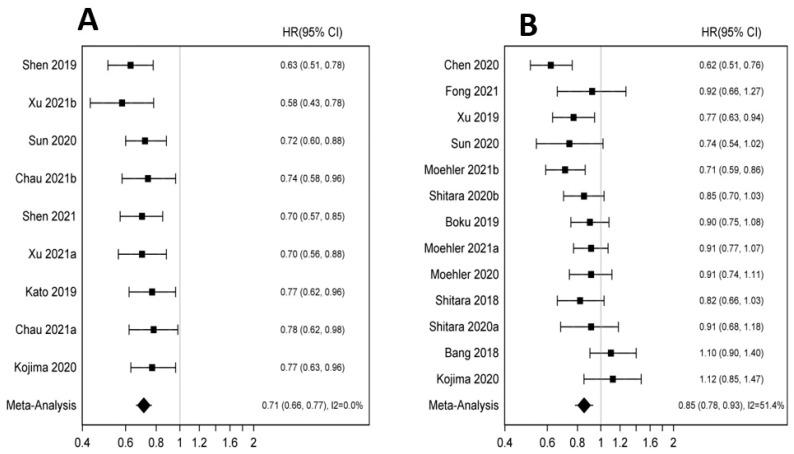
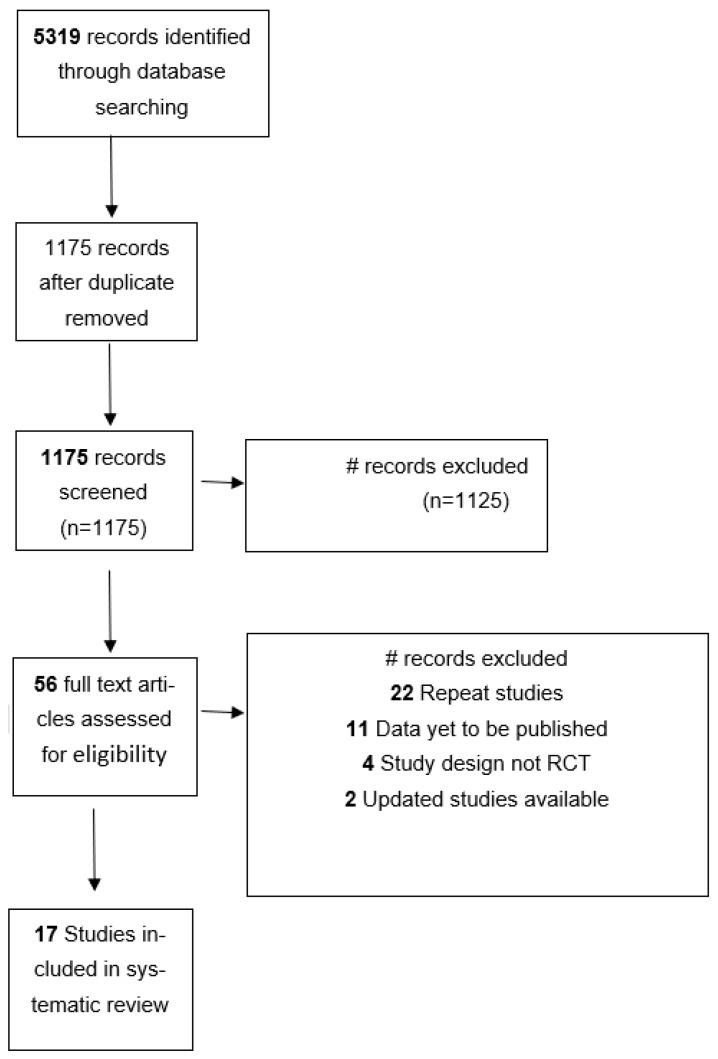
Importance: Immune checkpoint inhibitors (ICI) have revolutionized the treatment for gastroesophageal cancers (GEC). It is important to investigate the factors that influence the response to anti-PD-1/PD-L1 ICIs. Objective: To assess the benefits of PD-1/PD-L1 ICIs in advanced GEC and perform subgroup analysis to identify patient populations who would benefit from ICI. Data sources: PubMed, Embase, Scopus, and the Cochrane Library databases were systematically searched from database inception to September 2021 for all relevant articles. We also reviewed abstracts and presentations from all major conference proceedings including relevant meetings of the American Society of Clinical Oncology (ASCO), and the European Society for Medical Oncology (ESMO) during the last four years (2018 to 2021) and reviewed citation lists. Study selection, data extraction, and synthesis: Full articles and presentations were further assessed if the information suggested that the study was a phase 2/3 randomized controlled trial (RCT) comparing PD-1/PD-L1 inhibitor either alone, or in combination with standard therapy vs. standard therapy in advanced GEC. The full text of the resulting studies/presentations and extracted data were reviewed independently according to PRISMA guidelines. Main outcomes and measures: The main outcomes were OS, PFS, and treatment-related adverse events (TRAEs). Results: A total of 168 studies were assessed for eligibility, and 17 RCTs with 12,312 patients met the inclusion criteria. There was an OS benefit in the overall population with ICIs (HR 0.78; 95% CI 0.73−0.83 p < 0.001). Immunotherapy showed better OS benefit in males (HR 0.77 95% CI 0.72−0.83; p < 0.001) than females (HR 0.89; 95% CI 0.80−0.99 p < 0.03), esophageal primary tumors (HR 0.70 95% CI 0.64−0.76 p < 0.001) vs. gastric cancer (HR 0.84 95% CI 0.74−0.94 p 0.002) or GEJ cancer (HR 0.84 95% CI 0.72−0.98 p 0.024) and in squamous cell carcinoma (HR 0.71 95% CI 0.66−0.77 p < 0.001) vs. adenocarcinoma (HR 0.85 95% CI 0.78−0.93 p < 0.001). PD-L1 positive patients seemed to benefit more (HR 0.74 95% CI 0.67−0.82 p < 0.001) compared to PD-L1 negative patients (HR 0.86 95% CI 0.74−1.00 p < 0.043), and Asians showed OS benefit (HR 0.76 95% CI 0.67−0.87 p < 0.001) compared to their White counterparts (HR 0.92 95% CI 0.74−1.14; p 0.424). Conclusions and relevance: ICIs improve survival in advanced GEC without significantly increasing the side effects. However, certain subgroups of patients such as males, Asians, and those with esophageal primary, PD-L1 positive tumors and squamous cell carcinoma benefit more from such treatments. Further translational research is needed to understand the mechanistic links and develop new biomarkers.
重要性
免疫检查点抑制剂(ICI)彻底改变了胃肠食管癌(GEC)的治疗方式。研究影响抗PD - 1/PD - L1 ICI反应的因素很重要。目的:评估PD - 1/PD - L1 ICI在晚期GEC中的益处,并进行亚组分析以确定能从ICI中获益的患者群体。数据来源:从数据库创建到2021年9月,系统检索了PubMed、Embase、Scopus和Cochrane图书馆数据库中的所有相关文章。我们还回顾了过去四年(2018年至2021年)所有主要会议论文集的摘要和报告,包括美国临床肿瘤学会(ASCO)和欧洲医学肿瘤学会(ESMO)的相关会议,并查阅了参考文献列表。研究选择、数据提取与综合:如果信息表明该研究是一项2/3期随机对照试验(RCT),比较了PD - 1/PD - L1抑制剂单独使用或与标准疗法联合使用与晚期GEC中的标准疗法,则对全文和报告进行进一步评估。根据PRISMA指南独立审查所得研究/报告的全文和提取的数据。主要结局和指标:主要结局为总生存期(OS)、无进展生存期(PFS)和治疗相关不良事件(TRAEs)。结果:共评估了168项研究的 eligibility,17项RCT(涉及12,312名患者)符合纳入标准。ICI在总体人群中具有OS益处(风险比[HR] 0.78;95%置信区间[CI] 0.73 - 0.83;p < 0.001)。免疫疗法在男性(HR 0.77,95% CI 0.72 - 0.83;p < 0.001)中显示出比女性(HR 0.89;95% CI 0.80 - 0.99;p < 0.03)更好的OS益处,食管原发性肿瘤(HR 0.70,95% CI 0.64 - 0.76;p < 0.001)与胃癌(HR 0.84,95% CI 0.74 - 0.94;p 0.002)或胃食管交界癌(HR 0.84,95% CI 0.72 - 0.98;p 0.024)相比,以及在鳞状细胞癌(HR 0.71,95% CI 0.66 - 0.77;p < 0.001)与腺癌(HR 0.85,95% CI 0.78 - 0.93;p < 0.001)相比。与PD - L-1阴性患者(HR 0.86,95% CI 0.74 - 1.00;p < 0.043)相比,PD - L1阳性患者似乎获益更多(HR 0.74,95% CI 0.67 - 0.82;p < 0.001),并且亚洲人与其白人对应人群相比显示出OS益处(HR 0.76,95% CI 0.67 - 0.87;p < 0.001)(HR 0.92,95% CI 0.74 - 1.14;p 0.424)。结论与相关性:ICI可提高晚期GEC的生存率,且不会显著增加副作用。然而,某些患者亚组,如男性、亚洲人以及那些患有食管原发性、PD - L1阳性肿瘤和鳞状细胞癌的患者,从这种治疗中获益更多。需要进一步的转化研究来理解其机制联系并开发新的生物标志物。

 Zotero 插件