
微小隐孢子虫卵囊壁的富集和蛋白质组学鉴定。
Enrichment and proteomic identification of Cryptosporidium parvum oocyst wall.
机构信息
College of Veterinary Medicine, Henan Agricultural University, Zhengzhou, 450002, China.
International Joint Research Center of National Animal Immunology, Zhengzhou, 450046, China.
出版信息
Parasit Vectors. 2022 Sep 23;15(1):335. doi: 10.1186/s13071-022-05448-8.
BACKGROUND
Cryptosporidium parvum is a zoonotic parasitic protozoan that can infect a variety of animals and humans and is transmitted between hosts via oocysts. The oocyst wall provides strong protection against hostile environmental factors; however, research is limited concerning the oocyst wall at the proteomic level.
METHODS
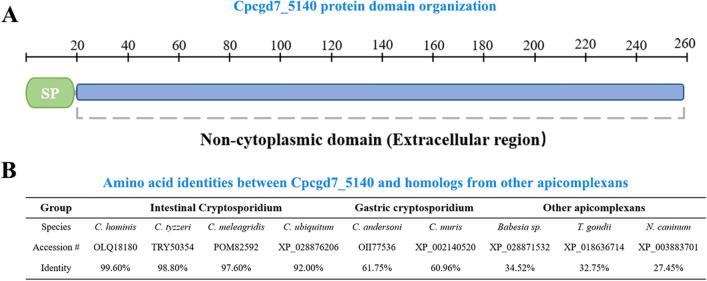
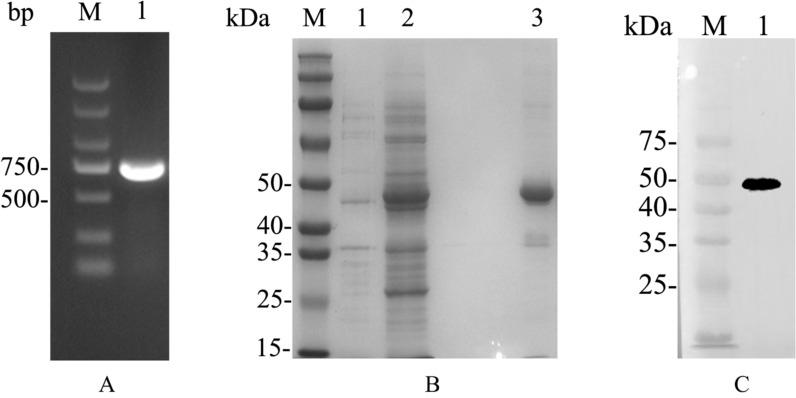
A comprehensive analysis of the proteome of oocyst wall of C. parvum was performed using label-free qualitative high-performance liquid chromatography (HPLC) fractionation and mass spectrometry-based qualitative proteomics technologies. Among the identified proteins, a surface protein (CpSP1) encoded by the C. parvum cgd7_5140 (Cpcgd7_5140) gene was predicted to be located on the surface of the oocyst wall. We preliminarily characterized the sequence and subcellular localization of CpSP1.
RESULTS
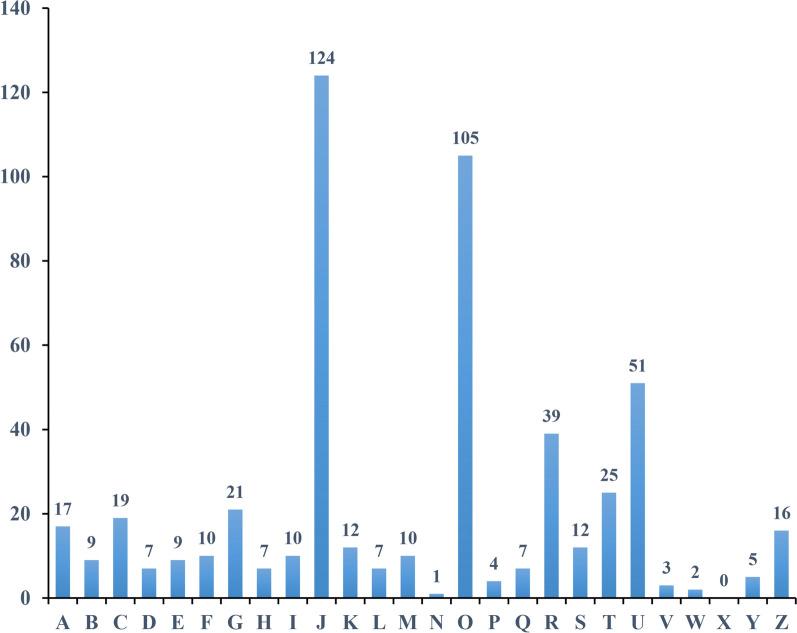
A total of 798 proteins were identified, accounting for about 20% of the CryptoDB proteome. By using bioinformatic analysis, functional annotation and subcellular localization of the identified proteins were examined for better understanding of the characteristics of the oocyst wall. To verify the localization of CpSP1, an indirect immunofluorescent antibody assay demonstrated that the protein was localized on the surface of the oocyst wall, illustrating the potential usage as a marker for C. parvum detection in vitro.
CONCLUSION
The results provide a global framework about the proteomic composition of the Cryptosporidium oocyst wall, thereby providing a theoretical basis for further study of Cryptosporidium oocyst wall formation as well as the selection of targets for Cryptosporidium detection.
背景
微小隐孢子虫是一种动物源性寄生原虫,可感染多种动物和人类,并通过卵囊在宿主之间传播。卵囊壁为其提供了抵御恶劣环境因素的强大保护;然而,关于卵囊壁在蛋白质组学水平的研究还很有限。
方法
使用无标记定性高效液相色谱(HPLC)分级和基于质谱的定性蛋白质组学技术,对微小隐孢子虫卵囊壁的蛋白质组进行了全面分析。在所鉴定的蛋白质中,预测微小隐孢子虫 cgd7_5140(Cpcgd7_5140)基因编码的表面蛋白(CpSP1)位于卵囊壁的表面。我们初步分析了 CpSP1 的序列和亚细胞定位。
结果
共鉴定出 798 种蛋白质,约占 CryptoDB 蛋白质组的 20%。通过生物信息学分析,对鉴定出的蛋白质进行功能注释和亚细胞定位,以更好地了解卵囊壁的特性。为了验证 CpSP1 的定位,间接免疫荧光抗体检测表明该蛋白定位于卵囊壁的表面,表明其可能作为体外检测微小隐孢子虫的标记物。
结论
该结果提供了微小隐孢子虫卵囊壁蛋白质组的全局框架,为进一步研究微小隐孢子虫卵囊壁的形成以及微小隐孢子虫检测靶标的选择提供了理论依据。


 Zotero 插件