
载脂蛋白 E 位于神经退行性疾病的靶心:载脂蛋白 E 基因型在阿尔茨海默病病理学和脑部疾病中的影响。
APOE in the bullseye of neurodegenerative diseases: impact of the APOE genotype in Alzheimer's disease pathology and brain diseases.
机构信息
Department of Experimental Medical Science, Experimental Neuroinflammation Laboratory, Lund University, Lund, Sweden.
Department of Experimental Medical Science, Experimental Dementia Research Unit, Lund University, Lund, Sweden.
出版信息
Mol Neurodegener. 2022 Sep 24;17(1):62. doi: 10.1186/s13024-022-00566-4.
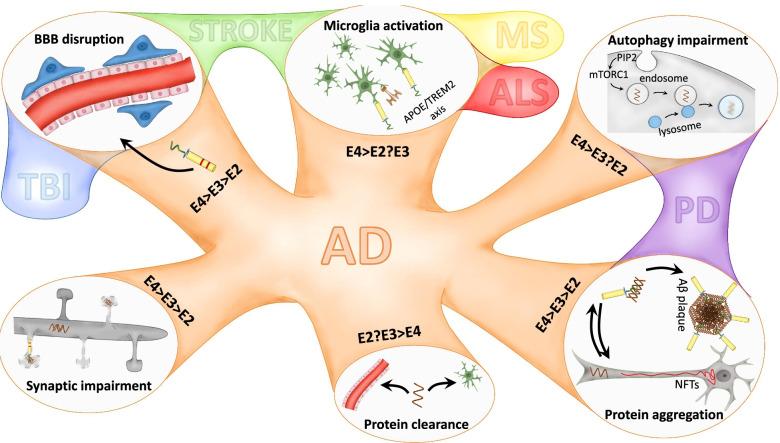
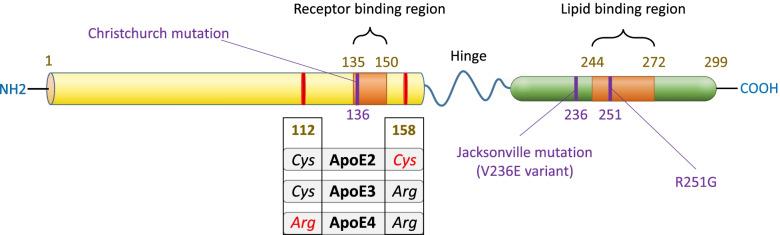
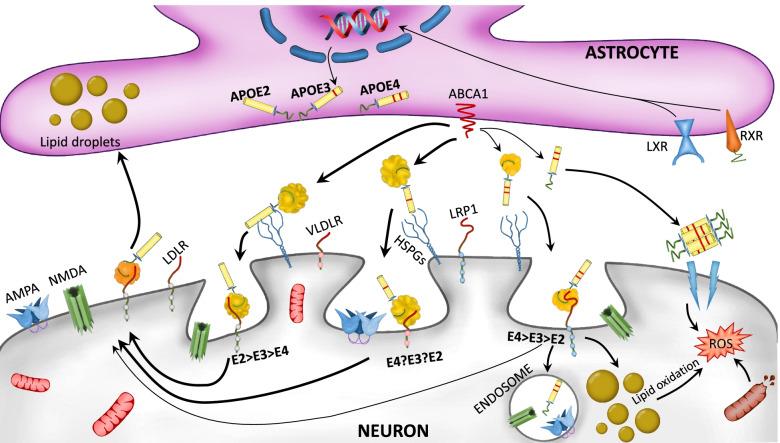
ApoE is the major lipid and cholesterol carrier in the CNS. There are three major human polymorphisms, apoE2, apoE3, and apoE4, and the genetic expression of APOE4 is one of the most influential risk factors for the development of late-onset Alzheimer's disease (AD). Neuroinflammation has become the third hallmark of AD, together with Amyloid-β plaques and neurofibrillary tangles of hyperphosphorylated aggregated tau protein. This review aims to broadly and extensively describe the differential aspects concerning apoE. Starting from the evolution of apoE to how APOE's single-nucleotide polymorphisms affect its structure, function, and involvement during health and disease. This review reflects on how APOE's polymorphisms impact critical aspects of AD pathology, such as the neuroinflammatory response, particularly the effect of APOE on astrocytic and microglial function and microglial dynamics, synaptic function, amyloid-β load, tau pathology, autophagy, and cell-cell communication. We discuss influential factors affecting AD pathology combined with the APOE genotype, such as sex, age, diet, physical exercise, current therapies and clinical trials in the AD field. The impact of the APOE genotype in other neurodegenerative diseases characterized by overt inflammation, e.g., alpha- synucleinopathies and Parkinson's disease, traumatic brain injury, stroke, amyotrophic lateral sclerosis, and multiple sclerosis, is also addressed. Therefore, this review gathers the most relevant findings related to the APOE genotype up to date and its implications on AD and CNS pathologies to provide a deeper understanding of the knowledge in the APOE field.
载脂蛋白 E 是中枢神经系统中主要的脂质和胆固醇载体。人类存在三种主要的多态性,即载脂蛋白 E2、E3 和 E4,APOE4 的遗传表达是导致迟发性阿尔茨海默病(AD)发展的最具影响力的风险因素之一。神经炎症已成为 AD 的第三个标志性特征,与淀粉样β斑块和过度磷酸化聚集的tau 蛋白神经原纤维缠结一起。这篇综述旨在广泛而广泛地描述载脂蛋白 E 的不同方面。从载脂蛋白 E 的进化到 APOE 的单核苷酸多态性如何影响其结构、功能以及在健康和疾病中的作用。这篇综述反映了 APOE 多态性如何影响 AD 病理学的关键方面,如神经炎症反应,特别是 APOE 对星形胶质细胞和小胶质细胞功能以及小胶质细胞动力学、突触功能、淀粉样β负荷、tau 病理学、自噬和细胞-细胞通讯的影响。我们讨论了受 APOE 基因型影响的 AD 病理学的影响因素,如性别、年龄、饮食、体育锻炼、AD 领域的当前治疗方法和临床试验。还讨论了 APOE 基因型在其他以明显炎症为特征的神经退行性疾病中的影响,如α-突触核蛋白病和帕金森病、创伤性脑损伤、中风、肌萎缩侧索硬化和多发性硬化症。因此,这篇综述汇集了迄今为止与 APOE 基因型相关的最相关发现及其对 AD 和中枢神经系统病理学的影响,以更深入地了解 APOE 领域的知识。
 Zotero 插件