
有机磷酸酯通过斑马鱼大脑中的多种信号通路导致甲状腺功能障碍。
Organophosphate esters cause thyroid dysfunction via multiple signaling pathways in zebrafish brain.
作者信息
Yan Zhenfei, Feng Chenglian, Jin Xiaowei, Wang Fangkun, Liu Cong, Li Na, Qiao Yu, Bai Yingchen, Wu Fengchang, Giesy John P
机构信息
State Key Laboratory of Environmental Criteria and Risk Assessment, Chinese Research Academy of Environmental Sciences, Beijing, 100012, China.
College of Environment, Hohai University, Nanjing, 210098, China.
出版信息
Environ Sci Ecotechnol. 2022 Jun 6;12:100198. doi: 10.1016/j.ese.2022.100198. eCollection 2022 Oct.
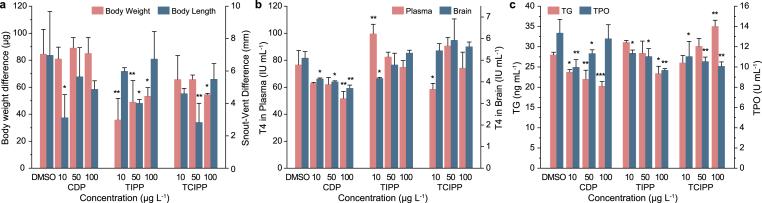
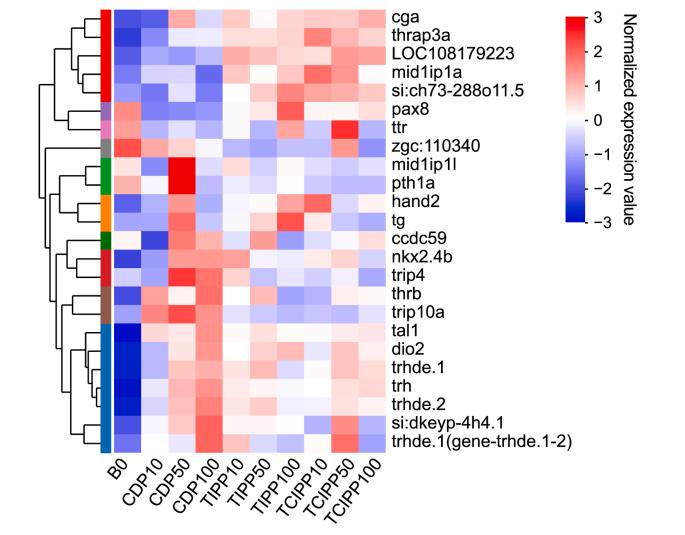
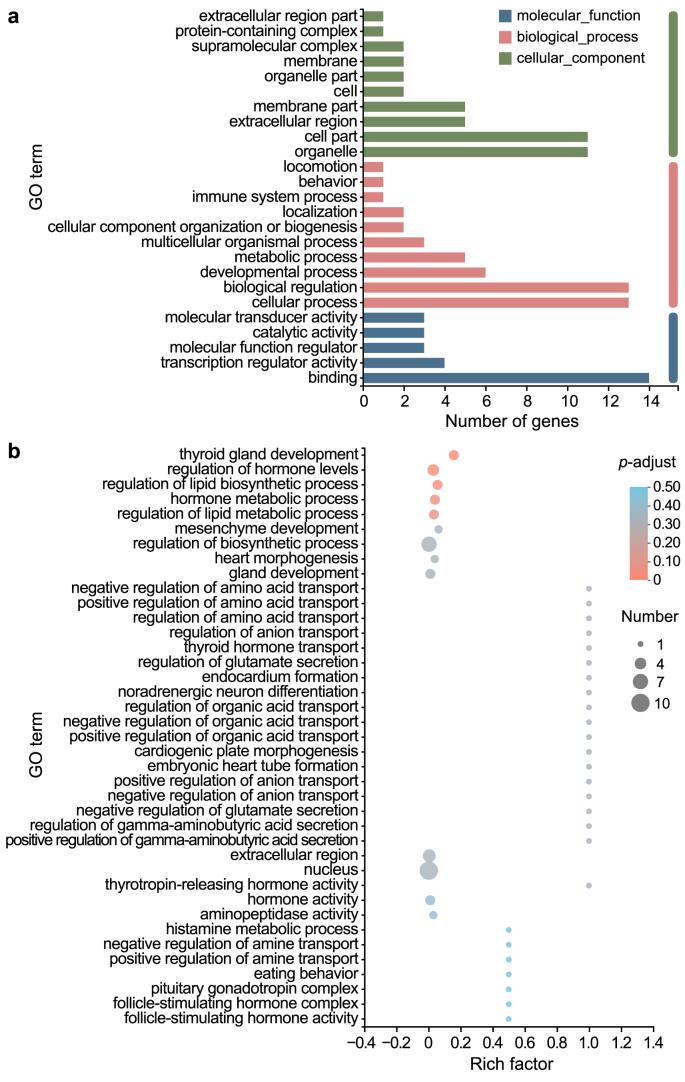
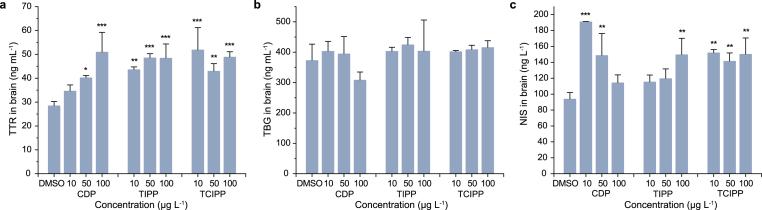
Organophosphate esters (OPEs) are widespread in various environmental media, and can disrupt thyroid endocrine signaling pathways. Mechanisms by which OPEs disrupt thyroid hormone (TH) signal transduction are not fully understood. Here, we present in vivo-in vitro-in silico evidence establishing OPEs as environmental THs competitively entering the brain to inhibit growth of zebrafish via multiple signaling pathways. OPEs can bind to transthyretin (TTR) and thyroxine-binding globulin, thereby affecting the transport of TH in the blood, and to the brain by TTR through the blood-brain barrier. When GH3 cells were exposed to OPEs, cell proliferation was significantly inhibited given that OPEs are competitive inhibitors of TH. Cresyl diphenyl phosphate was shown to be an effective antagonist of TH. Chronic exposure to OPEs significantly inhibited the growth of zebrafish by interfering with thyroperoxidase and thyroglobulin to inhibit TH synthesis. Based on comparisons of modulations of gene expression with the Gene Ontology and Kyoto Encyclopedia of Genes and Genomes databases, signaling pathways related to thyroid endocrine functions, such as receptor-ligand binding and regulation of hormone levels, were identified as being affected by exposure to OPEs. Effects were also associated with the biosynthesis and metabolism of lipids, and neuroactive ligand-receptor interactions. These findings provide a comprehensive understanding of the mechanisms by which OPEs disrupt thyroid pathways in zebrafish.
有机磷酸酯(OPEs)广泛存在于各种环境介质中,并且能够干扰甲状腺内分泌信号通路。OPEs干扰甲状腺激素(TH)信号转导的机制尚未完全明确。在此,我们提供体内-体外-计算机模拟证据,证实OPEs作为环境甲状腺激素通过多种信号通路竞争性进入大脑以抑制斑马鱼生长。OPEs可与甲状腺素转运蛋白(TTR)和甲状腺素结合球蛋白结合,从而影响TH在血液中的运输,并通过TTR经血脑屏障进入大脑。当GH3细胞暴露于OPEs时,鉴于OPEs是TH的竞争性抑制剂,细胞增殖受到显著抑制。磷酸三甲苯酯被证明是TH的有效拮抗剂。长期暴露于OPEs会通过干扰甲状腺过氧化物酶和甲状腺球蛋白来抑制TH合成,从而显著抑制斑马鱼的生长。基于利用基因本体论和京都基因与基因组百科全书数据库对基因表达调控的比较,与甲状腺内分泌功能相关的信号通路,如受体-配体结合和激素水平调节,被确定为受到OPEs暴露的影响。这些影响还与脂质的生物合成和代谢以及神经活性配体-受体相互作用有关。这些发现为OPEs干扰斑马鱼甲状腺通路的机制提供了全面的理解。



 Zotero 插件