
中国零售鸡肉中来自印第安纳州的抗菌药物耐药性以及一株携带[不明内容]且对环丙沙星、头孢噻肟和黏菌素同时耐药的分离株的出现。
Antimicrobial resistance of Indiana from retail chickens in China and emergence of an -harboring isolate with concurrent resistance to ciprofloxacin, cefotaxime, and colistin.
作者信息
Hu Yujie, He Yingying, Nguyen Scott V, Liu Chang, Liu Chang, Gan Xin, Wang Wei, Dong Yinping, Xu Jin, Li Fengqin, Fanning Séamus
机构信息
NHC Key Laboratory of Food Safety Risk Assessment, China National Center for Food Safety Risk Assessment, Beijing, China.
UCD-Centre for Food Safety, School of Public Health, Physiotherapy and Population Science, University College Dublin, Belfield, Dublin, Ireland.
出版信息
Front Microbiol. 2022 Sep 8;13:955827. doi: 10.3389/fmicb.2022.955827. eCollection 2022.
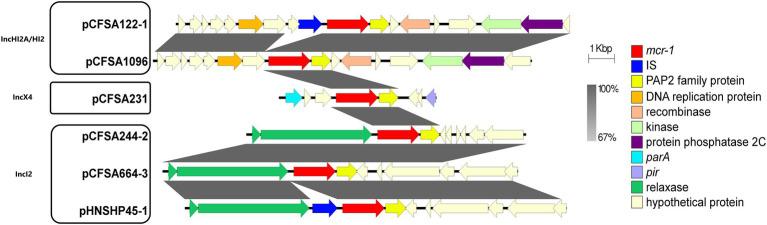
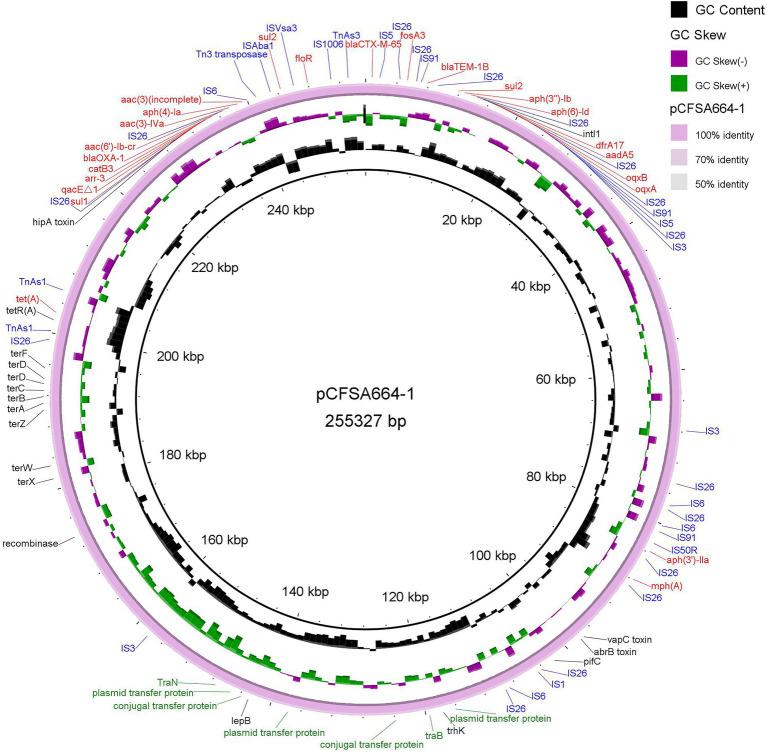
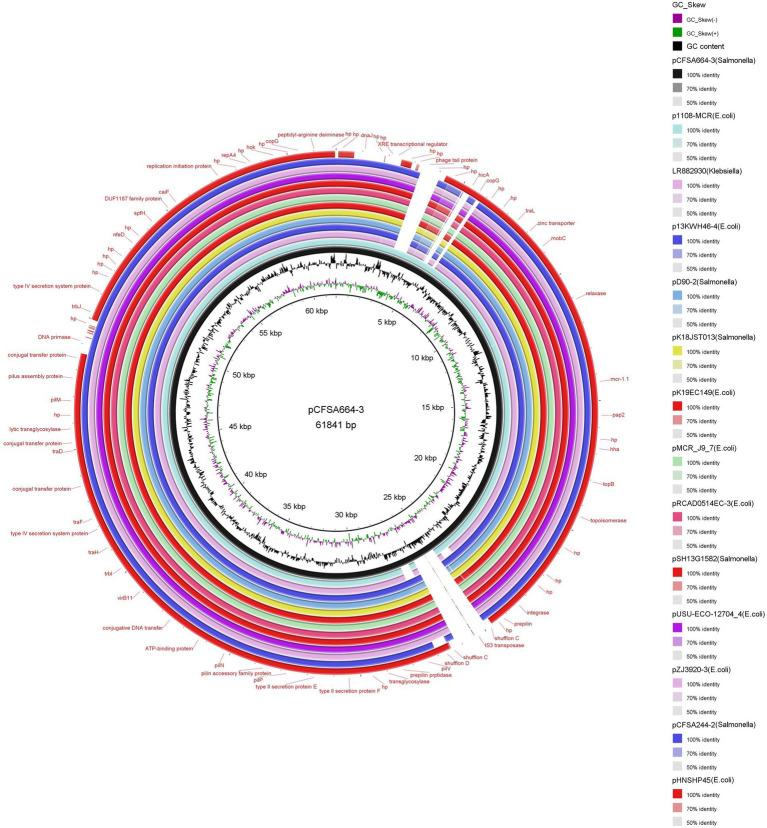
serotype Indiana ( Indiana) in Chinese poultry meat has aroused widespread concern because of its high prevalence and strong antimicrobial resistance. In consideration of the relationship in our previous study between Indiana and co-resistance to ciprofloxacin and cefotaxime (CIP-CTX), which were the first-line drug which were used in infection in clinical, the antimicrobial resistance (AMR) of 224 CIP-CTX co-resistant Indiana isolated from retail chicken samples in China were investigated, with the aim of characterizing the AMR profiles and related resistance mechanisms to ciprofloxacin and cefotaxime among these CIP-CTX co-resistant Indiana isolates, all of which showed multi-drug-resistant (MDR) phenotypes. GyrA (S83F and D87N/G) with ParC (T57S and S80R) were the dominant amino acid substitution types, with , and identified as common plasmid-mediated quinolone resistance (PMQR)-encoding genes. Five gene subtypes were identified with ranking at the top. Equally important, we obtained one isolate CFSA664 harboring the gene was ESBL producer with co-resistance to nine in ten classes of tested drugs inclduing colistin. A single circular chromosome and 3 circular plasmids were found in its genome. Among the 26 AMR genes identified, 24 were located on plasmid pCFSA664-1, including three ESBL genes, while plasmid pCFSA664-3 owning only the gene and sharing the same backbone structure with plasmids from Enterobacteriaceae. No insertion sequences were found near the gene but a relaxase-encoding gene in the flank, which could transfer into J53 at a relatively high frequency. Indiana in this study exhibited highly drug-resistant phenotypes, contributing to the acceleration of the dissemination and emergence of this pathogen among different sources. Surveillance and a One Health strategy are needed to limit the emergence of Indiana along the food chain.
中国禽肉中血清型印第安纳菌(Indiana)因其高流行率和强大的抗菌耐药性而引起广泛关注。鉴于我们之前的研究中印第安纳菌与对环丙沙星和头孢噻肟(CIP-CTX)的共同耐药性之间的关系,而环丙沙星和头孢噻肟是临床感染中使用的一线药物,我们对从中国零售鸡肉样本中分离出的224株对CIP-CTX共同耐药的印第安纳菌的抗菌耐药性进行了调查,目的是表征这些对CIP-CTX共同耐药的印第安纳菌分离株对环丙沙星和头孢噻肟的抗菌耐药谱及相关耐药机制,所有这些分离株均表现出多重耐药(MDR)表型。GyrA(S83F和D87N/G)与ParC(T57S和S80R)是主要的氨基酸替代类型,qnrA、qnrB和qnrS被鉴定为常见的质粒介导喹诺酮耐药(PMQR)编码基因。鉴定出五种qnr基因亚型,其中qnrS排名第一。同样重要的是,我们获得了一株携带blaCTX-M-14基因的分离株CFSA664,它是产ESBL菌株,对包括黏菌素在内的十类测试药物中的九类具有共同耐药性。在其基因组中发现了一条单一的环状染色体和3个环状质粒。在鉴定出的26个抗菌耐药基因中,24个位于质粒pCFSA664-1上,包括三个ESBL基因,而质粒pCFSA664-3仅拥有qnrS基因,并且与肠杆菌科的质粒具有相同的骨干结构。在blaCTX-M-14基因附近未发现插入序列,但在其侧翼有一个松弛酶编码基因,该基因可以相对高的频率转移到大肠杆菌J53中。本研究中的印第安纳菌表现出高度耐药表型,这促使该病原体在不同来源之间加速传播和出现。需要进行监测并采取“同一健康”策略来限制印第安纳菌在食物链中的出现。
 Zotero 插件