
结直肠癌干细胞化疗耐药机制及逆转研究进展:综述
Mechanisms on chemotherapy resistance of colorectal cancer stem cells and research progress of reverse transformation: A mini-review.
作者信息
Chen Lei, Yang Funing, Chen Si, Tai Jiandong
机构信息
Department of Colorectal and Anal Surgery, General Surgery Center, First Hospital of Jilin University, Changchun, China.
Pediatric Outpatient Clinic, First Hospital of Jilin University, Changchun, China.
出版信息
Front Med (Lausanne). 2022 Sep 12;9:995882. doi: 10.3389/fmed.2022.995882. eCollection 2022.
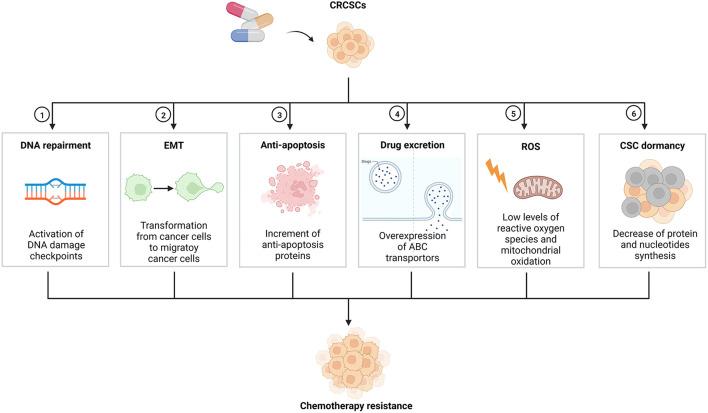
Tumor recurrence and chemotherapy resistance are mainly responsible for poor prognosis in colorectal cancer (CRC) patients. Cancer stem cell (CSC) has been identified in many solid tumors, including CRC. Additionally, CSC cannot be completely killed during chemotherapy and develops resistance to chemotherapeutic drugs, which is the main reason for tumor recurrence. This study reviews the main mechanisms of CSC chemotherapy resistance in CRC, including activation of DNA damage checkpoints, epithelial-mesenchymal transition (EMT), inhibition of the overexpression of antiapoptotic regulatory factors, overexpression of ATP-binding cassette (ABC) transporters, maintenance of reactive oxygen species (ROS) levels, and the dormant state of CSC. Advances in research to reverse chemotherapy resistance are also discussed. Our study can provide the promising potential for eliminating CSC and preventing tumor progression for CRC treatment.
肿瘤复发和化疗耐药是导致结直肠癌(CRC)患者预后不良的主要原因。癌症干细胞(CSC)已在包括CRC在内的许多实体瘤中被发现。此外,CSC在化疗期间不能被完全杀死,并对化疗药物产生耐药性,这是肿瘤复发的主要原因。本研究综述了CRC中CSC化疗耐药的主要机制,包括DNA损伤检查点的激活、上皮-间质转化(EMT)、抗凋亡调节因子过表达的抑制、ATP结合盒(ABC)转运蛋白的过表达、活性氧(ROS)水平的维持以及CSC的休眠状态。还讨论了逆转化疗耐药性的研究进展。我们的研究可为消除CSC和预防CRC治疗中的肿瘤进展提供有前景的潜力。
 Zotero 插件